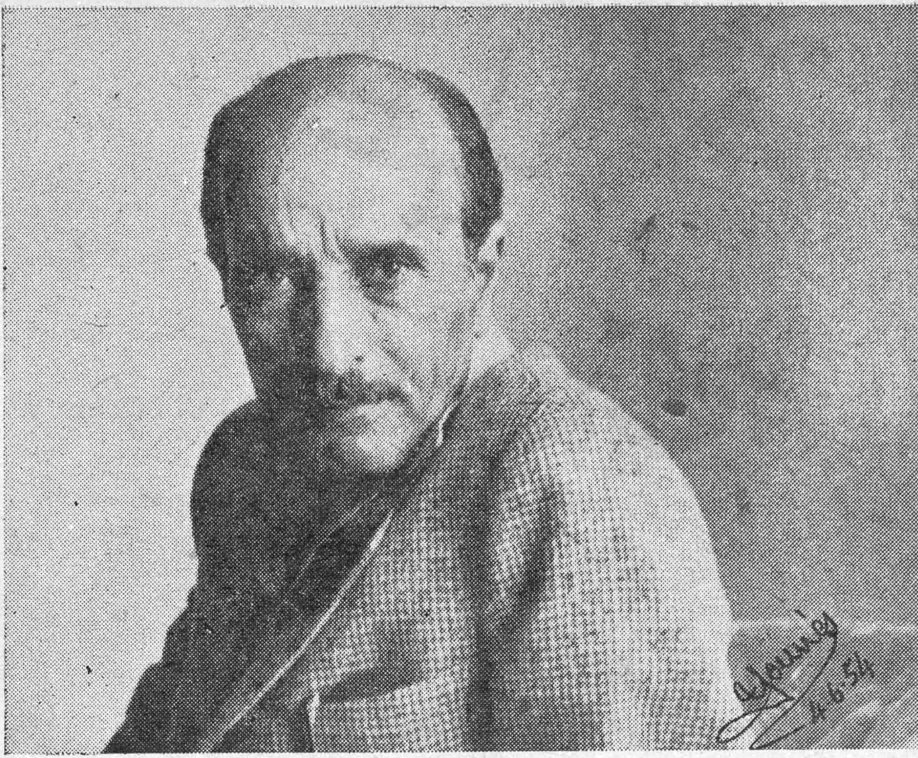
The elder of our men of letters, Mr. Mikhail Naimy, here gives the readers of "The Woman's Voice" his frank views on the problems of literature and language. And who, like Naimy, is worthy of treating these subjects, to which he has consecrated his mental and spiritual activity and the greater part of his days and nights?! Our deepest thanks to Mr. Naimy.
Q — What is, in your view, the destiny of the modern schools of literature? Are they fated one day to take the place of classicism once and for all?
A — Before the modern literary renaissance we had no arts of literature other than poetry, the essay, and the maqama. What is classical of these will remain classical. As for criticism in its broad sense, the story, the novel,
and the play, these are modern arts. Of these we shall have what becomes classical in the eyes of the coming generations. As for modern poetry, in all its various schools, only a little of it is destined to endure. And this little will not "take the place" of the old classical poetry; rather it will form, alongside it, a classicism of a new kind.
Q — Is there in Lebanon today a story that deserves to endure?
A — I have not yet read in Lebanon a story that fulfilled all its artistic elements. But we are newcomers to this kind of literature. And Lebanon is rich in talents. I do not doubt that it will produce stories which, were they translated into all the languages of the earth, would add to the world's
literary wealth an addition of real consequence.
Q — To which, in your view, belongs precedence in this field: to Egypt or to Lebanon?
A — The writers of the story in Egypt are more numerous and more abundant in production than those in Lebanon. And a judgment between
the production of the two countries can rightly be made only after a stretch of years.
Q — Mr. Fouad Ephrem al-Boustani, president of the Lebanese University, affirms that the level of the Arabic language in our schools today is higher than it was some quarter of a century ago — do you agree with this view?
A — It is not for me to oppose the opinion of my friend Mr. Fouad Ephrem al-Boustani. His long experience in teaching gives his opinion a weight not possessed by the