It was night, and the company, in a corner of the house of Qustantin Thabit, was listening to one of those present as he explained the program of an oratorical gathering to be held the next day, at which donations would be collected for the benefit of a project to build a sanatorium for those stricken with tuberculosis. Among the company was a lady who listened to the speaker with her whole being, light streaming from her blue eyes — and this lady was none other than Julia Tu'mah. The speaker had scarcely finished before the effect of his words had taken hold of every tremor of Julia's spirit, and she
sprang up to tell those present the story of a lady she had come to know in Broummana, who was stricken with this malignant disease. Her children had brought her from Beirut, placed her in a house they rented for her, and left her there alone to suffer the pains of the body and of solitude; they visited her only rarely, fearing for themselves the contagion of the disease that gnawed at her lungs without respite or mercy. Julia heard of this lady, and her humanity and nobility of soul would allow nothing less than visiting her at every opportunity, lightening her loneliness and her pains, and laboring to raise her spirits and her hope in life. Julia told
those present the story of this lady with all the eloquence she possessed, for she lived what she said, and pictured the pain she felt at the side of this wretched patient. Her words sank deep into their hearts; they felt what she felt and were moved as she was moved, and those present asked her to tell this story before the honored assembly on the day of the gathering. She refused flatly, for she stood in awe of Beirut, and of its society above all; it was not then the custom of the ladies of Lebanon to attend oratorical gatherings — how then should she stand among them as a speaker!
The next day, during the oratorical gathering, Miss Thabit whispered in the ear of the master of ceremonies that he should present Julia Tu'mah to the audience, that she might tell them what she had described so well the night before. He did so, and faced with the accomplished fact, Julia rose and walked forward as though a hidden power were driving her toward the platform, which she mounted for the first time in her life. She stood before the assem
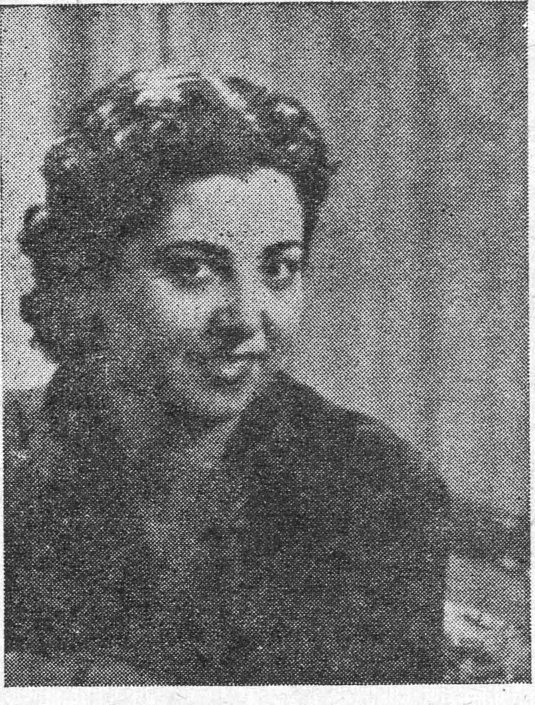
Ihsan Dimashqiyah
bly, drew her strength from its silence, and delivered a moving, splendid address in which the loftiness of her feelings and the nobility of her thoughts shone forth. She excelled in describing the disease and its pains and the misery of the stricken, until she held the feeling and the emotion of all present. She spoke with a strange fervor, and with a sincerity that entered the depths of the soul, shaking it and impelling it toward goodness and charity. Scarcely had she finished her story when the hands of those present blazed with applause, and they opened their pockets to the project, giving to it with a generosity the like of which had
never been seen before. But Julia won not only their admiration and their applause; she won something more precious — she won a heart that beat hard for her and yearned toward her, and this heart was none other than the heart of Badr Dimashqiyah, who had listened to her from among the audience.
Fate would have it that Badr and Julia should meet a second time, on the day when a runaway horse, ridden by Ali Salam, son of Salim Salam, struck her and threw her to the ground. Badr accompanied Salim Salam to the hospital, where the latter went to apologize to the lady for his son's deed, and so he came to know at close hand this lady, radiant
with nobility and gentleness.
This incident took place in 1913, and it was the turning point in Julia's life, for she married Badr Dimashqiyah, to form the true Lebanese home. And in her marriage she was a rebel, an insurgent.
Yes, a rebel — for she perceived with her keen insight that the ideal family, uniting man and woman, rests upon love, admiration, and mutual respect, and upon the sense of the necessity of handing down its culture and its good customs to its children; and these two principles were missing in the Lebanese family, where the mind opens on the man's side and never dawns on the woman's, owing to the total absence of her personality. This absence stripped her of every will, of every lofty idea, and her weakness and ignorance condemned her to be, in the man's eyes, a truncated creature, bound to a particular conduct whose axis was blind obedience, wariness and caution, and a feeling of guilt toward the man, since she could not rise to the