Nassif, whose lips speak approval or disapproval — and finally Miss Rebeiz, with her plump figure, hovering between blonde and auburn as though German-born, whom the French "models" have not touched and the new devices of adornment have not yet tempted!
As for Mr. Mansour Munsif, proprietor of the house of "Mun Hayim," he is a staunch friend of the magazine; the girls and ladies ringed him about on his right and his left, and he set down the rules drawn from "Dior's" excursions through the museums and "Fath's" rounds through the offices — and from the two together in the invention of colors that have no color! bearing names that never existed before! Then he swept us off to the recesses of the cathedrals, where he shows us "Balmain" drawing inspiration from their marbled glass and their inlaid, carved wood in the stately old enclosures!
From here Madame Najim carried us on to demonstration by applied examples; she said that the new "cool" colors best suit stout women and slight women alike, for they veil bulk and reinforce slimness. The most important fashion aimed at this purpose is the fashion of 1955, which takes the form of an H — the one criticized by the ladies present — for it works to flatten and cover the bosom, as against fullness at the
back (Blouson) and at the armpit, with an abundance of pockets and a blurring of waist and throat... all of which lends the stamp of femininity added luster and charm! She added that the two fashionable "warm" colors are red and brown — Marron Glacé — and the two "cool" ones blue and green blended together!
Here Miss Nassar pressed in, backing Miss Khatib's running argument, and said that this year's fashion reminds her of the models of the year 1920!
But it is hard to defeat an apostle of fashion arrived from the capital of inspiration; she answered her that the difference — hidden from no one — lies in the newfangled foundation bodices woman enjoys today: sturdy, sheer, slight of bulk yet strong in binding and gathering, which mold the
female form from within, however loosely the dress may billow about it from without! And thanks to the "trimming" with alluring dyed furs and the "lining" with beguiling contrasting fabrics, both inventions of today, one may fairly say that the H-line model — a new invention, however extreme — stands for freedom, femininity, and softness!
But beware! Here is Mr. Munsif's opinion, and it is the word of a seasoned artist: not every woman who applies the feminine stamp to the letter obtains the artistic result she seeks. The readiest proof of this is for two women differing in complexion, character, and beauty to dress in the very same clothes, colors, and Accessoires — how quickly the glaring difference between the two catches every eye!
Perhaps he meant by this that there are women fashioned by nature to harmonize with the winding, elusive fashions, and others who would do well to hold to the "classic" without much change.
And whether it be the judgment of instinct — "Mun Hayim's" — or the judgment of experience and practice — Madame Najim's — the modern, venturesome woman argues only to make herself ready, and then to take absolute command of the fashions that were created for her sake alone.
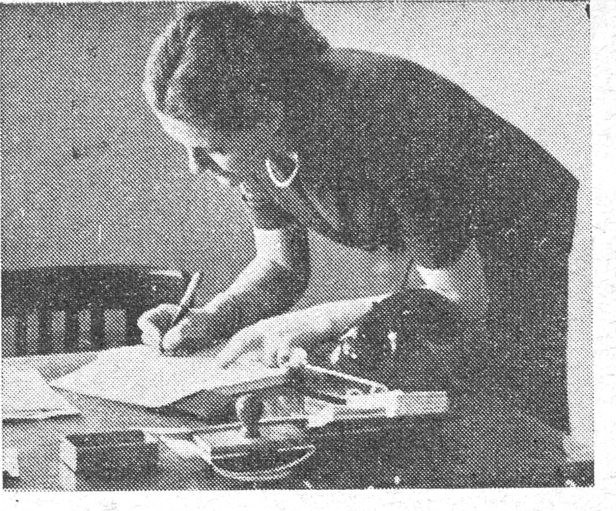
Mrs. Evelyn Kanaan records the discussion
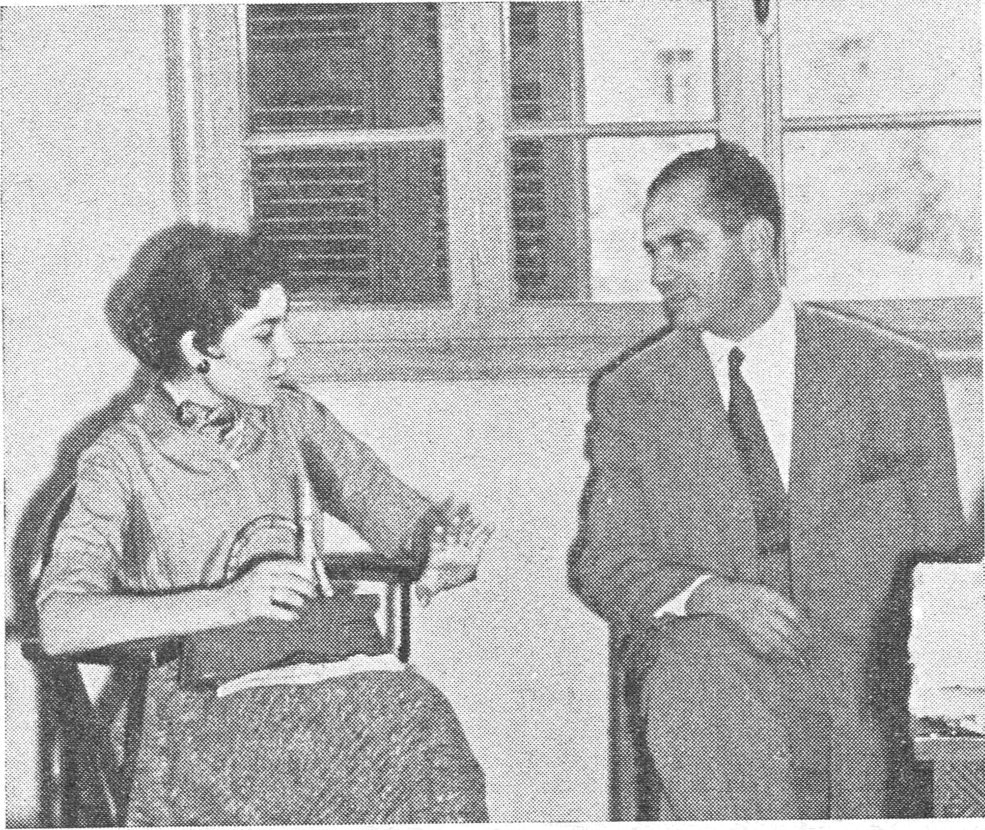
Miss Khatib and Mr. Munsif (Mun Hayim)