
Around a table in a restaurant, a discussion arose between two men on how to tell the abnormal person from the normal. One of them protested that he could recognize the abnormal from a great distance, and pointed to a girl in the corner, saying: "Do you see that girl, how she strikes her forehead? She is abnormal, of course." And his friend agreed with his view. When the argument and the meal were done, the two rose and passed near the girl, who was still worn out moving her hand in a nervous motion; and when they drew close to her they learned that she had been trying to drive off a large fly buzzing about her head!
The normal state is like happiness: we seek it and know not how to define it — except that it differs from happiness in this, that we do not know when we have attained it.
We judge that we are normal by comparing ourselves with others; but how do we know that those others are normal? By looking at their conduct? Yet at times they show the opposite of the truth: in the case of the girl and the fly, we cannot judge even the outward state from a distance — how much less the inwardness of the soul?
We look to the natural as the highest model for our conduct, and then it does not trouble us to be told that we are above nature — which means abnormality. The label "normal" is the level of the common run, and by this definition the decay of teeth may be counted normal, since it is the condition of the crushing majority of mankind; but if we say that the normal state is a model of perfection, then the decay of teeth becomes an abnormality.
Is it not strange that we reject a condition at odds with what is around us, and then accept to surpass others and become "above nature"?... And however the label of the natural may vary, no man can remain normal at every moment, for the standards of our society clash and diverge until we lose the path. Just as we feel pain in the head or in any member of the body, so waves of fear and sadness and anger sweep over us, whose causes we sometimes do not know; and so long as these states do not keep us from carrying on our work, they are counted normal.
Samir is one of the educated young men; his nerves weakened for a time, and it was quite natural that
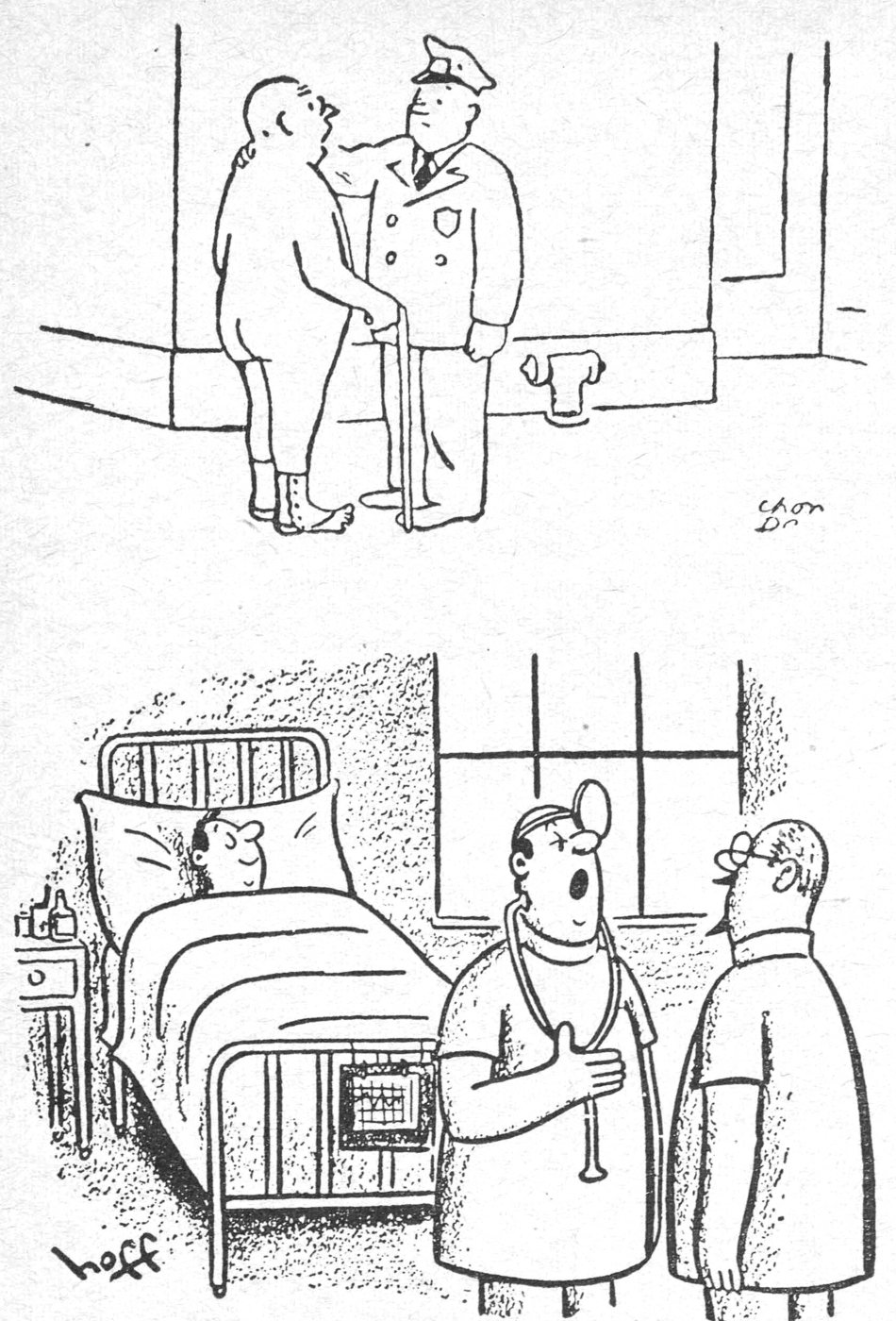
...his death to consulting a psychiatrist.
he should not look for treatment — for his parents would prefer his death to consulting a psychiatrist.
We cannot label an act normal or abnormal unless we grasp its causes and the influences upon it. If we see a man washing two dirty hands we pay him no attention; but when we see him washing two clean hands over and over again, we at once suspect his abnormality.
We feel a strange emotion when we help the needy, just as a self-contentment stirs in us when we finish our duties — and this is the reward of conscience; yet there are those who seek a passing ease by fleeing from responsibility, and this cannot be counted a working normality.
Someone likened man's life to an automobile crossing the road, carrying in its heart a quantity of oil that drives it, liable at any time to explode — and that is nothing other than the urges and the basic feelings without which it could not continue on its way; and whenever the driver senses a disorder in the motor, he stops, naturally, to look again into the machine in his hands.
Bodily conditions, such as illnesses, act upon the psyche; but the common run of people do not appre