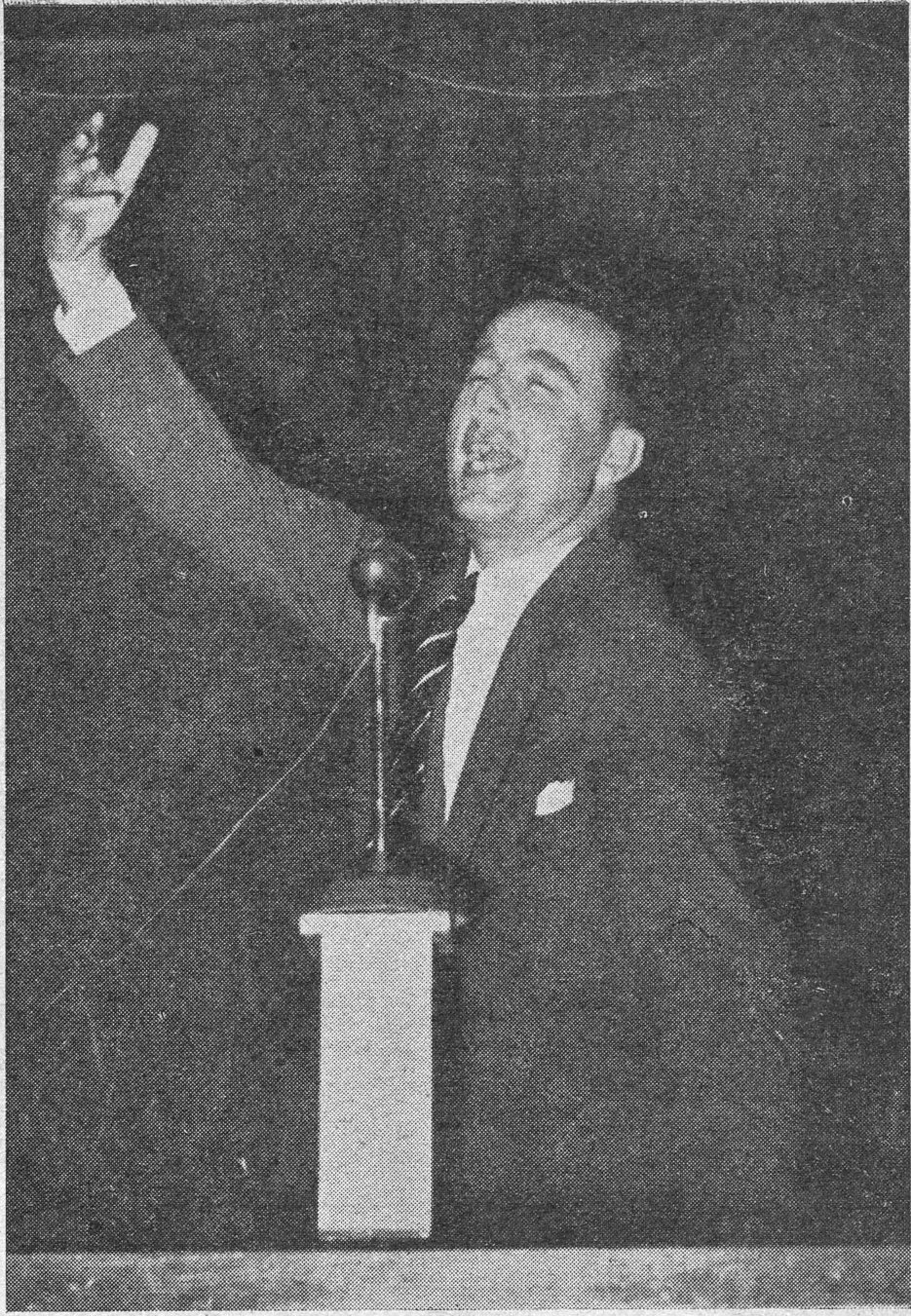
Mr. Said Akl at his poetry evening at the Cénacle Libanais
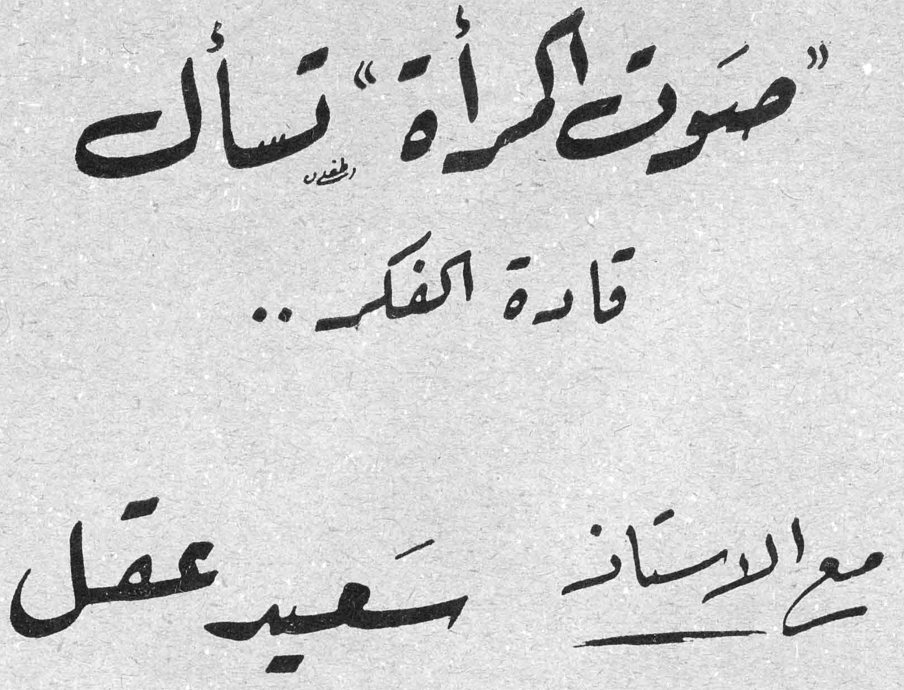
To introduce Said Akl is like introducing the sun: the very coming of its radiance!
Shall we say: he is authentic literature, his letters living proud and unheeding, his brow — the eagle's brow — upon the summits?
Or shall we say: he is the teacher of the generation of fine character, raising up the young — the hope of tomorrow — with a devotion beyond all devotion, and with a stubborn faith beyond all faith?
Shall we introduce him as the author of "Cadmus" and "The Magdalene," or content ourselves with "Rindala"... wherein love and woman are a glow of beauty and the completion of a prayer?!

Said Akl, then, is of the chosen elite, one of the leaders of thought in our world. What, we wonder, will be his opinion on the questions of youth, of literature, and of woman?
Q — In your capacity as one of the leaders of thought, are you satisfied with the directions our youth are taking today, and what is your word to them?
A — Our youth are a part of the nation — but the part that is still at the age of heroism; hence, the battalion that can be assigned to the great causes, to the changing of destinies. And the nation, in my view, is on the verge of becoming aware of the extraordinary role that awaits it. Will the youth, one wonders, truly be youth, and answer the call?
Their directions, on the whole, are the daughter of the nation's flabbiness; but I believe that in a handful of them there may be candidates to receive the spark. I trust certain individuals among the youth with a trust without limit; were it not for them I would feel a stranger in my own country — though it has never crossed my mind but that I dwell in my country amid a warmth and an encircling love I do not deserve. My word to these youth is threefold.
First: that they be aware that we are a people — by
our position, our past, and above all by our resolves — possessed of a mission we shall not renounce and shall fulfill.
Second: that we are in a state of danger such as has never before threatened a nation — the danger of effacement.
Third: that the youth, the youth and none other, will awaken before everyone else and will lead our country to the rank of a great power, the least of whose work is to be one of the dense patches of civilization, and the utmost of which is to lead — small as it is — the call to the unity of the human family.
Q — What do you mean by saying that we are a people with a mission?
A — I mean that Lebanon will continue in a role traditional to it: carrying the torch of knowledge and love under whatever sky and in whatever circumstance — that is, however dark the sky of destiny may grow. And that it has a role in awakening the Arabs which it will not renounce and will not cease to play — richer, this time, and more giving.
But the part of Lebanon's role that gleams new is this: it will reveal what has been forming within it of love, of passion for knowledge, and of a fine