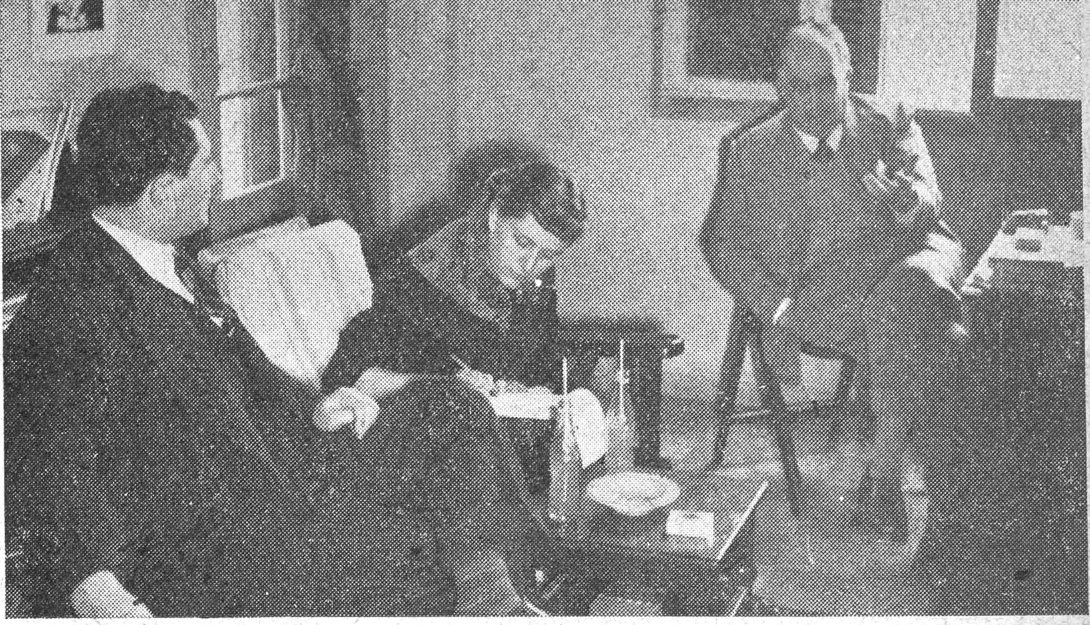
Touma says: The moment is favorable, and spurs us to take the first leap...
Local color in Lebanon depends to a very great extent on woman's imagination and her self-sacrifice
At The Woman's Voice symposium
From the imposing headline it will be gathered that the task of this symposium is an imposing one, which it hopes to see take tangible shape. Its members: Mr. Michel Touma, father of this tourism year; Emir Maurice Chehab, resurrector of Lebanon's antiquities and reviver of its monuments; then Mrs. Edvick Jureidini Shayboub, who has sent forth her intimate musings within a village frame, romantic in her bent; and the woman of letters Rose Ghorayeb, social critic and expert in aesthetics, well versed in the hidden springs of refined popular taste. The symposium, in this sitting, aims at bringing out the local color that has all but been lost in Lebanon, and that must be revived after the example of the other touristic countries, which draw their spiritual nourishment from their time-honored folk heritage.
Touma — This tourism year aims at two things. First, to prepare the Lebanese people to be a touristic people: not, as it was accustomed in former days, receiving visitors on the margin of events, but making it a conscious partner in the modern art of hospitality, which works toward strengthening the national economy and developing our personality and dignity. Second, and at the same time, we shall have made Lebanon known as it deserves in all the circles of the world, preceded by placards and advertisements, whether in the newspapers, over the radio, or with the airline companies: and so the sons of the Arab lands will come streaming in during the year of welcome, whose summer is set apart as an appointed season of homecoming for the Syrian-Lebanese communities in the Mahjar.
Ghorayeb — Have you programs of amusement and entertainment reserved for the tourists this year?
Touma — In fact we have contracted with theatrical companies capable of performing a Revue à grand spectacle in the citadel of Baalbek in ancient Roman costume; besides which we look forward to the opera season and to the delightful, engaging philharmonic orchestra.
Shayboub — And what do you think will be the effect of these spectacles and festivities upon those who come from New York or São Paulo, for instance? Do you not think that Westerners thirst for Eastern sights and local programs?
Touma — In truth, the first thing that reaches to the depths of the tourist in Lebanon is that feeling which speaks to him of its deep-rooted past — like the palace of Beiteddine, built on a height overlooking a plunging valley, eloquent in the grandeur of its structure and the splendor of its wood carvings and marble mosaics, calling to mind the wonders of the Thousand and One Nights!
Chehab — And would you not care to add that the emiras and their handmaids used to sweep through the wings set apart for them in wooden clogs gilded and silvered, their glances kohl-darkened and drawn long, their jujube-red fingertips tinted with henna... their foreheads banded with gleaming coins and their braids flowing loose amid pieces of silk worked with beads and gold thread!
Shayboub — Or those seasons and feasts that held minds captive for a whole week, in which the feast-keepers mingled amid merry, melodious rites and traditions.
Ghorayeb — There are in Lebanon elements worthy of trust that could be drawn upon, and profit taken from their researches, which have remained individual and confined: from the painting of Blanche Amoun to the costumes of Eveline Bustros, to the verse and music of the Rahbani brothers, the poetry of Charles Corm, the plays of Said Takieddine, the masters of zajal poetry, and others.
Chehab — The enthusiasm of the two literary ladies moves me to recount to them a program I drew up as far back as the days of the Mandate. It consists of a festival held in purely national style in the courtyard of the palace of Beiteddine. The finest horsemen are brought in — riders and jereed-throwers, of whom the true-bred stock still survives in the remote highlands, such as Akkar — and after they have performed their feats of horsemanship, a village wedding procession enters the arena, in which the national costumes stand