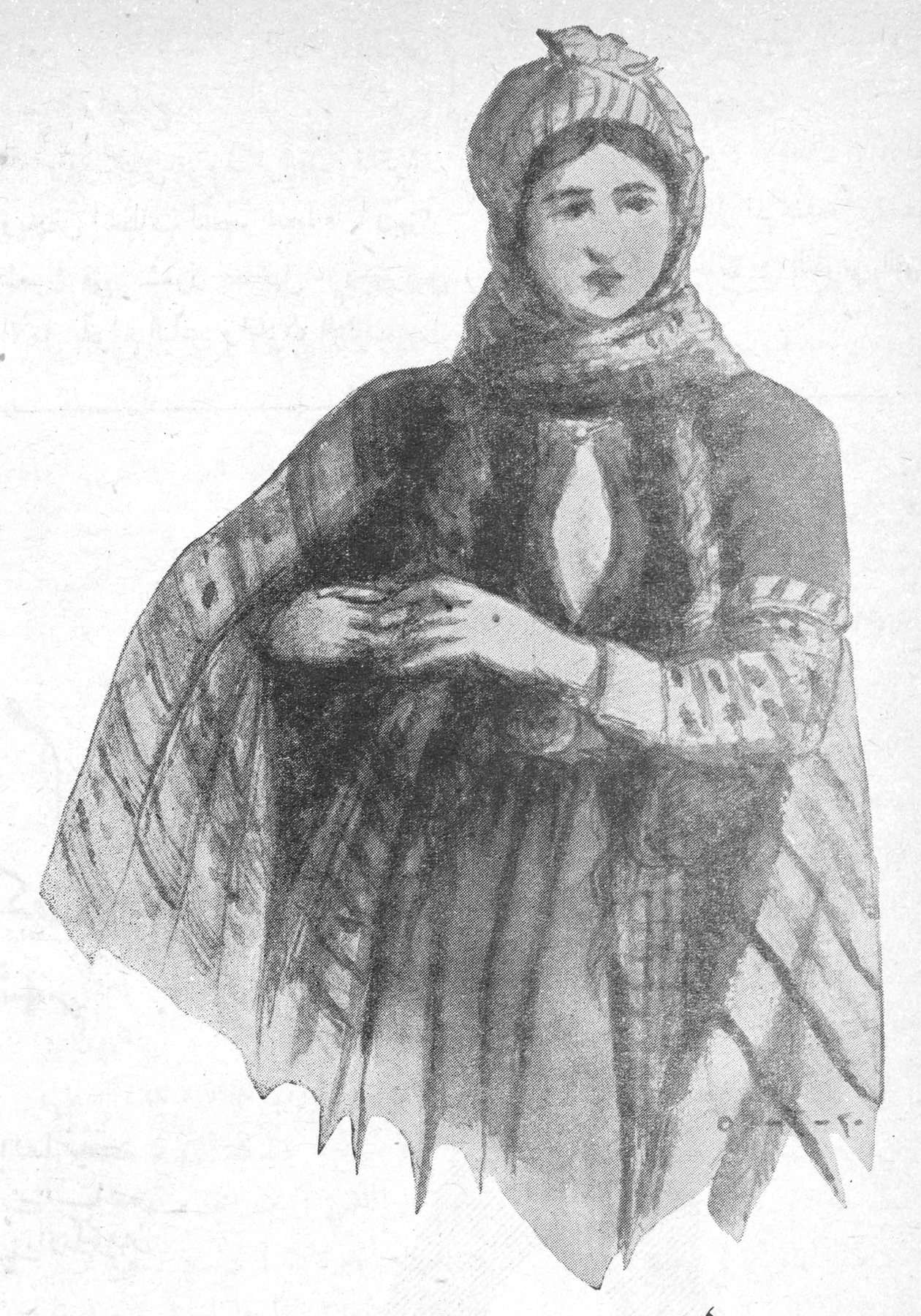
What share had she: of influence, of culture, and of social and political activity??
Woman in the first Abbasid age enjoyed a share of freedom equal to that of the Umayyad woman — she who said in defense of unveiling: "God, blessed and exalted, has marked me with the brand of a beauty which I wished people
to see, that they might know His favor toward them; I would not conceal it." And down to the reign of the tenth caliph — the reign of al-Mutawakkil — woman continued to enjoy a wondrous portion of freedom. Chivalry was alive among men. Neither the licentiousness of the Byzantines nor the luxury of the Persians had yet succeeded in demolishing and destroying the simplicity of the desert and its
freedom. Fathers, up to that time, took pride in bearing the names of their refined and beautiful daughters as bynames, such as Abu Layla, Abu Hind, and Abu Sufra. Their names were the battle cries of brothers and lovers as they plunged into the fray. The refined Arab woman conversed with men without any perturbation, and received her guests with every welcome, without any shyness; and she was respected by all who were around her.
In the time of al-Mansur we hear of two princesses of the ruling house, cousins of al-Mansur, who went to war wearing coats of iron mail, in fulfillment of a vow they had taken upon themselves at the time of the war with Marwan, the last of the Umayyad caliphs. And al-Khayzuran wielded, in the reign of al-Mahdi, an influence in affairs such as no other woman possessed. In the first days of the caliphate of her son, Musa al-Hadi, she used to act on her own authority in his affairs and to deal with him as she had dealt with his father before him, monopolizing command and prohibition. Zubayda, too, enjoyed an ample share of freedom, and intervened in the affairs of the state; indeed, when she made the pilgrimage to the House of God in the year 186 A.H. and realized the hardships the people of Mecca suffered in obtaining drinking water, she summoned the keeper of her treasury and ordered him to bring engineers and workmen from all parts of the country, saying to him: "Work, though a stroke of the pickaxe should cost a dinar." And so it was: the most capable engineers and workmen came to Mecca, joined together the springs of water in the mountains, and made the water flow beneath the rocks until it reached Mecca.
Al-Rashid loved Zubayda with a great love — so much so that when his brother, the caliph al-Hadi, resolved to depose him from the succession in the year 170 A.H. and to have allegiance sworn to his own son, Ja'far ibn al-Hadi, al-Rashid was content in himself with that. Yahya ibn Khalid al-Barmaki said to him: "Do not do it." Al-Rashid answered him: "Does not my brother leave me a life of ease and wholesomeness, wherein there is room enough for me, and I shall live with my cousin Zubayda?" Zubayda had no rival in this great rank which history records for her, save 'Ulayya, al-Rashid's sister by his father, and al-'Abbasa. The former was among the most distinguished women of her age, possessed of a surpassing