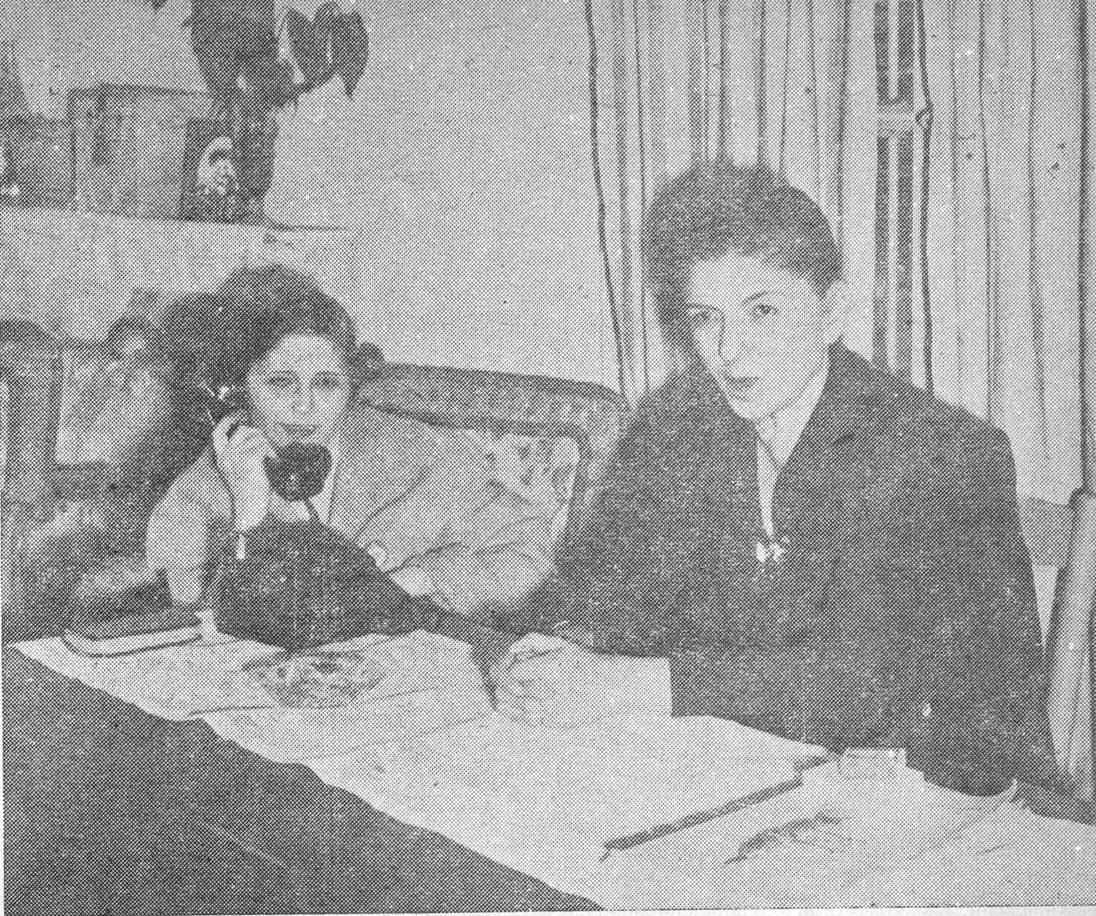
Miss Malak Kharsa, directress of the Home for Delinquent Girls, with Miss Halima Barbar, the officer in charge of the institution
The hand of the clock pointed to ten in the morning exactly when I passed through the main door of the Home for Delinquent Girls — that home which stands on a hill with a wide prospect, in one of the quiet quarters of Beirut.
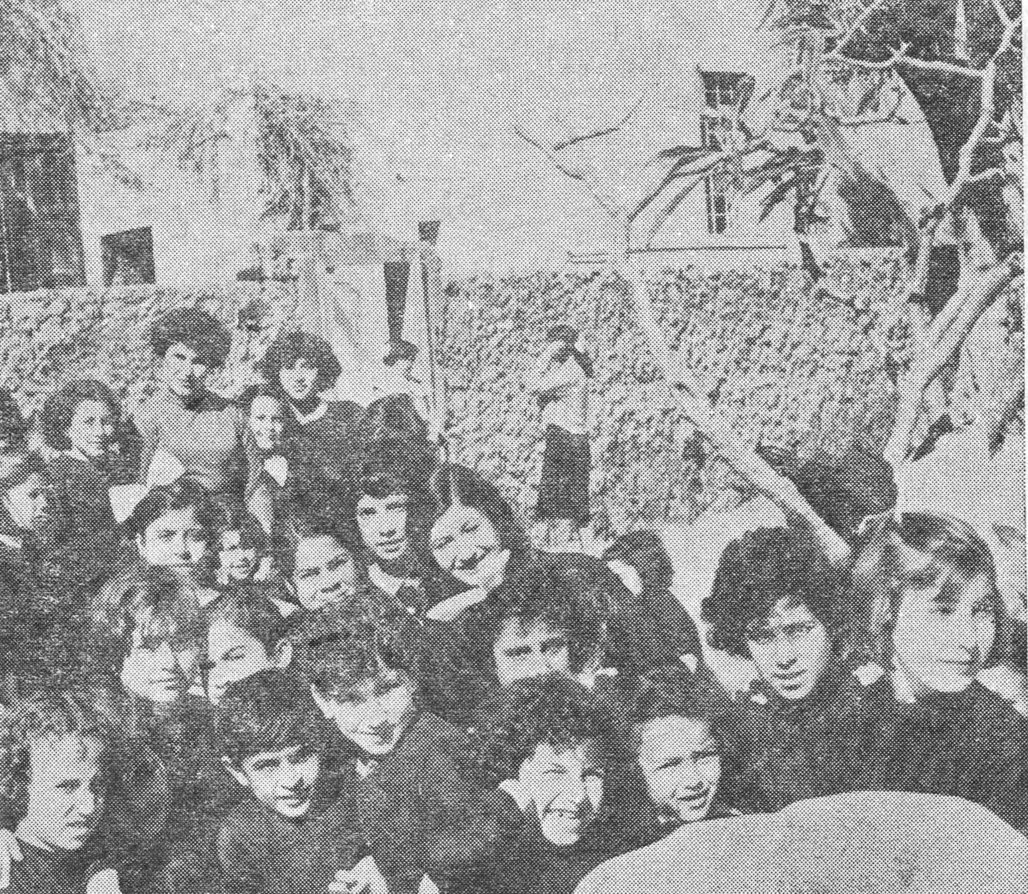
I was struck by the quiet and order pervading this modern institution, which houses forty girls of different backgrounds and nationalities. They were still absorbed in performing their household duties: some helping the cook, others washing the dishes, another ironing clothes. I saw little girls between nine and twelve, and some who had passed thirty! — and this great difference in age astonished me.
I called on the directress of the institution, Miss Malak Kharsa, who told me, with delight plain upon her face, that she finds a pleasure beyond all pleasure in caring and providing for girls whom the fates willed to walk a crooked road.
I looked into the registers and admired this surpassing attention: each girl has her own file, on which are written her name, the nature of her offense, the date of her entry, her address, the result of her medical examination, the principal cause of her delinquency, then her story in detail, and the result of the observation of her progress... It gladdened me that they have taken swift strides toward
improvement and toward holding fast to virtue. The head of the home has taken care to prepare each girl completely to face life with a weapon in her hand to guard her from the evil of destitution and want and fit her to live in dignity: so she has seen to teaching them home economics and handicrafts and to giving them sound moral direction. The little ones, in addition to this, receive lessons in reading and writing. The institution receives its girls through the police department and gets assistance from the Ministry of Social Affairs, and each girl remains in the shelter until the term of her sentence is done.
But have we any right to view the bedrooms and the kitchen, the dining room and the workroom, and sing the praises of their cleanliness and order, without seeing and speaking to each girl by herself, and learning the cause of her delinquency?!
My eye was caught by a child of sweet glances and soft features, not past seven. I drew near and asked her what had brought her to this state. She said: My mother died when I was in my second year, and my father married a hard-hearted woman who inflicted every kind of torment on me and kept food from me, so that I went to bed on an empty stomach; neither my abundant tears nor my pleadings won me the morsel. I shall never forget the day I stole a loaf — how the whips came down on me so hard that they bloodied my body, because I had stayed my hunger with a piece of bread I had no right to take! So I fled from the oppression and joined the ranks of the beggars.
Then I passed on to a crippled girl, though she was in her seventeenth spring. I came up to her, and she looked at me with her two beautiful eyes that spoke
A group of daughters and sons of the Arab fighters