of a pain held down, as though imploring me not to ask her anything — she did not want her tongue to repeat the pains of her heart. I understood from her, after some effort, that she had strayed from the straight road and thrown away the dearest thing a girl possesses; this drove her to flee her town, in fear of her family's punishment and of the shame that had fastened upon her, and she took to sleeping in the pine wood of Beirut through the days of bitter cold, and was stricken with the rheumatism that has crippled her.
Let me now see this woman who has passed thirty, and over whom a perpetual distraction hangs. She comes of a respected family and received a high education — she is fluent in English and French, being a university graduate. She was a flame of intelligence who carried off the prizes throughout her studies, so that the young men of the university vied for her friendship. From among them she chose a young man worthy of her; they exchanged love and devotion, pledged themselves to marry when her studies were done, set a date for the betrothal — and she made herself ready to meet the absent beloved, the husband-to-be. He came back at last — but only after he had completed his betrothal to a girl who surpassed her in beauty! And he left Marie behind him, toying dazedly with the scattered wreckage of her devotion, walking in despair and surrender toward the region of darkness where dwell those condemned to shame. Her family washed their hands of her, and the world emptied itself of her affair. The poor creature was struck with something like madness after that shock: love stormed her heart and blinded her, and the arrows of madness struck her mind and brought her down!
As for Suad, her eyes opened upon life to find herself clipped of wing, without a mother. She
found no one to care for her or attend to her, for her father was a drunkard and a gambler who came home only at midnight, leaving his daughter, who had not passed her tenth year, to roam the alleys — until she fell prey to a human wolf. She bore a child whose needs she could not meet, and it died within days. But Suad had grown used to wandering the alleys, and so the police arrested her on a charge of vagrancy.
I stepped toward a girl of fourteen and learned that she is a skilled thief with several previous offenses. The cause is her not obtaining what she desires, for she is a girl who loves delicious food and beautiful clothes. She lost her parents and lived in the care of her two brothers, whose only concern was to look after themselves; even food they grudged her. So she began by raiding the neighbors' kitchen, then the other houses, stealing whatever fell under her eye; she advanced in the trade until she confined herself to stealing money, and whatever is light in weight and high in price. Poor girl — she is sick with the disease of lying and theft.
And I was startled by the sight of a bold, full-bodied girl on whom the stumblings of fortune had left no mark, and whose spirit, laughing at life, had not been touched. Her mother died while she was in the cradle, and her father remarried; she endured horrors and hardships that the most despairing and long-suffering of people could not bear! And the father was harsher than his wife: he would not listen to what she confided of the dreadful torment she was meeting, but only redoubled his abuse. So the wronged little one grew up and began to rebel against a life of torture, and this rebellion took its harshest form: parting from her father came easy to her once she had felt mercy vanish from
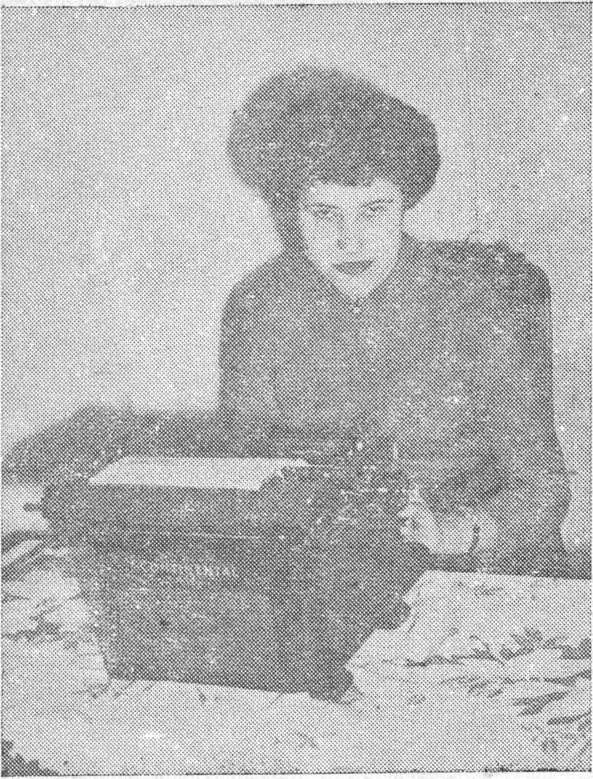
Miss Zaynab Abu Ghazaleh
his heart. The street caught her up, and she joined the ranks of the vagrants, the highway robbers, and the daughters of the night!! — and she in her fifteenth year.
As for Zahra, she comes of a poor family; her parents died, and she took up begging as a trade. I wondered how she could accept such a trade when she is strong of build; but, as she put it, she found no work. She said to me in a firm tone: What would you have of one seized by killing despair, who, things being so, has nothing before him but to work — to do any work, at any price — to overcome the crying of the belly and the cruelty of hunger? Things being so, he either accepts some paltry work for which he never prepared himself, and becomes a paltry person among hundreds of thousands; or he steals and swindles, or makes lawful to himself every iniquity, caring nothing for what is called dignity and chastity and probity — for these things, to him, dwindle to nothing beside his threatened life. Alas for us!
And so, with the end of the talk of Zahra the philosopher, I contented myself with these observations!