Education is the nation's point of departure, the wellspring of the rising generation's movement, and the nerve of the new generation. Is there in the universe a subject more important than man? Or is there among all studies a matter more intricate than this human being, or more absorbing?
The son of this age takes up a book or a magazine, and it gives him no pleasure to search in it for
crumbling ruins, nor for the diversion of legends and tales of jinn and spirits. Rather he is realistic, he is scientific, an investigator of truth, working to reach the ideal, to reach perfection, to reach the point where man becomes brother to man, so that wars fade away, hatred dies out, and security and stability prevail.
Attention to education, and concern for the child in all the stages of his growth, has never in any age occupied the place this age has opened for it, whether in the home, the school, or society; every gesture of the child has come to carry meaning for parents and educators!
Here is the magazine (Parents) publishing an extensive study entitled "Hostility in the Child," in which the writer devotes herself to examining one of the child's behaviors from his first months until his entry into school. She says in this endeavor that hostility has been, and remains, one of the gravest
dangers besetting social relations; its source is the home and the child's first environment. But once the educator understands this instinct consciously, and hastens to remedy it, investigating its foundations and the causes of its appearance, he can uproot it and work to lighten its weight.
How do we define the hostile feeling?
Here the writer says that it is every instinct that aims at destruction and at the harm of others. The susceptibility to this instinct grows in the child's soul as his capacity for speech, thought, and learning grows; and we must accept this reality with an open heart. Children may at times feel hostility toward parents, brothers and sisters, and educators, and everyone connected with them must watch where the dart of their anger is aimed at a given moment. Fortunately, modern science supplies us with various means by which to help our children — among them, teaching the child how to distinguish between the natural hostile feeling and the dangerous, destructive hostile act.
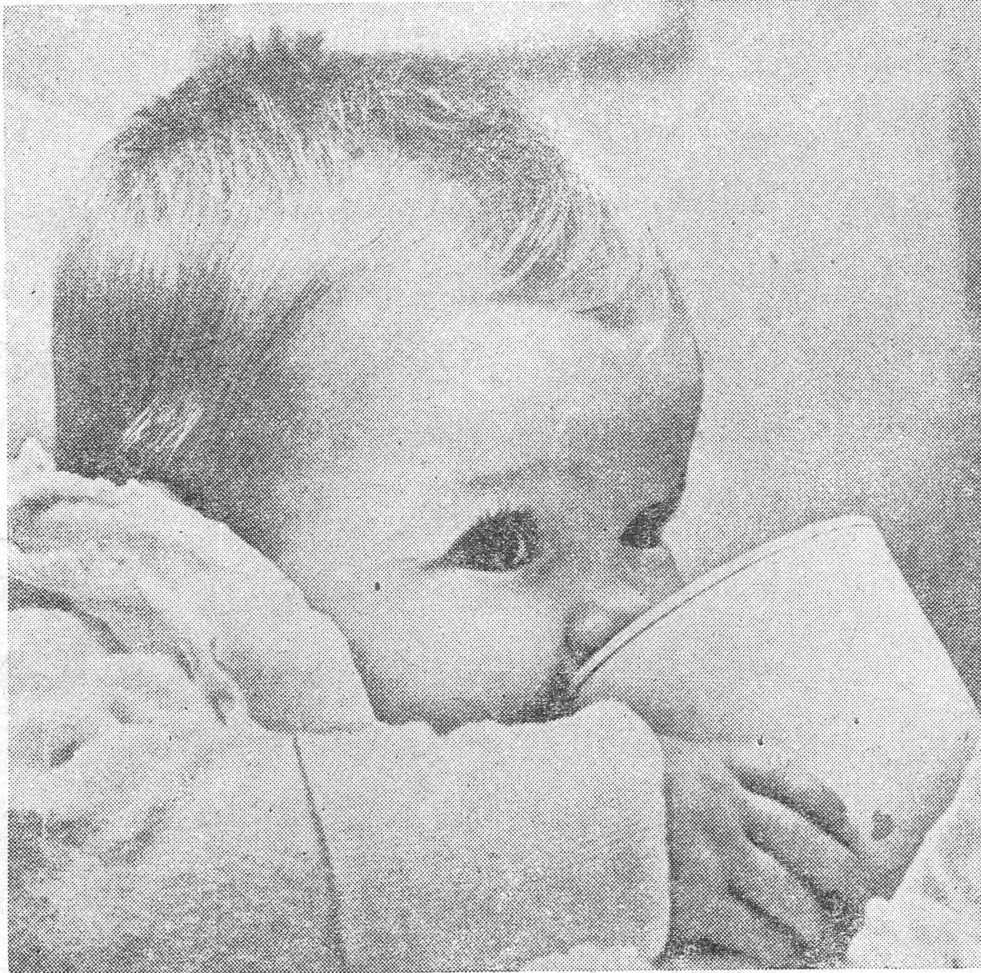
The situations that sweep over the psyche of the grown person do not pass through the child, for the horizon of his thinking is very limited indeed. He is comfortable and pleased when he has eaten his fill and slept, and his misery and resentment appear when he is hungry or in pain. The child may link the touch of his mother's fingertips and her face, on the one hand, with his meals on the other; so if he sees the face and feels the caress of the fingertips and then fails to obtain his food, he suffers and despairs, and expresses it in screaming and weeping. If we look for other causes we find many of them: he may rage when he throws away a toy he was playing with, and his smile returns when it is given back; or he may see his mother's face and smile, then the face disappears and he feels alone and cries for help! From all this we conclude that his screaming came as a result of his inability to obtain what he wants...
The researcher goes on to say that every family has various methods it follows in raising its children, but there are general rules of education which educators would do well to follow. Then she draws our attention to understanding the situation, so that we do not judge the child a failure merely for a fit