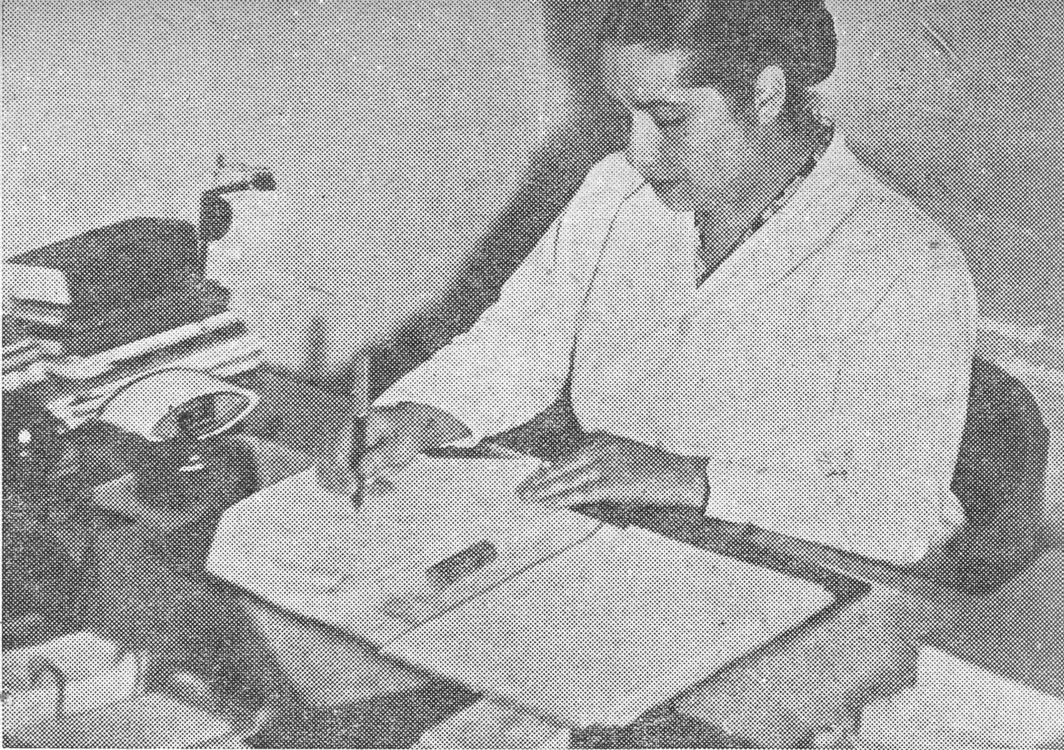
Dr. Jamal Karam Harfush at her desk

Dr. Jamal Karam Harfush speaking to the correspondent of The Woman's Voice
Dr. Jamal Karam Harfush graduated from the American University of Beirut, and in America she specialized in children; now, in addition to the work of her private clinic, she is a professor in the department of pediatrics at the American University.
From the moment she stepped into working life, Dr. Jamal has shone — shone as a physician endowed with lofty qualities that fit her for distinction in this humane field, and shone as a worker for public causes. The leap of 1943 was the first serious test, which she passed with the boldness of sincere patriotism, and her voice was in the forefront of the voices raised to affirm the standing of the Lebanese woman — and out of that storm broke the founding of the Lebanese Women's League. The young physician, with her companions in the struggle, is still at work raising up two institutions through every stage of their growth; the duties of her profession have never for a day kept her from rendering distinguished services, whether to the Kindergarten or to The Woman's Voice —
Outside Lebanon, too, Dr. Jamal shone, the day Lebanon appointed her adviser to its delegation to the United Nations on health and social questions. She now presides over the Lebanese Child Welfare Union, which will soon open a center for the care of crippled or physically disabled children — the first institution of its kind in this country.
Her personality has, besides, many sides of social activity which, if they prove anything, prove woman's vitality and her capacity for fruitful production and tender giving...
Here she gives, in what follows, a medical talk to the correspondent of The Woman's Voice, for which we thank her... — The Editors —
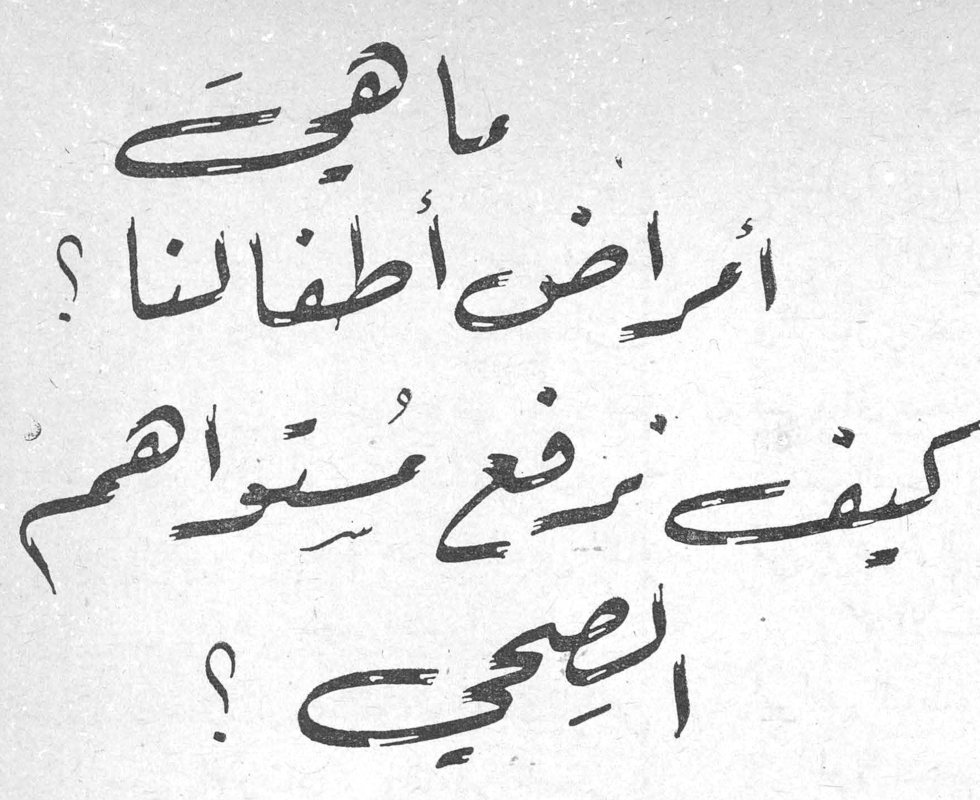
1 — Why did you choose the branch of pediatrics?
First — because work in this field harmonizes greatly with woman's nature and inclinations. The child needs affection in both health and sickness, and he draws it first and foremost from his mother's tenderness; the affectionate mother
is distinguished by her ability to give her child an ideal upbringing. Yet the child also needs the affection of the doctor and the nurse, above all in sickness, for affection creates in him a feeling of security which makes it easier for him to keep growing steadily and to recover quickly.
The
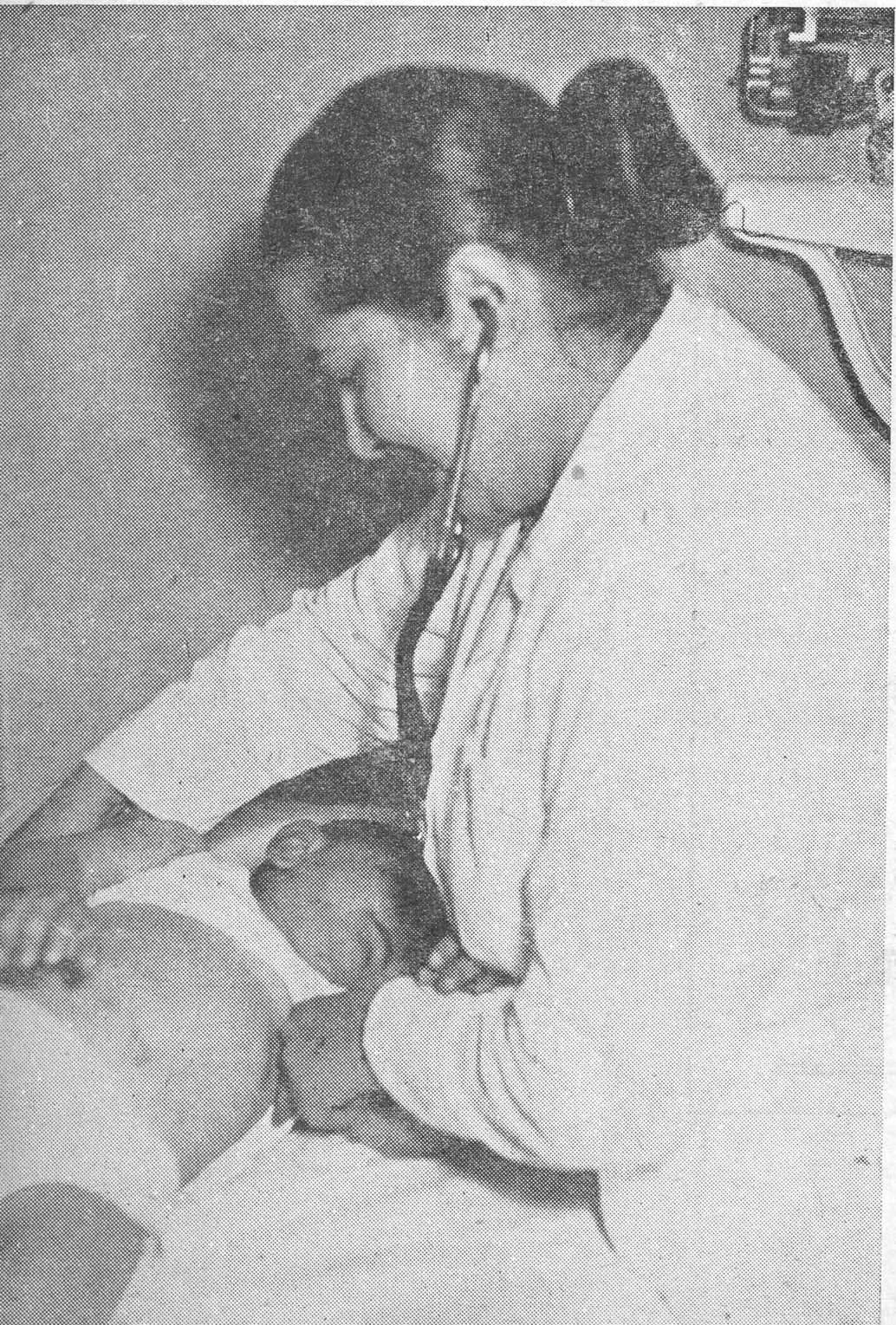
She plays with the sick child during his examination so that he will feel at ease with her!