



In our air these days are the stirrings of activity and momentum. It is the harvest season, in which our children reap the yield of their labors — tens of thousands of them toiling, jostling, and contending — all in pursuit of a single goal: success!
The schools are seething beehives, amid drudgery, agitation, and dread.
And in the streets, faces upon faces pass you in haste, in the early morning and at dusk — some somber and tearful, some jubilant and dancing!
Slow your step, my reader, and lend a moment's attention.
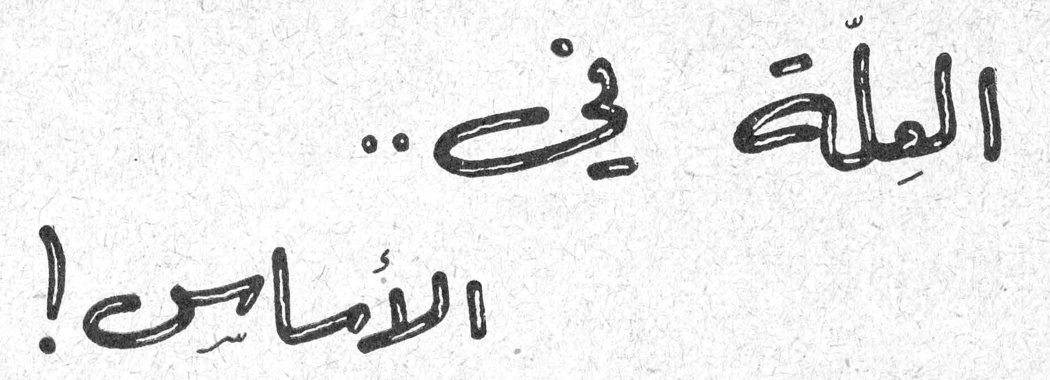
We talk — and how much we talk — chewing over the same words in criticism of the existing educational system; how like the people of the Tower of Babel we are! I have never met a friend and found her satisfied with her children's school. We are all vexed and grumbling, and we all show our cleverness in devising solutions, while some are carried off by enthusiasm and pour themselves out upon partial questions, overlooking the fundamental problems of instruction — I mean the problem of the teacher: his training and his fair treatment; the problem of the curriculum: its direction and its unification; and the problem of the textbook: its writing or its revision.
Poor baccalaureate student! His knees knock and his hand is on his heart the morning he steps into the examination hall! What if last year's tragedy were repeated, and the majority failed, and none passed but a tiny few?
What fault is it of the baccalaureate student if the Ministry of Education suddenly decides to raise the standard of instruction and to tighten the awarding of grades? And what fault is it of his, so long as he has followed his school's instructions and his teachers' counsels throughout his years of study, neither falling short nor ever being warned of any negligence?
This questioning brings us to a logical conclusion — namely, that the root of the malady, did we but know it, lies in the foundation, and that the attention of the responsible officials at the Ministry of Education must turn deliberately to this foundation, setting to work on the fundamental problems in which our educational apparatus sways without respite.
We have no right to expect from secondary-school students results of a high standard unless we hasten to pluck them, at an early stage, from the whirlpool that closes over them — a whirlpool in which they cannot escape drowning, nor steer their vessels to a safe shore.

