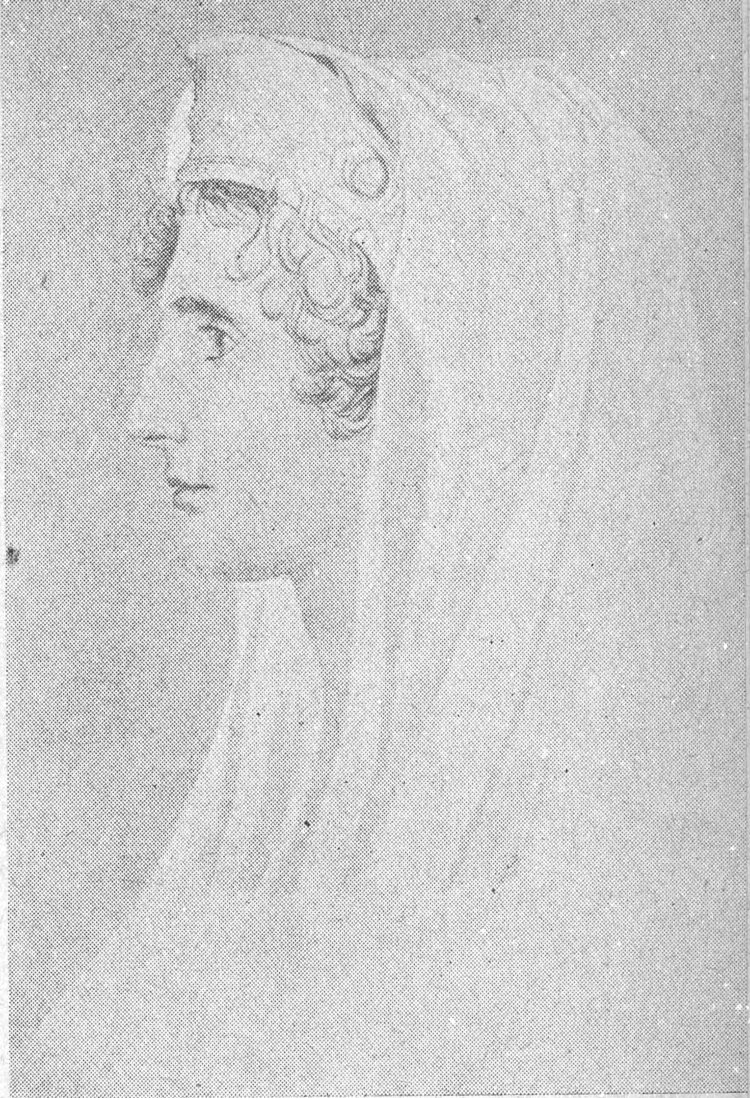
Lady Hester Lucy Stanhope
We were casting our gaze toward the west, having climbed a knoll on which stands "Deir al-Mukhalles," and it falls upon a view that a person sees only in Lebanon or in color films.
And the young monk, who had begun pointing with his finger to a certain knoll over there, said: on "Dahr al-Sitt" you will find her grave.. and in this grave the legend lies at rest.
And we looked out, feasting our eyes on the sight of the hills, each one climbing into the lap of another, all of them wrapped in a green spread down to the edge of the blue sea that fills their air with whisperings.
What manner of poetess was this, who chose to die in a place like this??
The monk-father let his gaze wander a little, then said: "I do not know much about her — neither I nor the other young fathers. You may ask the elderly among us; as for me, I have known her only through some of the books that treat of the modern history of Syria."
We were carrying one of these books, and we turned back to
it whenever we wished to ponder some side of this woman's life.
Did I tell you that she was a woman??
Yes — an Englishwoman, whose infatuation with the East drove her to live in it and to die a legend that the villagers speak of in the tales they tell their children, and to which the books point as one of the few adventuresses the eighteenth century knew.
We left the hospitable monastery and drove down a little in the car; then we stopped at a certain point and left the car behind.
And on an unpaved side road, along whose two sides bramble and za'tar and wild flowers tangle, we set about climbing the hill the villagers call "Dahr al-Sitt."
And "the Sitt" was none other than this Lady Hester Lucy Stanhope, about whom we had come to gather up the tales.
Our companion the monk said: She was not one of those women who love life soft and easy; she built her house at the very top of this hill,
and she used to ride a horse going up and coming down.
We said nothing as we stood to gather our breath, and we arrived after half an hour, having met on our way only a little shepherd girl, who came forward to kiss the young monk's hand; he smiled at her and gave her a small icon of the Virgin, which she pressed to her breast with thanks.
And we stood before the remains of a palace, surrounded by a large abandoned garden.
The monk said: here is her house.
And we began to look about us, trying to find something that spoke with the air of the legend — but our expectation was disappointed by the lowing of a cow tied to the wall, faced at the other wall by an ancient donkey.
We called out, in case someone should come out to us, for we had been told that a farming family lived in the place.
An old woman came out to us, her face furrowed like freshly plowed earth; she came toward us, taken
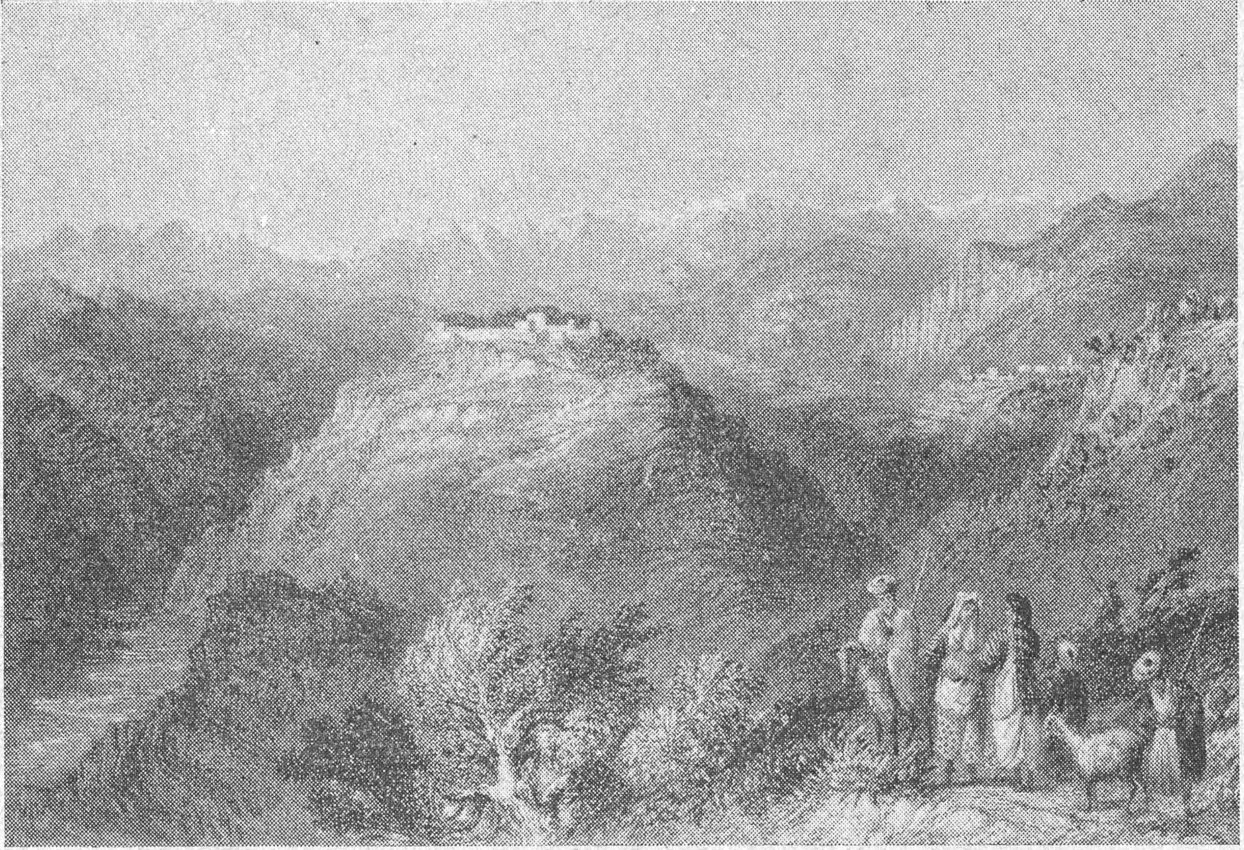
Lady Stanhope's palace near Joun