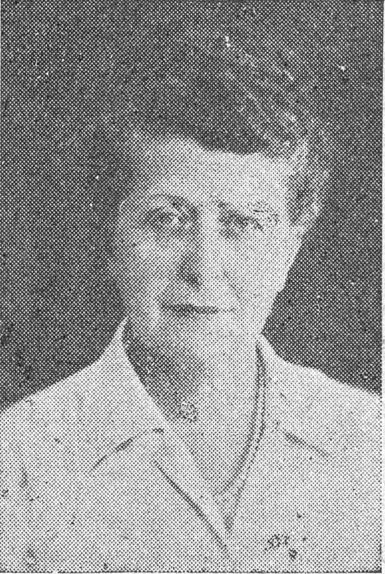
The "Committee for Honoring Women Writers" crowned its activity for this year with a memorial celebration for the writer Salma Sayegh, at which the man of letters Mr. Edouard Honein presented a study of the departed writer, which the two covers of a book will soon enclose, together with selections from Salma Sayegh's writing and excerpts from what has been said of her.
"The committee's aim in producing the book is to prepare material fit to serve as a superior reference for students of literature ..." "And after the appearance of the Salma Sayegh book, the committee will turn its attention to honoring other women writers, such as May and Julia Dimashqiyah and others."
So announced the master of ceremonies, Mr. Fouad Ephrem al-Boustani, president of the Lebanese University and a member of the committee ..
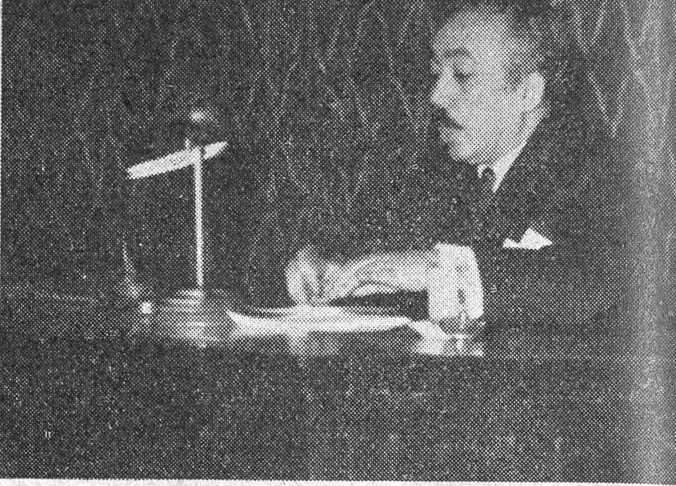
What follows is a glimpse of the felicitous lecture which Mr. Edouard Honein delivered in his engaging style on the evening of the seventh of June, in the hall of the Ministry of Education, before a large gathering of the elite and of the appreciators of Salma Sayegh's writing — from the pen of Mr. Hares Farhat.
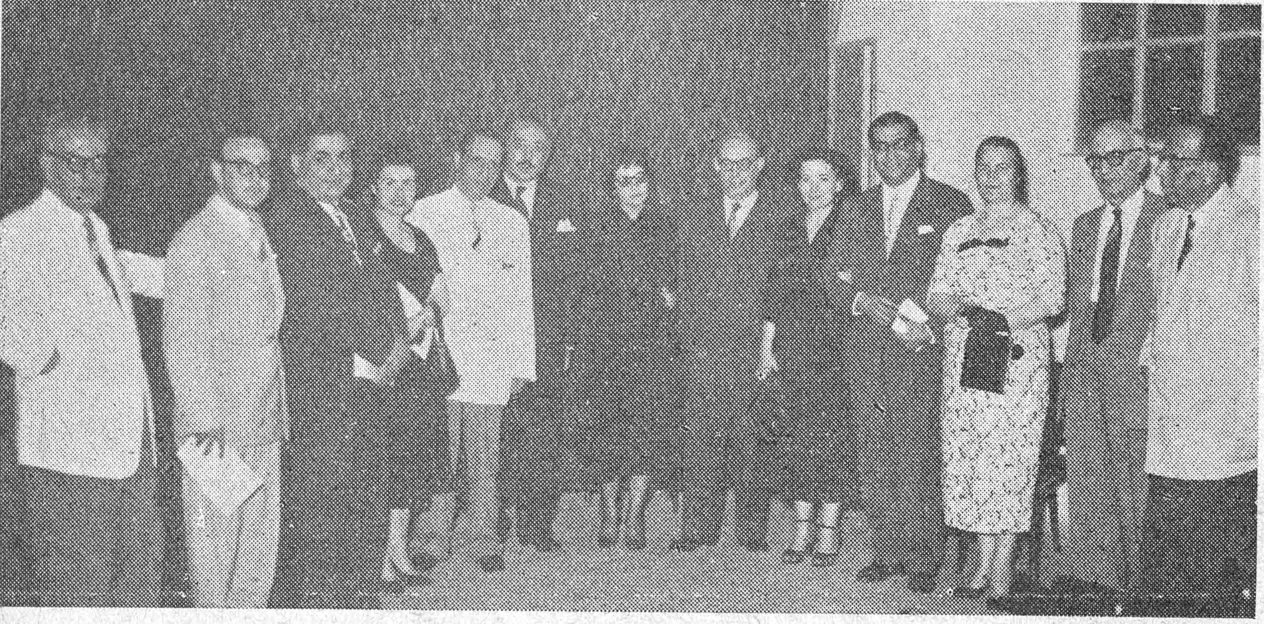
In the center, Salma Sayegh's only daughter, Mrs. Aida Labaki: on her right the lecturer Edouard Honein, then her husband Salah Labaki, then three members of the "Committee for Honoring Women Writers": Loreen Rihani, Musa Sulayman, and Jamil Jabr, then Youssef Ghossoub; and on her left Fouad Ephrem al-Boustani and Edvick Jureidini Shayboub of the committee, then the poet Chafic Maalouf, then Mrs. Zahia Salman, president of the committee, then the poet Georges Saydah, then Michel Abou Chahla
Salma the writer ... as mother and citizen
After a passing sketch of the writer's beginnings, her girlhood and youth, her failed marriage, and her bereavement in the little boy who died at the breast, the lecturer related in an engaging style the story of the motherhood that welled up from her depths and went on gushing forth all her life, cooling the blazing flame of its desert with that daughter who remained to her — to draw from her heart all its love and tenderness; she vowed her life to raising her, educating her, making her happy, and paving the road before her — and she was not content with herself alone, but turned to all the other mothers to show them their important role in the rise of nations —
And then we find ourselves before Salma the citizen, strong of voice — penning articles and composing forceful lectures brimming with patriotism and nationalism. She calls for the education of girls and the building up of the country, and for holding sacred everything that belongs to the homeland; for she stands for a Lebanese nationalism and a Lebanese nation, demanding independence and sovereignty and the safeguarding of the rights of man.
•
Then Salma the writer appears with the first rank of the men of letters who rose in revolt against the conventions.
Her literature is the literature of the article, written and read every day: a nervous, graceful phrase, tightly cadenced, musical in rhythm, its words well broken in. And in all that she wrote there is not one discordant note.
She was not the founder of a school of philosophical thought; she was self-made, and her style is cut from her own particular stamp ... She created a living literature that goes on being read for its own sake, because it is an embodiment of the elements of life, and in its expression it passed beyond the aims of dictionary words ... Her literature is an intimate blend of thought and feeling and a