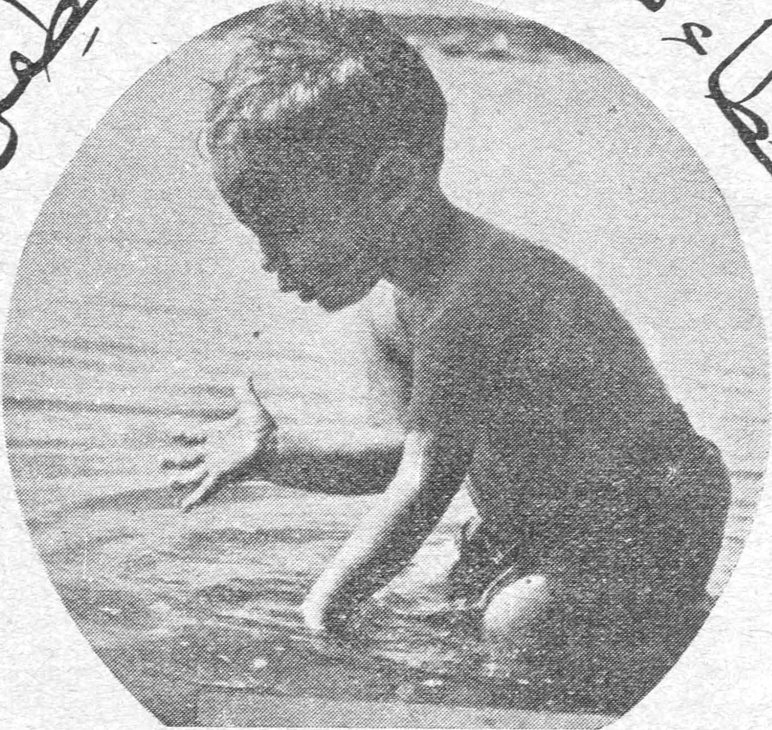
The home environment has the greatest effect in forming the child's personality. And since at the outset of his life he is easily influenced and open to molding, more than at any later stage, he is affected by everything around him — things or persons, every sight his eye falls upon, every word he hears, every emotion stirred in him. Parents may imagine that the incidents that befall him, or the circumstances that surround him, are outwardly trivial and of no account, and may not affect the little one's inner life; but their repetition day after day gives them the
greatest effect in the forming of his character.
The child is like a mirror: he reflects every movement he sees, and repeats every word he hears from those among whom he lives. And the mother is held the first person responsible for every crookedness that appears in the child's character, since it lies within her power to keep him away from the influences that corrupt his character, and to accustom him to praiseworthy qualities. Here, Madam, are
some examples of the common mistakes in child-rearing:
It may disturb you to hear your child utter words outside the bounds of good manners and sound upbringing; you are astonished at it — indeed you stand thunderstruck and bewildered before this disgraceful conduct. But wait: the matter is simpler than you imagined. If you listened to the talk of the servants and nursemaids to whom you leave the care of your child, you would trace by it the source of those expressions. The fault of repeating unseemly phrases is not the little one's fault; the responsibility rests on the shoulders of the one who rears him, for like a parrot he repeats what he hears without grasping any meaning in it.
It may grieve you, too, that the little one speaks to grown-ups without respect or politeness, not knowing how to say "thank you" or "please." And how do you expect all this, when you yourself do not address him in a like tone? If you wish, Madam, to plant in him the spirit of ideal good manners, so that he grows up tactful, well-bred, considerate of the feelings of others, let it begin from the very first years. Just as you want him to treat grown-ups, so treat him yourself, in the very same way. You will
soon be astonished at the brilliant results, for the child is quick at mimicry and loves to copy.
Have you not sat down one day at the table with your child beside you, and indicated to the servant, within the little one's sight, that this dish did not please you — because it was not well cooked, for instance? The very next day your child follows your example: you find him refusing a kind of food out of love of imitating and resembling you; you try to persuade him, and when he insists, your temper flares and you scold him. But would it not have been more
fitting not to make that remark of yours in front of him? Had you done so, you would have avoided the problem, and perhaps the little one would have set upon the food as usual, with willingness and appetite.
Do you send your child to bed and order the servant, within the little one's hearing, not to leave him alone in the dark? If that happens, the child will believe that the dark is a dreadful, frightening thing. And so the child grows up fearful, cowardly, timorous;
and what deepens the impression is what he may hear from the servants — lying tales and superstitions about demons and jinn, for instance. It is better, to avoid these results, to accustom the child to sleeping alone, by a faint, quiet light if he fears the dark; then his fears melt away, his illusions are scattered, and the habit of sleeping alone becomes for him a natural thing that stirs no anxiety and brings you no trouble.
A mother offers her child a tonic medicine — it may be delicious in taste and sweet in flavor — but the little one may refuse it on the plea that he does not relish medicine and has no wish at all to take it. The mother presses him, now with gentleness, now with severity; his obstinacy hardens and he persists in refusing. Had the mother shown no concern at his obstinacy, left him for a while, then come to him at a fitting moment and explained to him the benefits of that medicine and its effective part in his growth and vigor — besides its being delicious in taste — supporting her words by tasting the medicine within his sight, the matter would have been easy, and the little one would have taken the medicine with a willing heart and without any hesitation.