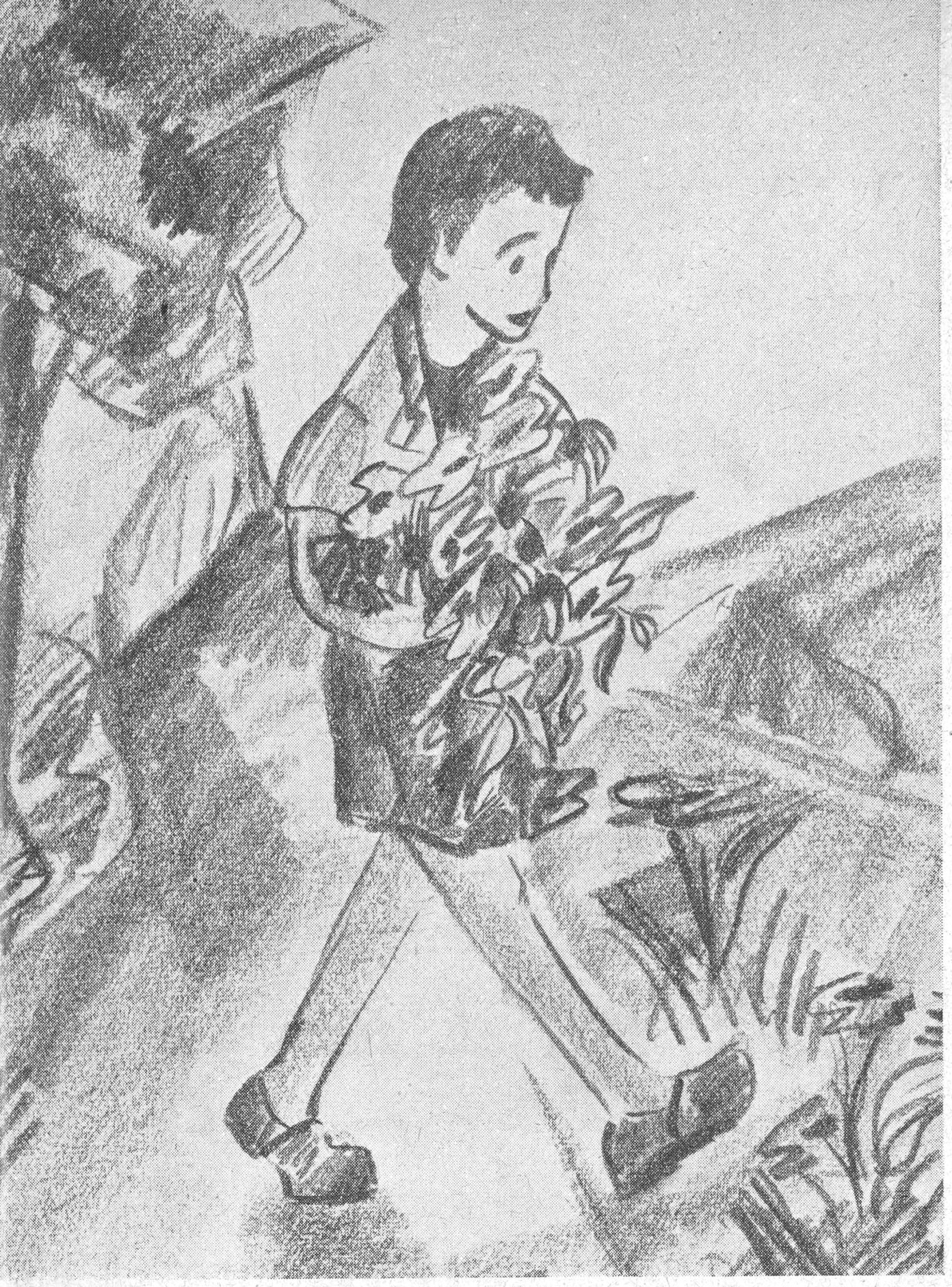
The boy's eyes gazed long at the man riding his horse on a high road, and he asked his sister: "Do you know, Caterina, that this horseman is traveling to the wondrous city?"
As for Caterina, she did not know what the wondrous city meant. It had reached her ears that there were many cities in the southern parts, and those, in the village girl's eyes, were large — but she did not believe them wondrous.
So she asked her brother Tiziano: "What is the name of that wondrous city?"
He answered in astonishment: "Do you not know that it is Venice, sister?"
The name of the city meant nothing to Caterina. And though she was older than her brother, she was no dreamer like him. All she knew was that frightening things happen in cities — people there perish of hunger. In the mountains, on the other hand, food is plentiful, though the people are not rich. So she said to her brother: "I do not know why you call Venice a wondrous city. Have you grown weary of living here?"
He answered: "No, sister. But painters live in cities. And if circumstances allow me to study
under Bellini, the famous painter, I shall paint certain pictures that I burn with longing to set down." And since Caterina was a simple girl, she imagined that if a person had something to eat and drink, he ought to be content with his lot. So she answered him reproachfully: "You are forever repeating talk of painting in my ears and seeing things that no one sees but you — so much so that the villagers have begun to whisper that if you do not stop your fancies you will never become a useful man; and that is why your father wants to send you to his friend the cob
bler, to learn his trade. There are many trades in the world besides picture-making and drawing!"
Tiziano shook his head and did not answer. He would spend whole nights thinking of a way to persuade his father to let him study painting. And a rumor had gone about the village that Tiziano was drawing mountains and valleys and other things on boards of wood or on stones — the village priest would praise him for drawing them — yet he could not make his critics understand that drawing in different colors has an