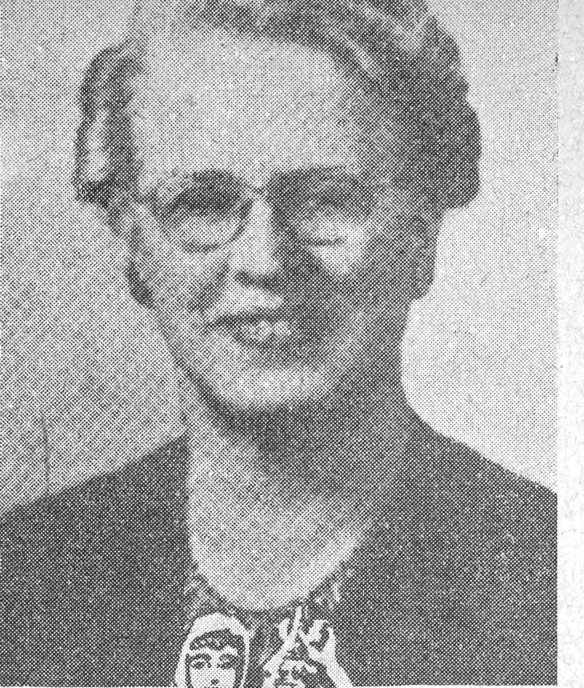


Miss Catherine Cleveland visited Beirut as an adviser for the household management branch of the American Point Four. Her aim was to diversify Lebanese handicrafts in color and form so that foreign tastes would find them agreeable, and thus to arrange a market for them there.
In the two years she spent among us this lady worked
at getting to know the Lebanese villages, observing their handicrafts, and then buying samples of them. The Lebanese artist Mrs. Salwa Rawda Shoucair assisted and accompanied her. The artist would modify a design or give it a special Lebanese character, whether in ceramic work, straw, crochet, leather, or the like. She assembled an attractive artistic collection of samples, photographs of which were sent to merchants, especially in the United States. Miss Cleveland wished to establish a cooperative in Beirut where these works could be displayed, but she was unable to obtain the necessary appropriations. Her term, moreover, came to an end, and she was obliged to return to her country. We knew Miss Cleveland in Beirut at the many receptions she gave in honor of Arab or American visitors: an attractive personality, gracious and tactful, a polished conversationalist, and the tallest lady in Beirut without exception. A graduate of the University of Wisconsin and of
the New York teachers' college with the degree of M.A., she worked long in the field of household management and headed the New York Institute of Household Management. A traveler who tells you with the utmost relish of what she saw in Puerto Rico, Canada, the Scandinavian countries, and the East. She became acquainted with Arab customs and they impressed her; she listened intently to our national sorrows and took them to heart; and with an open heart she accepted our complaints of her nation's sympathy for Israel, and she saw the weak points in American policy, saying, as says every American who truly knows us: "What you need is publicity. The American people does not understand the truth of the question. Your cause is a just cause."
And so last October Catherine Cleveland — accompanied by Miss Smith, who was hardly less than she in her love for Lebanon — departed, weeping at parting from Lebanon and the many friends whom she loved and who loved her, promising to love Lebanon forever. Do you know, my dear reader, what this lady is doing today for the sake of Lebanon? She lived in it only two years, and in that time she made friends with a choice company of Lebanese who neither flattered her nor drowned her in perfumed praise of her nation and its abundant favors toward us, nor in shameful confessions of the Arab nation's poverty and the superiority of others over it; rather they were truthful with her and showed her the reasons behind things..
Today this lady is touring the United States with her samples of Lebanese life in particular and of Eastern Arab life in general, volunteering to deliver speeches in clubs and universities and in every place to which she is invited, her subject being: "Get to Know Your Neighbors in the Middle East."
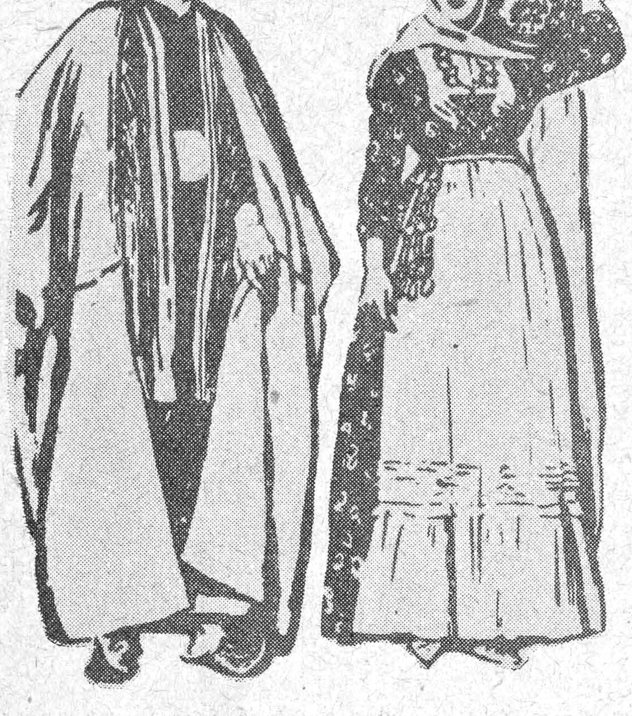
She brings a group of young women and young men, dresses them in the national costumes, and presents them to the audience; then she speaks of family life and gives the justifications for the existence of the various customs. She shows them how our weddings are held in the village, how our coffee is prepared, how the village child sleeps in his old-fashioned cradle, and with her talk she prunes away the tendentious pictures and propaganda that the American sees or hears from time to time. She speaks with enthusiasm of our Eastern hospitality, our generosity, and our merry hearts, open to brotherhood and love, because she by her nature feels this same feeling and delights in generosity of every kind. Often she invites her friends to a dinner at which purely Lebanese dishes are served.