Music: Giuseppe Verdi (1813–1901) Arabic rendering: Samir Shikhani
An opera in four acts, adapted from Victor Hugo's play "The King Amuses Himself." It was first produced in Venice in 1851.
The Characters: • The Duke of Mantua • Rigoletto: the court jester • Gilda: Rigoletto's daughter • Sparafucile: a professional assassin • Maddalena: his sister • Borsa • Count Monterone • Count Ceprano • Countess Ceprano Members of the court council • Giovanna: Gilda's governess • Courtiers, men and women; servants
The Time: the sixteenth century. The Place: the town of Mantua, in Italy.
Act One
The Scene: the ballroom in the Duke's palace.
The dancers, men and women, sway to the strains of the music in the spacious, sumptuous ballroom of the palace of the Duke, ruler of the province. The Duke leans toward one of his courtiers — Borsa — and speaks to him of the beauty of the women present in the song "Amid the Merry Throng," whereby all know him for a merry trifler, a deceiver and a swaggerer.
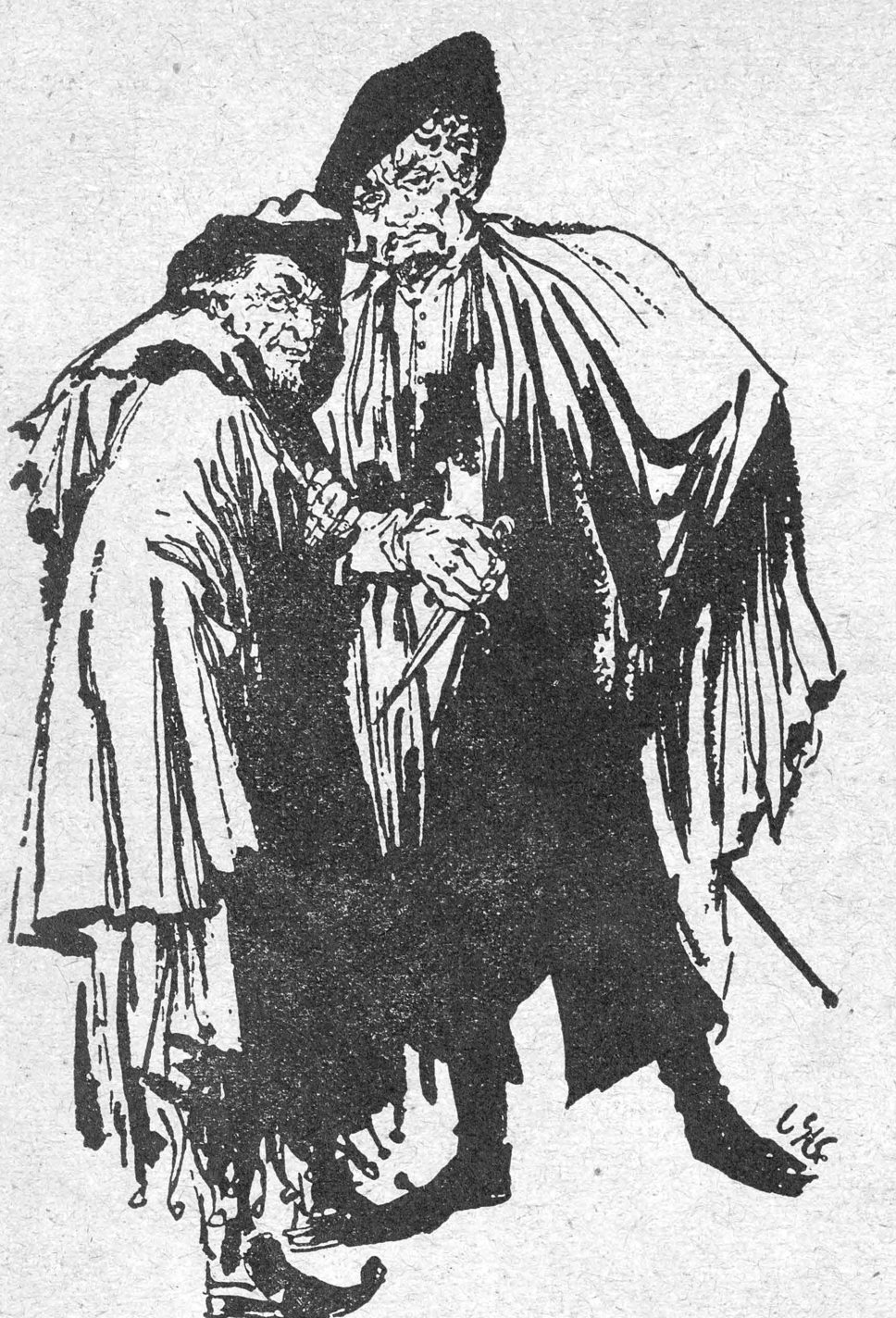
He joins the circle of the dance and dances with Countess Ceprano, flirting with her within the hearing and sight of her jealous husband the Count, who stands with folded hands, seething with rage. Rigoletto, the hunchbacked court jester, seizes the opportunity to mock the Count, the husband, with biting, cunning mockery, thinking thereby to please the Duke and win his favor. Nor was that the first time Rigoletto had behaved in such a fashion — which moves the men of the court to threaten him with revenge. But he laughs at them, believing himself safe under the protection of the powerful, far-reaching Duke.
The dancing begins anew, and suddenly there appears Count Monterone, a gray-haired, dignified nobleman, who accuses the Duke of misconduct toward his daughter and rebukes him; whereupon the jester steps forward to answer for his master with his usual mockery and derision. But Monterone is unlike
the rest of his fellows: he turns to his adversary the Duke and calls down a curse upon him and upon his jester. The Duke, with steady nerves, orders the old Count arrested, but Rigoletto begs him to withdraw
his curse. The Count, however, repeats the curse with force and violence as he walks between his captors. Rigoletto trembles in terror and falls to the ground...
Act Two
The Scene: outside Rigoletto's house.
The stage is divided in two by the wall of