A glance at history: Indian culture is five thousand years old, teeming with contradictions and marvels. Years of inquiry and exploration are not enough for one who wishes to speak with truth and fidelity of that immense continent. How, do you suppose, can twenty days suffice for making the acquaintance of 364 million souls, fifty thousand towns, 370 languages and dialects, and two thousand varied sects? And of seventy religions, and contradictions and conditions at the sight of which one passes from the reasonable to the unreasonable!
Every town has its distinction: What shall I tell you of the towns of India? Every town has its special distinction, its history, its civilization, and its tradition. Agra is the city of the famous "Taj Mahal"; Ajmer, with near it Lake Pushkar, the holiest lake in India; Amritsar of the golden temple; Benares — the holy city to which the Hindus go on pilgrimage to seek blessing in the water of its sacred river (the Ganges); Elephanta with its museums and antiquities; the Kangra valley with its bewitching views; Kashmir — the tourists' paradise; the Kumaon mountains (part of the Himalaya) — the hunters' paradise; Madras with its great conservatory of music; Mysore, the city of lights; and so on...
Woman: To speak of the Indian woman is a pleasure that delights readers — and how much has been written on this subject, and how much has been spun and twisted! The plain truth, without equivocation, is that the Indian woman is open to the world, and emancipated to a far degree; she wants to learn, to complete her personality and to serve her country. Her gravity, her jealousy for her dignity, and her patriotism captivate you, and you bow your head in respect... I said that the Indian woman has completed her personality and trodden underfoot what is defunct in the harsh traditions: she is no longer, for example, burned alive upon her husband's corpse, as was her lot in times past, when the widow's fate was either burning, or contempt and casting out, on the ground that she was possessed by evil
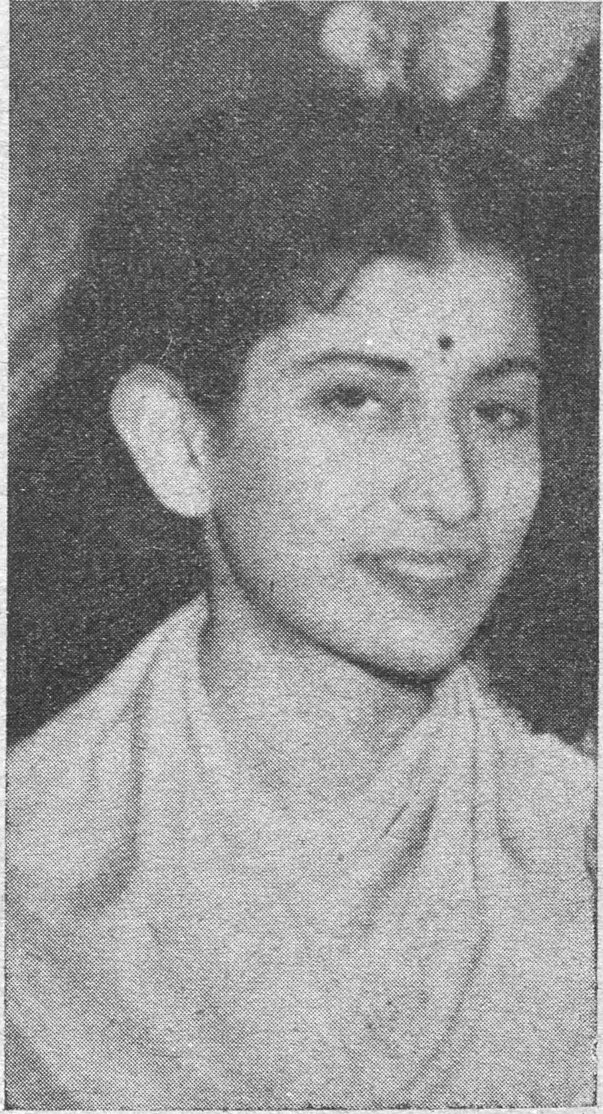
spirits! The Indian woman today performs the very tasks of the man: she is in the administrative posts of government, in the banks and the companies, and in every field of work — and she has given proof of competence and of good management, and has won the man's esteem. She exercises her full political right and has her women representatives in Parliament.
This does not deny the existence of a class of conservative women who keep aiming their attacks and accusations at the emancipated party, so that they pelt one another with words in the pages of the newspapers — to no profit whatever! And there is an ancient nobility in the character of the Indian woman: she keeps certain of her national traditions, and for the sari, her beloved dress, she will accept no substitute.
In this age India has brought forth literary personalities among its women, among them: Lila Fani, whom in India they call Madame Curie; Rani Yafani, who has left immortal poetry; and Mira Yani, the poetess and writer of far-flung fame. It is told that a European man, commenting on the poetry of Mira Yani while under its spell, said: "The gold of the whole world does not equal the heart of a woman who loves you under the blue sky of the Punjab!"
The sacred cow: There is one sight that catches the stranger's eye in India: the people's love for animals and the forbidding of their killing — above all the cow, which in their eyes is sacred, because she provides them with so many of the means of livelihood; and so they leave her to roam and frolic as she pleases.
Among India's boasts is the "milk colony," which the Governor of Bombay invited us to visit. It is a garden full of flowers, with well-ordered roads, its area equal to half the area of Beirut, in which 17,000 cows live a healthy, ordered life; and in it are modern factories for sterilizing milk by the newest methods and distributing it in tightly sealed bottles...
And what more of the land of India?
Talk of her is delightful and long and has no end — so let me stop, then, before boredom steals in upon the readers!!
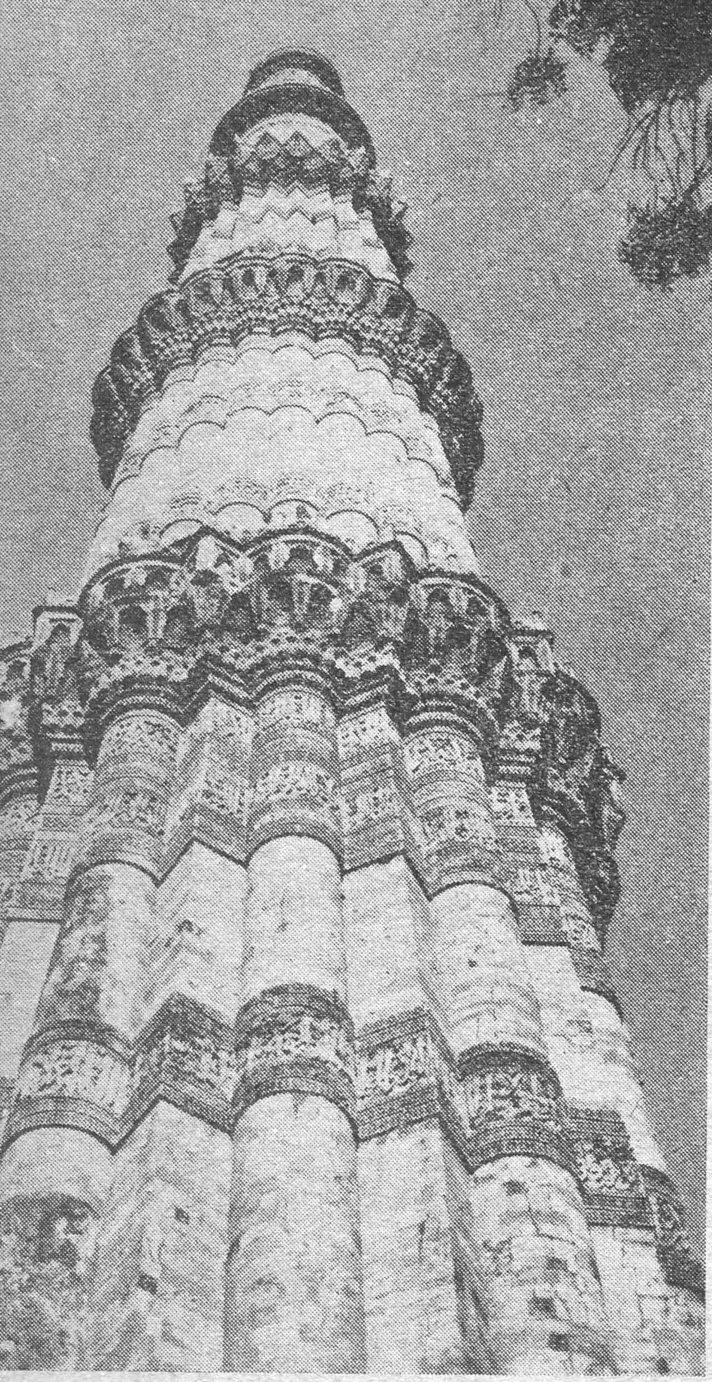
A minaret of magnificent workmanship in one of the mosques
Miss Yadi, one of the highest-ranking women officials in the Indian government at New Delhi