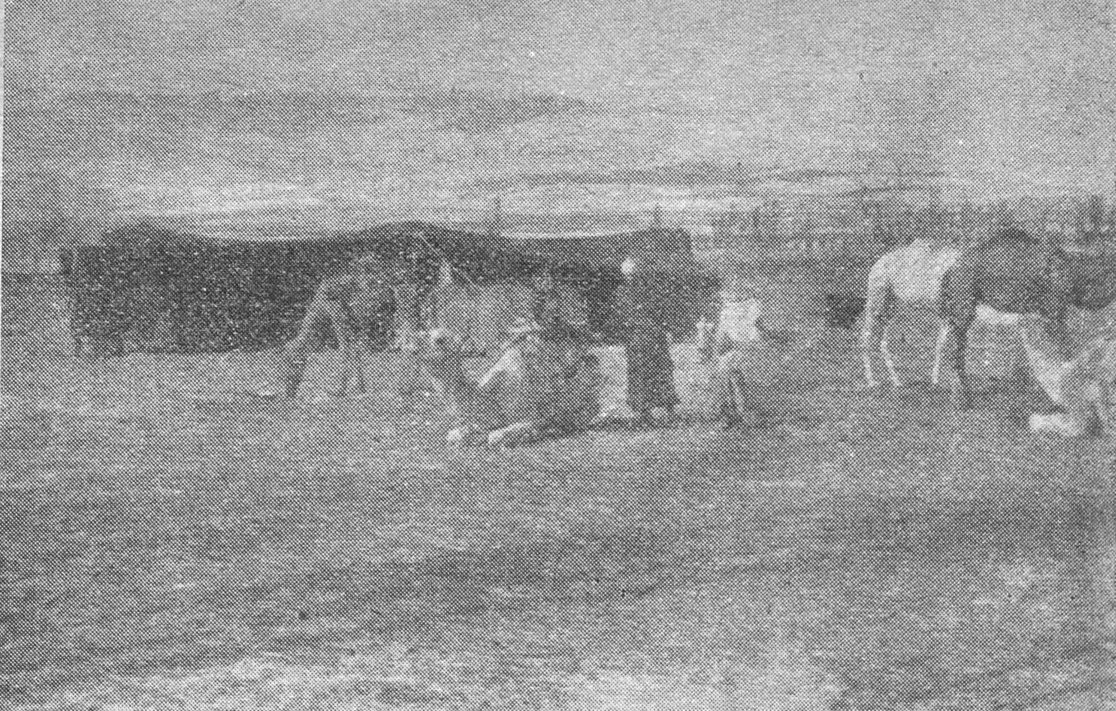
The tent of hair, and the camels...
sweet to me, saying:
"I put a little dibs (carob dibs) in the vessel and stir it with some water, and when it boils I put the flour over it and boil it a little until it is done; then I take it off the fire, and when it has cooled I make little twists of it with my hand, and the children devour them with appetite."
My luck was great, for Umm Rashed was with child, and in her ninth month, and I was watching for the day her time of delivery should come, to see with my own eyes how these Bedouin women manage without doctor or helper. Like other city dwellers, I had heard the many stories of the Bedouin woman who gave birth in the field while she was gathering firewood, then picked up her child and rose without helper or aid.
And the awaited day came, and nature had no pity on poor Umm Rashed: it sent her rain and wind and cold. It was a harsh night.
I entered the tent of hair, and there I stood before two Bedouin women, and between them Umm Rashed, covered by a thick quilt. One of the Bedouin women had taken hold of her arms, and the second sat by her feet, awaiting the newborn. And I wondered greatly, for I heard no sound or sigh from her who lay under the quilt!
The hearth burned near them to give a little warmth and light, and there was a small oil lamp lit specially for the occasion.
It was nearly seven o'clock in the evening, and the children had not yet gone to sleep; they sat up waiting for the newborn, gathered around their mother in all solemnity. All this while Abu Rashed was away: he had set off in the morning with his camels, to return after two or three days.
Only a few hours passed before Umm Rashed was delivered of a new daughter — all without a cry or a moan rising from her! And the two Bedouin women did all that had to be done, helping each other in this "Bedouin midwifery." The girl was swaddled after her body had been rubbed with water and salt.
Umm Rashed kept to her bed for three days, and on the fourth day she rose as usual to do her duties by the family.
The custom among the Bedouins is that the newborn is given no name until the mother has risen from her bed; and so the girl remained without a name until the fourth day, and was named "Roza," to match the names of her two sisters, "Foza" and "Loz."
And Umm Rashed told me that some Bedouin women give birth while on the road: a few hours after the delivery they mount the camel and continue the journey.
And so these Bedouin tribes move from one spot to another, without restraints or law. When the winter season draws near, they journey to northern Syria, where pasture abounds for their camels and their sheep, and where the weather is warm and the rain moderate. And they are happy, caring nothing for our civilization and knowing little of it.
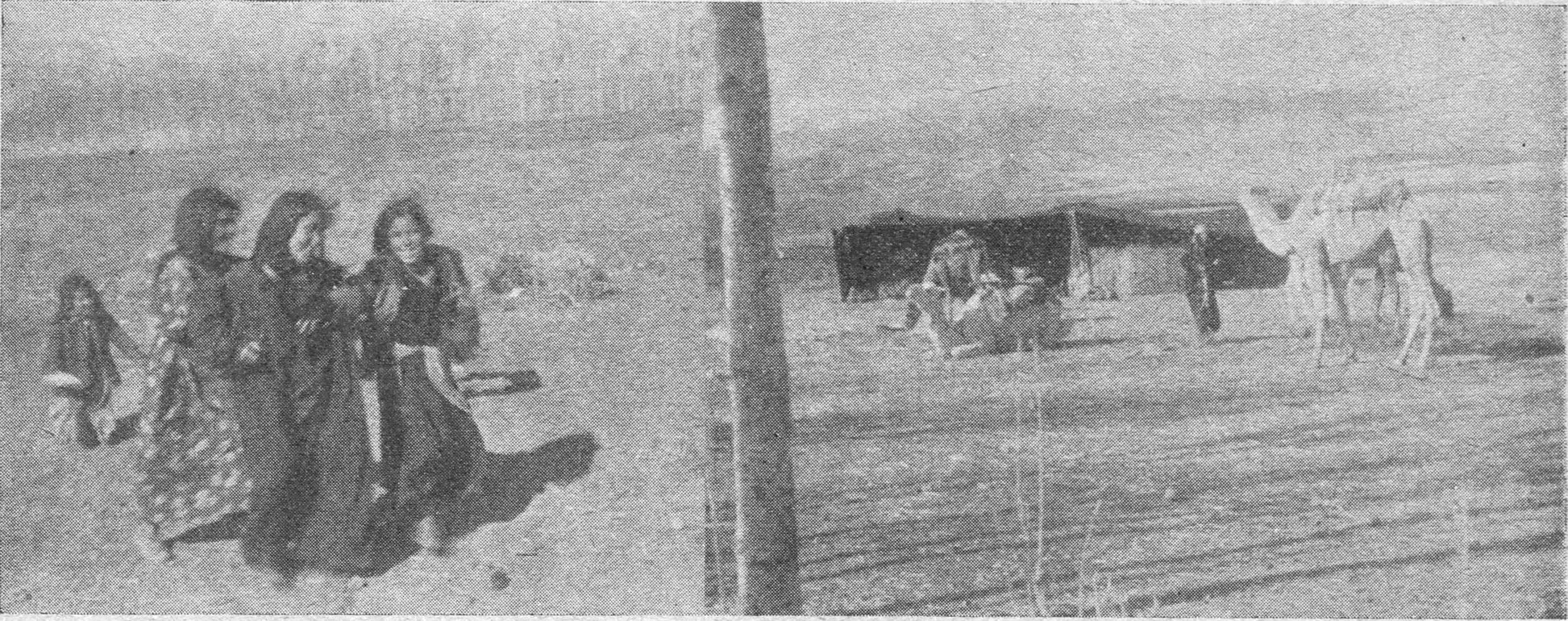
And the little Bedouin girls play their various games, like all little ones
Umm Rashed hurrying after her chores.