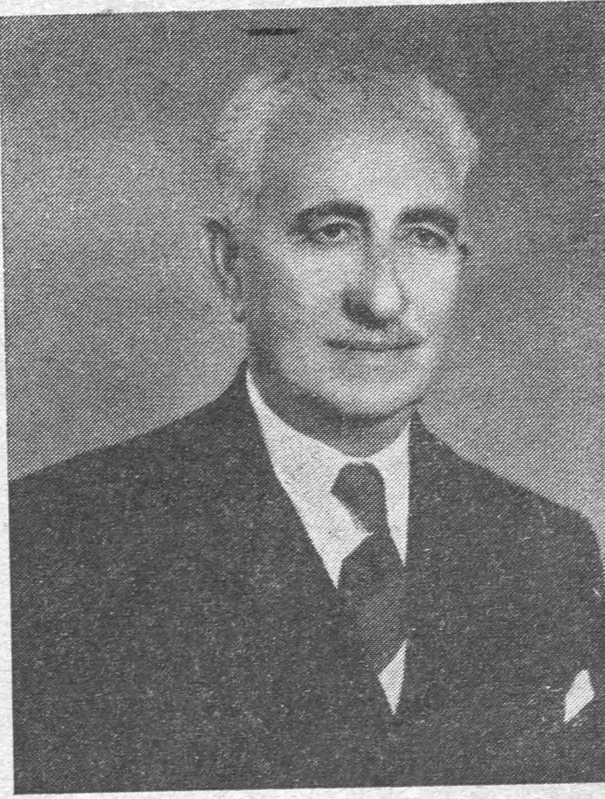
The essence of the valuable address delivered in West Hall at the American University of Beirut by the president of the “Society for Combating Prostitution,” Mr. Mohammad Jamil Beyhum. We present it to our readers as a contribution on our part to the advocacy of this important moral and health cause, which ravages our social fabric, tearing down in an hour what it builds in sixty...
The first to organize prostitution in Beirut in an official manner were the Turks, in 1890. The houses of vice began simply, confined to a single market where the Regent Hotel now stands; then they began to spread, which led the Turkish government to move them elsewhere, to where they now stand, behind the headquarters of the police department in Martyrs' Square (al-Burj).
Then the First World War broke out, and its effect on the world was severe from the moral standpoint, above all in Lebanon, because of the financial hardship that had it in its grip, not to mention the conscription of its men.
And when, after the war, the
country came under the Mandate and freedom was given to the people, especially to women, and everyone rushed after extreme Western principles — one consequence of this release was the spread of prostitution on a wider scale, which led the Mandatory power in 1931 to lay down a law for official prostitution, consistent in its organization with the laws in force in France.
In fact the Mandate reinforced the idea of maintaining houses of official prostitution throughout the Syrian interior, especially wherever soldiers were numerous, with a view to their recreation — but this action of theirs collided with the protests of the inhabitants, to which no heed was paid...
The protests of the Syrians reached the League of Nations in Geneva, and in the course of its discussion a memorable saying was recorded: “The interest of the soldiers is not the only one worthy of attention!”
The idea of combating prostitution spread, not only in the lands of Syria — coast and interior — but in Europe and America as well; many organizations were formed to this end; magazines were issued to set out this cause and publicize it, and some went so far as to dispatch their advocates to the countries of the world to preach their principles; and there began in the world an awareness directed against clandestine prostitution.
The first to work in this field among us, and effectively, was Mr. James Nicol, head of the Evangelical mission and founder of Beirut College for Women (the Junior College), who lately
returned to Beirut to be honored by that institution.
Mr. Nicol founded in Beirut the “Manara” (Lighthouse) association, which served as a point of departure for the fight against prostitution in general. The “Manara” association was careful to bring non-Evangelical religious bodies and certain national figures into the work.
The association's work was not confined to guidance and counsel; it took a practical form with the establishment of a headquarters for the association at the entrance to the public houses, and its members, men and women alike, would intercept the young men as they frequented those houses and offer them advice and warning; likewise they would approach the prostitutes as they went out for their medical inspection, striving to guide them aright and to help those who wished to repent and return to a decent life...
Certain national bodies hastened to join the ranks of the workers, among which we mention the Young Women's Christian Association, the General Arab Women's Union headed by Miss Ibtihaj Kaddoura, the Union of Islamic Youth (whose president is the giver of this address), the Committee of Working Women headed by Mrs. Adele Nakhou, the Committee for Raising the Moral Level headed by Mrs. Adelaide Rishani, and the Committee for the Protection of the Girl headed by Mrs. Laure Tabet, in addition to the White Slavery Committee. All these societies threw themselves into the fight against prostitution, each on its own, and vied with one another in petitioning the government to demand its abolition.
In the year 1933 these societies came together and held a large meeting, and it was resolved to form a society entrusted with