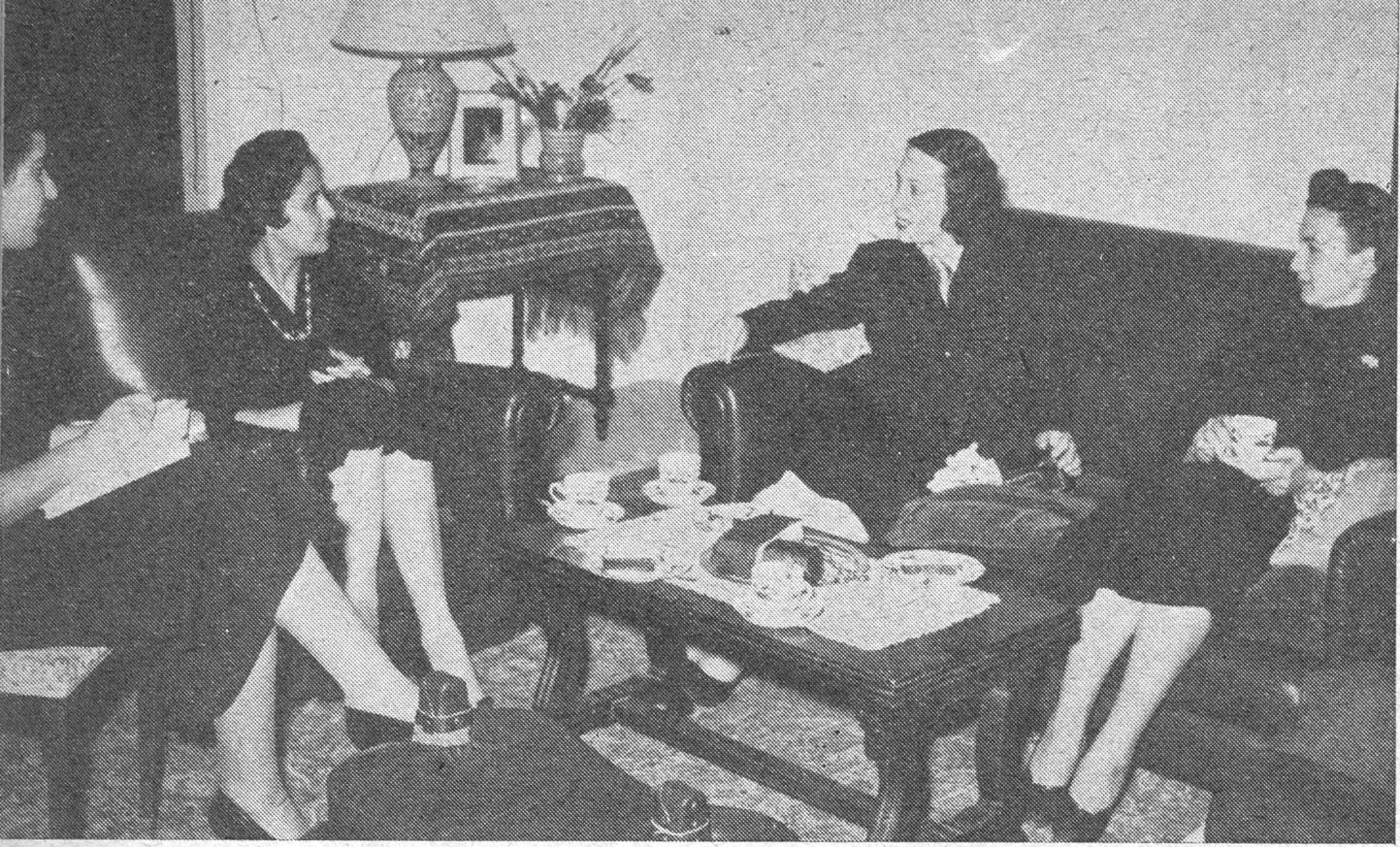
Sabiha defends the boarding school...
secrets which he meets at this stage. Either he finds the answers to his questions at home, or he finds them outside. And there lies the danger... for the ignorant friend may construe and explain the truth to him in a twisted fashion that harms him and deforms his view of life...”
Then Salwa asked the company's opinion of the cinema, which she considers the most dangerous means of spreading corruption in the life of the growing youngster. A committee should be formed to supervise films, setting a minimum age for attendance at films that deal with subjects which inflame the imagination and the sexual instincts.
Then Hassana agreed with her view, on the whole. “The cinema is useful in certain respects, above all the artistic, the scientific, and the musical. It is a means of general culture.”
“Yes,” Faiza agreed, “certain films must be kept from the young... And fortunately, in these last years new films have been shown that are useful and delightful, enjoyed by grown-ups and youngsters alike — such as
‘20,000 Leagues Under the Sea’ and ‘Seven Brides for Seven Brothers.’ Protecting the children is necessary, but it must be a positive protection — especially now that the cinema has become one of the strongest and best-loved amusements with them these days...”
As for Sabiha, she showed us a second solution to that problem. She said: “At this age the adolescent's vitality and energy are very strong and abundant... They must be spent in useful channels, other than the cinema, which
strengthen his personality and give it form... My two boys, for instance, spend their leisure hours at drawing and at scouting — with pleasure, delight, and profit!”
“But our children want to go to the cinema more than anything else,” Salwa broke in. “What is to be done, then? Shall we forbid them to go? Would that not create in them psychological complexes we ought to avoid!?”
“There is no need to forbid them the cinema,” Faiza returned. “Go with them from time to time, and make of the occasion a means of warning them against false understanding, and of showing your love for them by sharing in their lives!”
Salwa pursued her questioning: “The mother must be frank in matters of sex — so say the authorities on upbringing — and must explain those secrets to her children. But in truth I do not know how to open such a conversation with them in a natural, everyday way.”
Hassana interrupted her: “Here another use of the cinema appears. It makes it easy for us to open this subject in the manner we wish. Thus we acquaint our children with those facts (which appear distorted in most films) in an easy, scientific way.”
“The growing child sees in those scenes upon the screen,” Faiza reassured us, “only what his
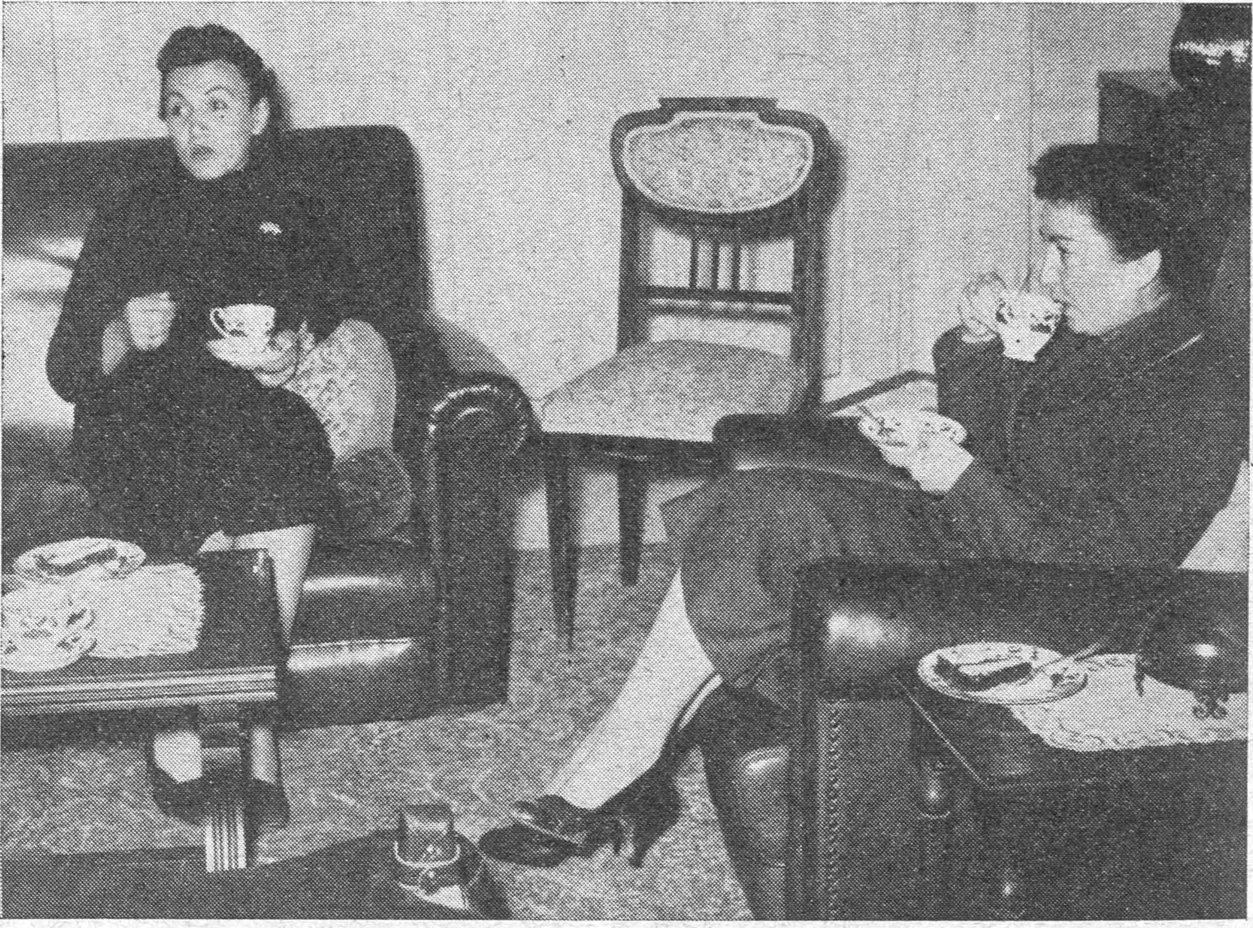
Hassana takes the side of Faiza, who holds that temptation is always present