
Those in charge of motion-picture production in the world, and in Hollywood in particular, find in history a fertile key for their output. Have we not ourselves seen some of these films — "The Robe," "Julius Caesar," "The Gladiators," and "Land of the Pharaohs"? The overwhelming majority of this production deals with the life of ancient Rome with all its luxury, its amusements, and its barbarous customs. The screen has presented it in an attractive mold, unconcerned with fidelity to the subject, and that for a reason the producers hold fundamental: the film's success in terms of material gain.
Yet this principle does not apply to every film. Our example of that is the film we are now concerned with. This great historical film, which ran in Beirut for four consecutive weeks owing to the great success it won with the public, is the film "The Siege of Troy," or the loves of the enchanting Queen Helen. It was entrusted to a director well known in cinema circles, Robert Wise. Wise held literally to the texts of history and made of this film a magnificent artistic masterpiece.
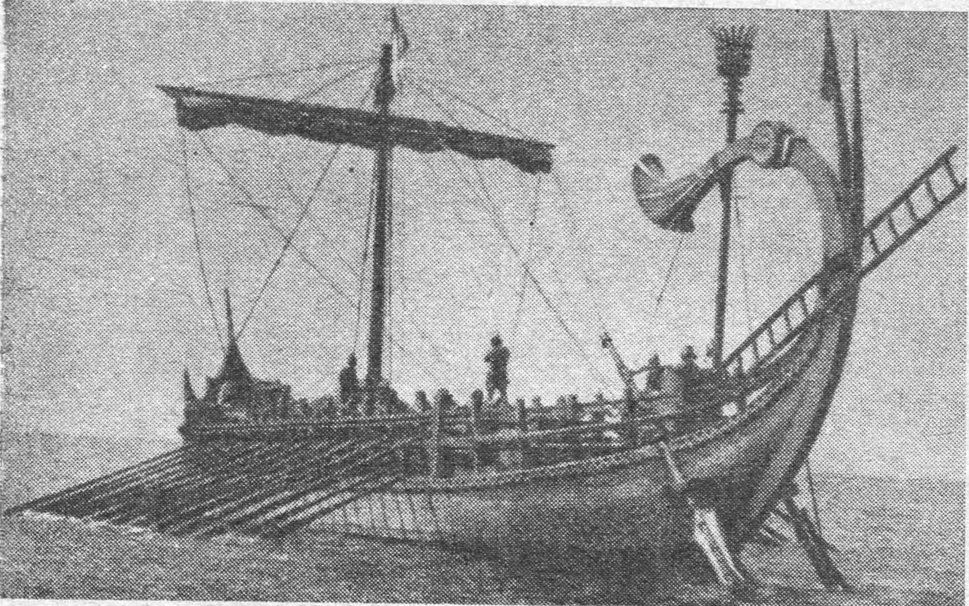
Toward Carthage the ship steers, and on its deck the lovers on whose account the war will break out!
Helen... for her sake, a thousand ships crossed the sea!