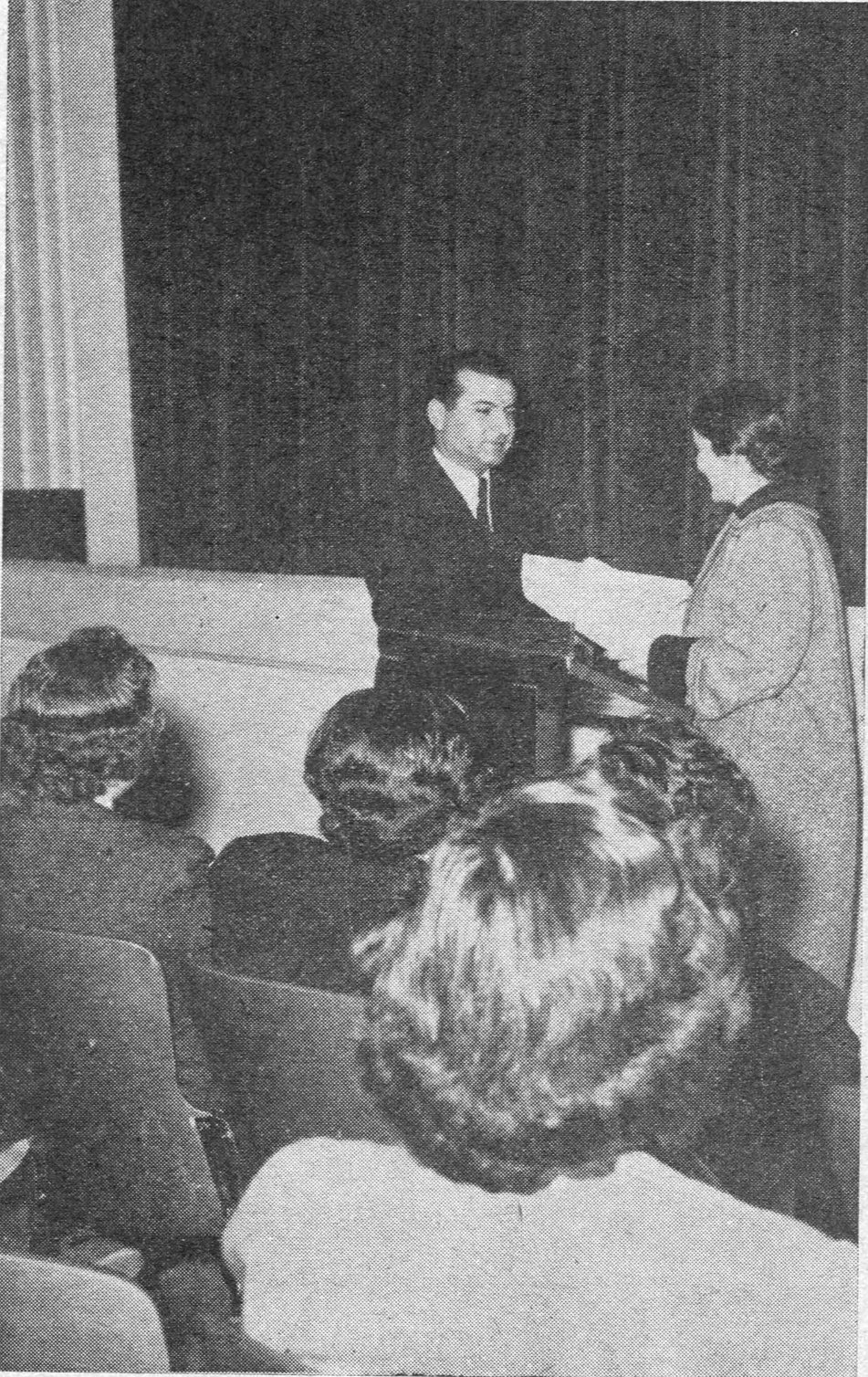
Anissa Najjar, mistress of ceremonies of the program, receives Mr. Halim Traybeh of the Vocational School of the Ministry of Education, one of the conference's lecturers
In our deep comprehension of the importance of home economics we are still infants learning to crawl — yet a select group of our ladies has awakened to the matter, called a conference last month at Beirut College for Women, and set a blessed movement in motion... One of its pioneers, Mrs. Nahla Marwa Shuman, tells the story of this movement...
The science of home economics in Lebanon is still confined to a small number of girls' schools, and this subject in the teaching program remains obscure to some people. How many a school among us gives a lesson in needlework, or a lesson in hygiene and foods, and calls it home economics! There are likewise
Anissa Najjar, mistress of ceremonies of the program, receives Mr. Halim Traybeh of the Vocational School of the Ministry of Education, one of the conference's lecturers
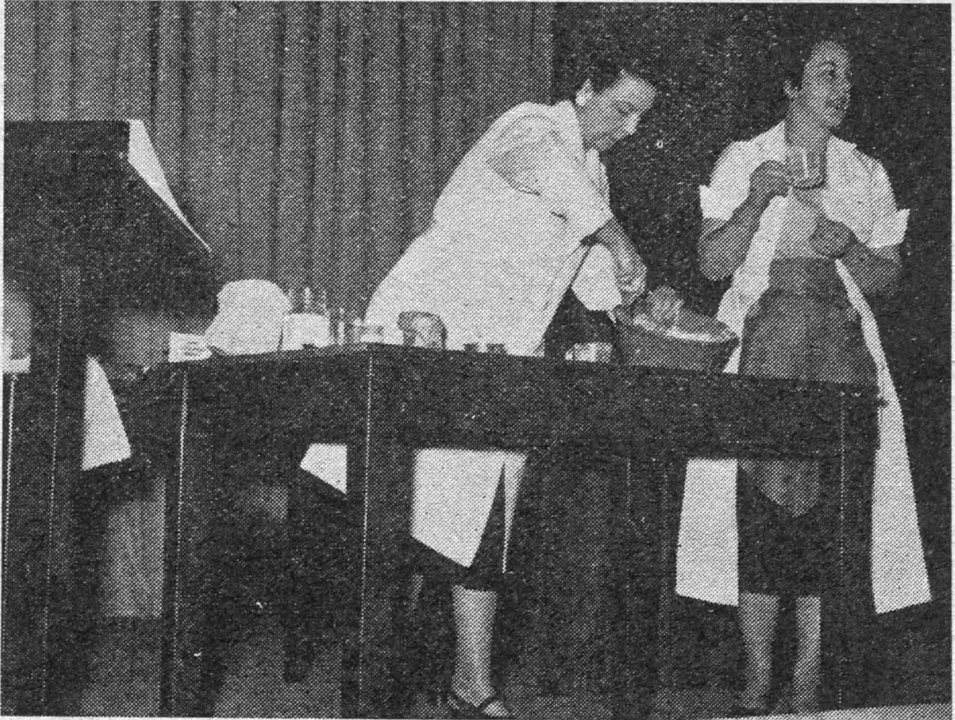
A scene during a demonstration of how to make an "orange cake"
a number of parents who imagine that in home economics lessons a girl learns only how to make a pretty, decorated cake.
This, upon my life, is an error, for home economics is a comprehensive, wide-ranging subject embracing the important topics that touch our daily life and our upbringing. Home economics takes in fundamental topics that have a great effect on raising the level of our family and social life, and that play the leading part in rearing healthy, happy children — and in consequence, good men and citizens.
Here are some of the fundamental topics on which the science of home economics rests: foods and nutrition; the budget and the management of the home's economic affairs; child-rearing; family life and psychology; the house and its furnishings; the science of textiles and sewing; the art of dress; and so forth.
Running a home and building a family are an art and a science that call for study and specialization; but we in Lebanon still take these matters as they come, just as we take many other matters besides.
A high percentage of our homes in Lebanon are run by the maid or the "ashshiyeh," while the lady of the house occupies herself with social life outside her home, as if she had been created to play this role alone. Many people suppose that the husband, the master of the house, is at ease with this state of affairs, or that he is happy in such a home. The truth is that a man, whatever his culture and his circumstances,