Scene Three: The castle garden.
On a terrace outside the castle, overlooking the sea, Mélisande complains to Geneviève of the darkness of the forests surrounding the castle. Every spot in that land is dark in her eyes — she, a daughter of light. Pelléas comes and joins them, and the talk among them turns to a storm that nature is brewing. The wings of night begin to descend, and Geneviève goes out, leaving Pelléas and Mélisande alone. Pelléas tells her that he is leaving tomorrow; Mélisande is astonished and asks him why he is going.
Act Two
Scene One: A fountain in the garden surrounding the castle.
It is noon, and Pelléas and Mélisande sit on the marble rim of the fountain, resting after her wanderings through the garden. Like a child, Mélisande tosses her wedding ring into the air and catches it, time after time, until she misses it and it falls into the fountain. She cries: “Oh, we shall never be able to find it. What shall we say to Golaud?” Pelléas answers her: “The truth, the truth!” But Golaud never learned the truth, so greatly did Mélisande fear him.
Scene Two: A room in the castle.
Golaud lies in bed, his horse having stumbled under him at the very moment Mélisande's ring fell into the fountain. Mélisande stands beside his bed, and he asks her gently why she weeps continually — has anyone treated her harshly? Or does she wish to leave him? She answers no, saying that what troubles her is the darkness and gloom that hang over the castle, where she
sees the sun only rarely. As Golaud takes her hands in his, he discovers that the ring is gone. This distresses him greatly, and Mélisande tells him she lost it in the grotto by the shore. He bids her go at once to search for it before night unfurls its banners.
Scene Three: A grotto on the shore.
Pelléas and Mélisande grope
slowly through the darkness along the path leading to the entrance of the strange cave. Suddenly the moon breaks from behind the clouds, revealing three old men asleep at the mouth of the cave. Pelléas tells her this is because of the famine in the land. But Mélisande trembles with fear and wishes to go back the way she came, saying: “Let us go — we can come back another day!”
Act Three
Scene One: One of the castle towers.
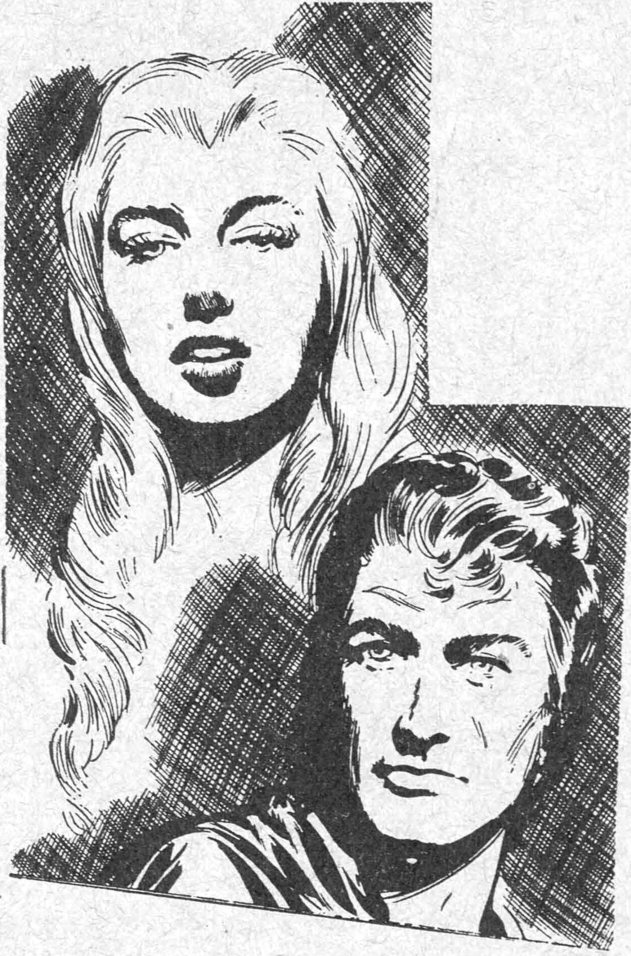
Mélisande, at a window of one of the castle towers, is combing
her beautiful long blond hair. Pelléas passes beneath the balcony, and the moonlit night works its effect upon their feelings. He begs Mélisande to give him her hand, for he must depart on the morrow. She stretches out her hand to him, leaning out of the window, and the end of her hair brushes Pelléas's head. He winds it about his neck, and they exchange murmurs in a tender, stirring, quiet song of love. Golaud arrives and finds them thus, and says: “Do you not know how late it is? It is nearly midnight.” And he laughs nervously, repeating: “What children you are!”
Scene Two: The vaults of the castle.
Golaud has led his brother Pelléas down into the damp, dark, dismal vaults beneath the castle. Pelléas's hands tremble in this fearful, suffocating place as Golaud points out how easily one might fall into the abyss — but he does not say that such a fate awaits the man who loves his wife, even if that man is his own brother. True, he never says it at all; but everything hints at it.
Modern scientific research has shown that black eyes can see at night better than all other eyes. Black people, with their eyes of that distinctive color, enjoy a keenness of sight four times that of the eyes of whites, which are strangely affected by strong light when it is turned upon them: they cannot withstand it for long, and water at once.