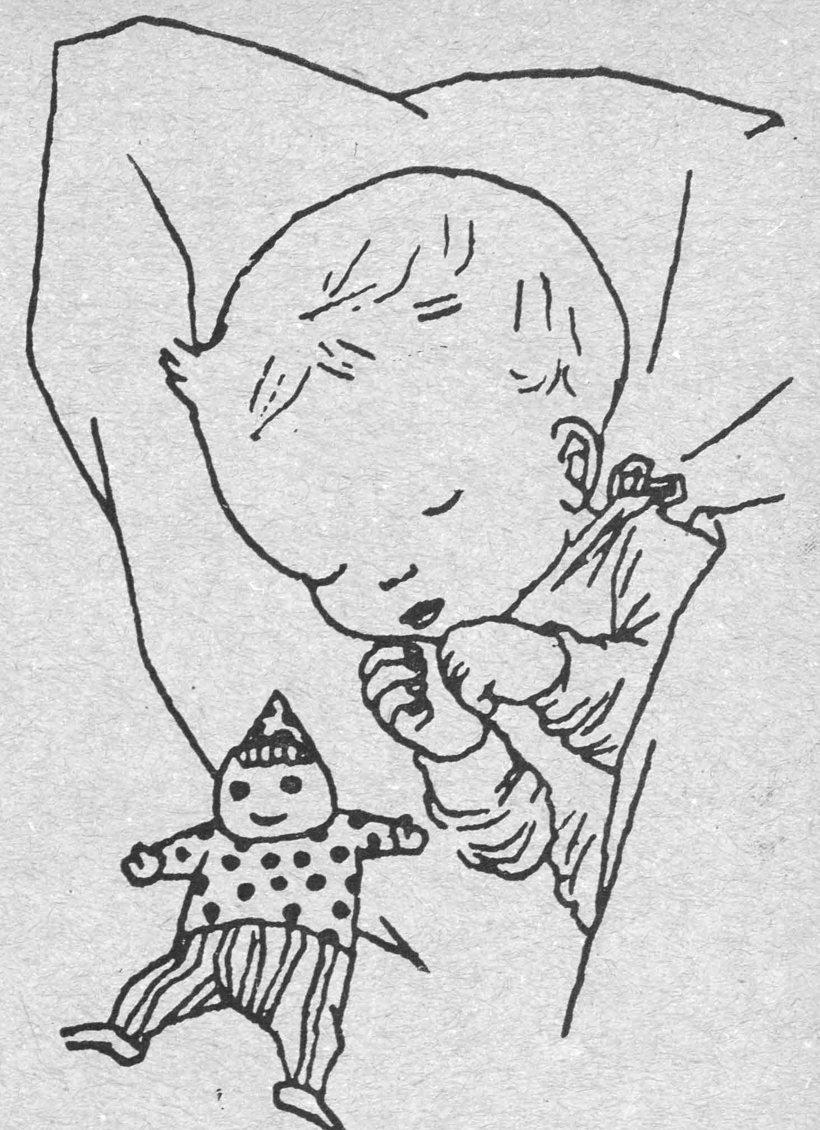

• Let your child fall asleep in his cradle without rocking or lulling.
• Fix his times for sleeping and waking firmly and decisively...
• Secure him a short period of rest before bedtime, and do not accustom him to exciting or frightening stories.
• Accustom him to sleep alone after his second year.
My friend said:
The secret of my success in raising my children goes back to my constant reading of every valuable study published on the problems of childhood. I shall never forget what one of the specialist physicians said in his studies on the problem of sleep: that one must begin instilling good sleep habits from the child's birth, for he ought to fall asleep in his cradle without anyone's help. There is no need whatever to rock him or lull him, nor should we let him fall asleep at his nurse's breast, or give him a rubber nipple to amuse himself with until drowsiness steals over him and he dozes off — because if we resort to such devices, the child grows accustomed to being unable to sleep
without them.
As for the hours of sleeping and waking and the times of the midday nap, these must be fixed firmly and without variation. Some parents are often inclined to move the child's bedtime earlier or later as suits themselves — wishing, for instance, to show the little one off to friends invited to dinner at an hour when he ought to be in his bed. But this is the very essence of error, for we grown-ups have no right to tamper with the child's private life and violate its sanctity — for the preservation of his health and the safeguarding of his good upbringing.
It is entirely natural for a child to complain and fidget when we oblige him to leave a toy he is playing with, or a scene that delights him, and order him to withdraw alone to his bedroom. He may resort to screaming or to shedding tears if his past experience has taught him that this serves to get him his wishes. But if the parents take a firm stand and are not swayed by these displays and whims, the child will soon give up the habit and submit to the will of his elders.
If the child rests for a short while from every kind of bodily movement — after a day full of fun and play, or after mental activity, studying in particular — before he goes to bed, it is a great help to him in surrendering to a calm, deep sleep as soon as he lies down. Whereas continuous play at the hour of retiring, or listening to an exciting tale, or to some radio program that tempts him to come back and go on sitting up, is very often the cause of long hours of wakefulness and restlessness in bed.
And often the story that was merely exciting in the sitting room becomes a thing of terror in the child's imagination. No sooner does he find himself alone in the quiet bedroom, cloaked in darkness, than the heroes of the story take shape before his eyes in a frightening, agitating frame.
My friend went on: That is why I never let my children face situations of this kind. And the reason is utterly simple: I take charge of supervising them