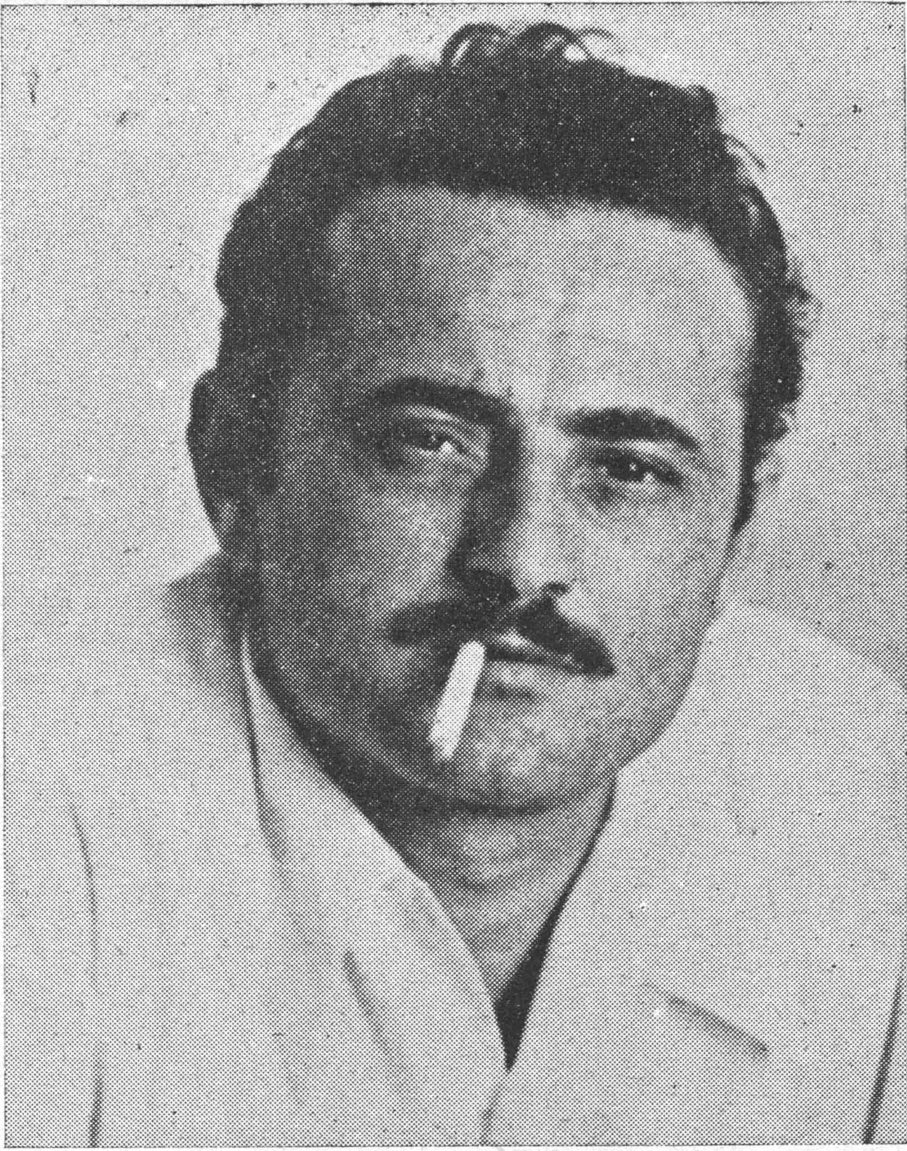
Mr. Youssef al-Khal is no stranger to our readers. He is among the first who nourished the magazine with the fruit of his mind, open as it is to poetry and letters... He has a diwan of poetry, "Liberty," and a play, "Herodias."
He returned to Lebanon at the beginning of this year from the United States, after an absence of seven years, during which he joined the United Nations and then headed the editorship of the New York newspaper "al-Hoda." He has kindly consented to answer the questions put to him by the editorial staff:—
Q — Surely, Mr. Youssef, these seven years you spent in America have won you a wide and rich experience. There is your close contact with United Nations circles, your work in the Arabic press of the Mahjar, and there is your constant attention to the currents of contemporary literature and poetry — here and in the West. What, then, are your impressions of America as the greatest power in the world?
A — To speak of America's greatness is to state the obvious, as it is to speak of the virtues of its people, which have raised it, in the space of a century and a half, to the place of precedence among the peoples of the earth. Whatever satire may be leveled at that people, this truth remains standing: the rise of the American people rests not on the shortcomings it may be reproached with, but on the virtues it enjoys, which stem from its belonging to the authentic European heritage of civilization, founded on faith in action, in natural law and Christianity, and in modern science. Were it not
for that, that natural wealth would never have submitted, obedient and humbled, to man's will and resolve.
Q — And American literature — what is its standing in your eyes?
A — American literature, on the whole, is less deep than the literatures of Europe. That is a long story. Suffice it to mention here that the most prominent side of this literature is the story.
Q — And American poetry — what is your opinion of it?
A — Contemporary American poetry is not the most prominent side of the literature. Nor does it lead world poetry — unless we count T. S. Eliot and Ezra Pound as Americans. The first, as you know, madam, forsook America for London from his earliest youth; and the second has lived most of his days in Europe, in revolt against everything American. In the last century, however, American poetry had, thanks to Edgar Allan Poe, a far-reaching influence on the French realist-symbolist movement whose path was opened by Charles Baudelaire.
Q — Then you are not an admirer of