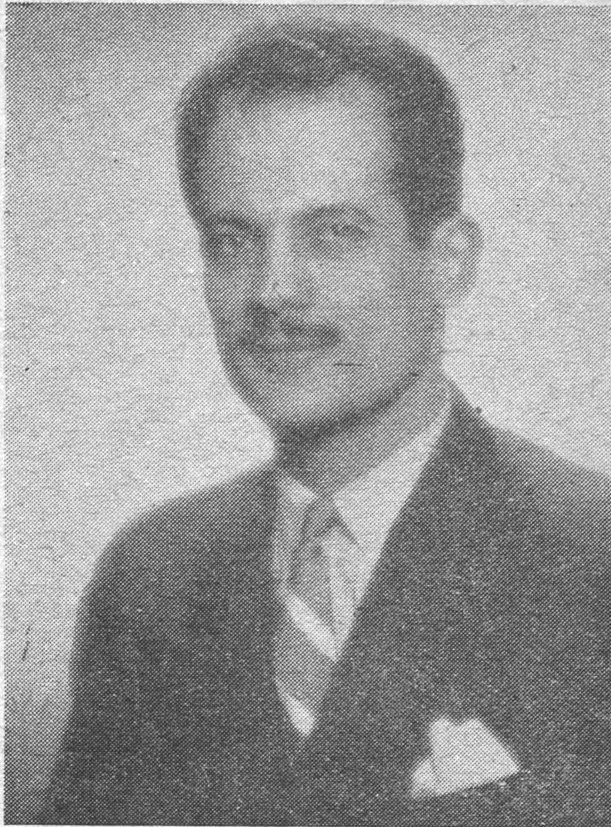
The decorating engineer, Mr. Camille Munsif

About a month ago the duty-free market at the international airport in Beirut was opened in the presence of the President of the Republic, the great men of state, and a gathering of directors of airline companies and banks, merchants, and others. The event was reckoned at the time to be of great importance. And there are those who affirm that it is the largest duty-free
market in the international airports of the world...
It is Lebanon's good fortune that its government should grant it its favor and agree to the opening of a duty-free market at its grand international airport. From the day the airport of Khalde came into being, Lebanon grew great in the eyes of the world; and so this market has come, with all its taste and refined design, in harmony with the splendor of the airport itself.
What adds to the airport's splendor and grandeur is the spacious "autostrade" that extends in a wide, straight line, joining the airport to the Lebanese capital... so that the stranger coming to Beirut from the airport is captivated by the charm of nature — amid the perpetual green of the pines and the climbing mountains, over whose shoulders and summits the sweet red-roofed villages lie spread...
And since a large portion of the travelers passing through Beirut "in transit" have no time to go down into the city and buy the things they wish to buy, the
idea arose of creating a duty-free market on the grounds of the airport itself, supplied with all the goods a traveler might be tempted to buy.
The duty-free market comprises thirty shops for display and sale, where travelers and tourists can buy everything they desire. How was this accomplished?
The problem was to create a "modern market," up to date in every sense of the word, with each display window given a character of its own, suited to the goods to be shown in it: the windows displaying shoes differ from the windows of perfumes, and likewise the windows of fabrics, and so on — and all these windows together had to form a whole of complete harmony.
This delicate task was entrusted to the "decorating engineer," Mr. Camille Munsif — a young man who had already given standing proof of his refined taste and his high artistic qualifications.
He began his life as a student of sculpture and painting, but observed in France that artists are forever destitute, without the wherewithal to keep body and soul together, so he chose to profit from his talents
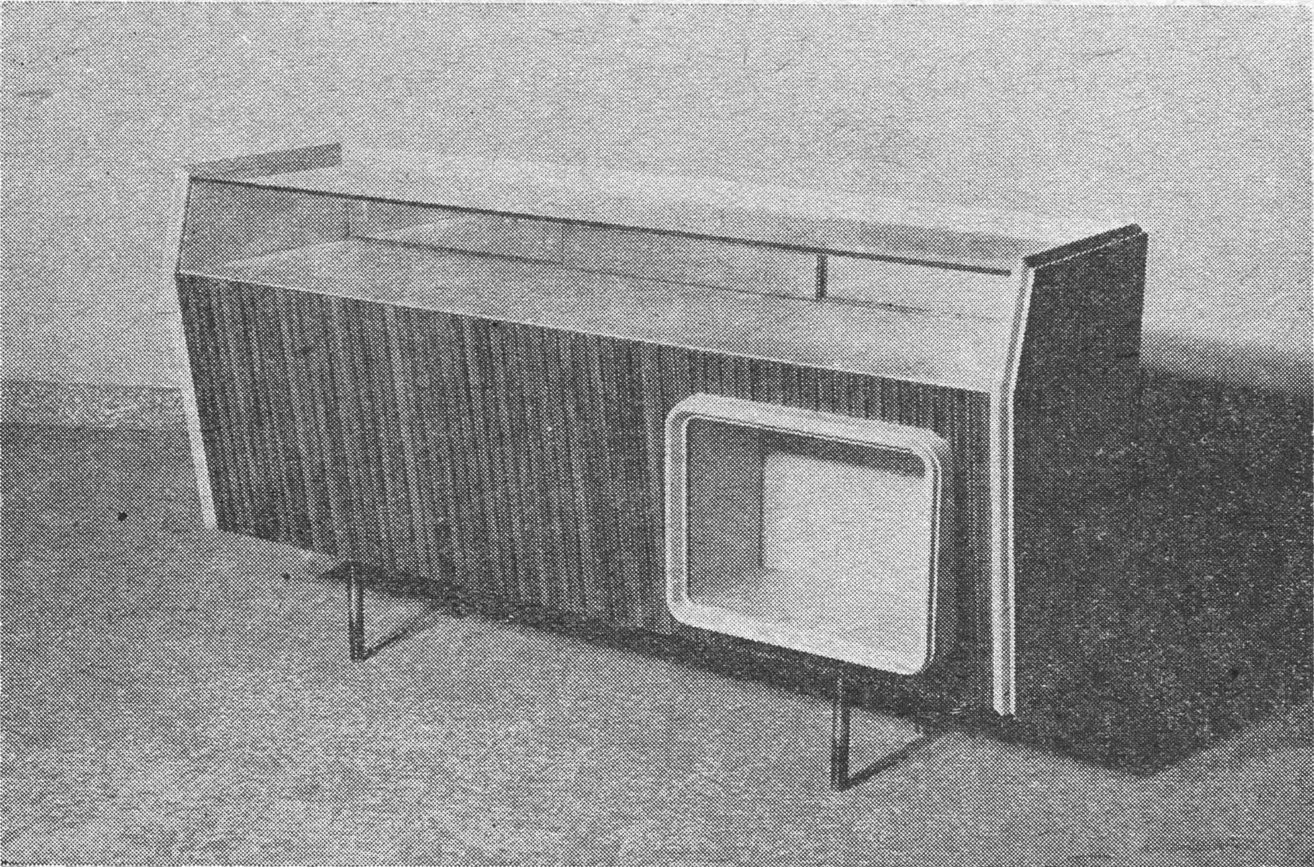
A specimen of the "comptoir," combining modern taste and modern art