Just as the Bedouin prizes the fall of rain in the desert, so do the employees of the Arabian American Oil Company in the district of Dhahran and the other centers of black-gold production rejoice at the descent of
springs of thought and learning, when the company brings them from the farthest and nearest ends of the earth to whet minds and to make the thousands here feel that life is not black gold alone — there is also the
gold of the mind, nay, its very jewels.
The latest of these springs was an American lady and scholar counted among the most famous women of America — indeed among the most famous learned women of the world — namely Dr. Margaret Mead. This world-famous lady has several works to her name.
Dr. Mead was born in the state of Philadelphia in 1901, but she has lived the last thirty years in New York, where she still occupies the post of the natural history of the human races (anthropology) at Columbia University, and is head of the research section on contemporary civilization, among other posts...
I wanted to let "The Woman's Voice" share in a conversation I was given the chance to hear from this great lady in the midst of the desert...
Dr. Mead answered some of my questions in a private sitting that brought me together with her for this purpose.
Q — How and why
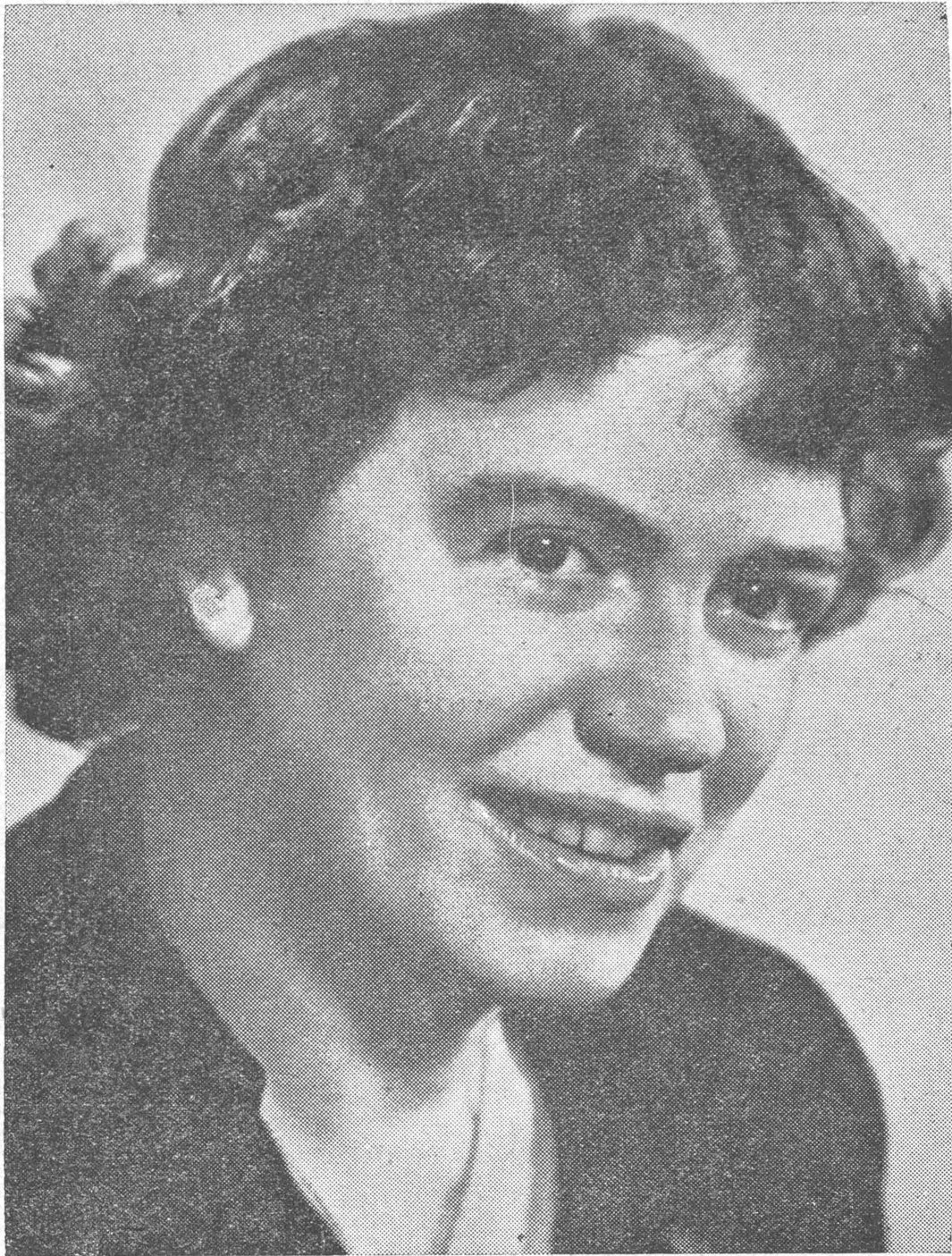
did you choose the science of the natural history of the human races, known as "anthropology," as the subject of your specialty?
A — My mother took an interest in sociology before me; she worked with the Italian community in the district where we lived in the United
States, and so I grew up from childhood loving people and interested in studying their conditions. The ember of this inclination in me never went out, for I found someone to feed it during my university studies: my professor was one of those personalities who make you love the subject they teach — to him, then, this turning point in my life goes back — and he was Franz Boas; and likewise to Ruth Benedict. This science was then only little known, and had not yet developed. There was but a handful of workers in this field in all parts of the world. The material they used was the civilizations of peoples who either, by way of historical accidents, had changed their pattern of life, so that our own life stood out by comparison, or who had merged into the outward forms of our life so that the features of their own way of living faded away.
Q — What are these historical accidents that can change a people's
civilization and transform the substance of its life?
Every epidemic, every new discovery of an oil field or a gold field, and every one of the missionaries' endeavors has brought some new people nearer the circle of our Western intellectual life, covering over forever the
living record of their former ways of life. This feeling in me made the interest in this science a living desire instead of merely a necessary part of my profession, for I came to have a bent for knowledge and research — and that was in 1924, following my meeting