The World's Most Famous Operas
The Golden Cockerel!
Music by: Nikolai Rimsky-Korsakov (1884–1908)
Rendered into Arabic by: Samir Shikhani
An opera in three acts, adapted from a legend by the poet Alexander Pushkin
First produced in Moscow in 1909
The Characters:
• The Astrologer • King Dodon • The Queen of Shemakha • Prince Guidon • Prince Afron • General Polkan • Amelfa: mistress of the royal household
Time and Place: imaginary
Act One
The scene: the court of King Dodon.
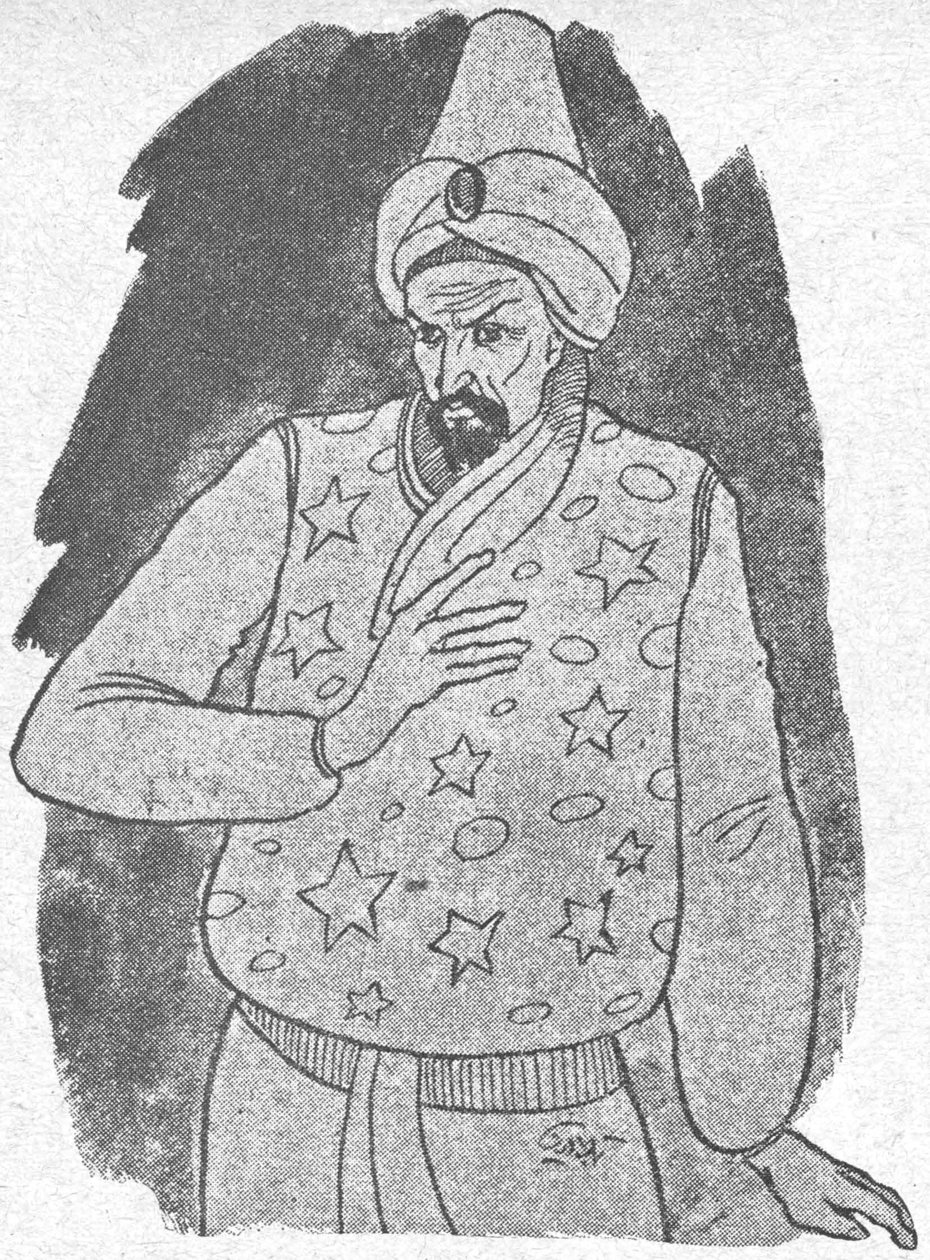
Before the curtain rises, there appears on the stage, in front of it, an old man of strange appearance, short of stature, dressed in the garb of the astrologers of old, with a tall cap adorned with the signs of the zodiac. In a loud, quavering voice, he announces that the old tale he is about to present is not true in its entirety, but that it carries a message and a moral.
The curtain rises upon the court of the fat old King Dodon, seated on his tall, magnificent throne in the middle of the hall, surrounded by the members of his privy council. The King speaks and tells them that he is no longer as strong as he once was, that he does not know what to do while enemies threaten his kingdom from every quarter, and that he wishes they would leave him in peace, to enjoy eating and sleeping and rest...
The King has two sons, the elder of whom,
Guidon, stands up and says the matter is simple: the whole trouble is that the armies are close to one another, and in constant conflict. If King Dodon could withdraw his forces from the border region, he would be able to enjoy the rest he seeks. For the enemy would at once set busily about burning and plundering the villages scattered at the far edge of the kingdom, until weariness and exhaustion wore him out, whereupon Dodon's forces would fall upon him and rout him utterly.
The idea pleases the members of the court council, with the exception of the old General Polkan, who asks what would befall the country if weariness did not overcome the enemy and he continued his march on the capital.
The younger son, Afron, rises and says that his brother is mistaken, as usual, and that the best solution to the problem is to disband the armed forces entirely; this move would quiet the enemy and put it into his head that he was now
safe from all danger; then, within a single month, the disbanded forces