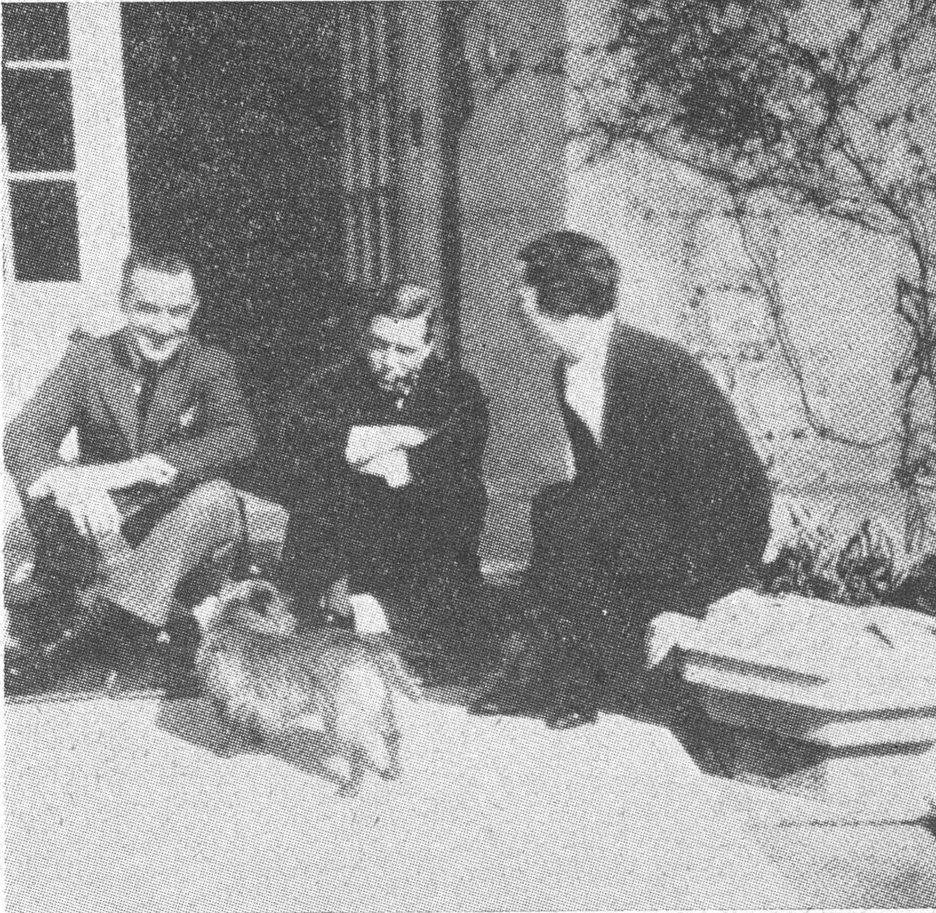
Mrs. and Mr. Simpson, with the Prince of Wales between them
it. If he spoke of what Her Majesty the Queen or the King had said at a gathering or a charity function, he would mention it with reverence and awe. If Queen Mary changed her coat, that was enough to renew women's fashions. As for King George, he was a model of elegance. Besides all this, I marveled at the Londoners' passion for talking about the royal family; before I ever met the Prince of Wales, I had formed a clear picture of him from talk around the bridge table or at a tea party.
One of the problems I encountered was my frankness, and then my gaiety, for I differed from the Englishwoman, who does not say everything she thinks and does not show her feelings — she even perfects her smiles. In drawing-room conversation I never heard a colloquial word; if I once forgot myself and agreed to something with the word "okay," the glances were leveled at me as at one who had done something scandalous. I came to think that Maud's friends waited in wonderment for whatever this strange woman might utter — and that was enough to make me withdraw into myself in the days that followed. Maud tried to help me adopt the ways customary in the society around me, moved to it by her love for her brother; but she only made me cling to my former habits, to the point of excess.
My loneliness grew, and my spirits sank, with the coming of the winter of 1928 — the bitterest winter of my life. A wave of ice swept over London, and a thick sheet of fog wrapped the city until even the inhabitants' features changed. Added to that was the
illness of King George V, who was fighting death in Buckingham Palace. The Prince of Wales returned from East Africa, where he had been on a hunting trip — returned with all speed — and it was as though the entire capital lived on the doctors' daily bulletins. On a rainy day, I was in my car near St. James's Palace when I caught sight of the guards presenting arms, and then I saw a black automobile coming out into St. James's Street. As it passed our car, I glimpsed a young face, staring straight ahead, on which intense concern was visible. I looked at the driver of the car, and he said: "Madam — that is the Prince of Wales, on his way to see his father at the palace, no doubt."
My second husband differed from the first as night differs from day. His nature was calm and temperate; he was earnest in his work, preferring early bed to late hours, and the grandest evening he spent was at the house of some friend. He rose at seven in the morning, left for the city at nine, and came home at seven in the evening. In short, he was a businessman and nothing more. But he loved classical literature, the theater, dancing, and music. Our life was ordinary, somewhat monotonous; my anxiety left me, and I began to feel that I was a citizen despite being a stranger.
My mother was still living with her husband, and Aunt Bessie; and one day I was surprised by her arrival to visit me. She looked thin and pale, and when I entered her room she cried out at me: "Wallis — why turn away from me... to die?" When she rose the next day, she had lost half her sight; yet she remained cheerful for all that, especially in my presence. In this condition she met Ernest for the
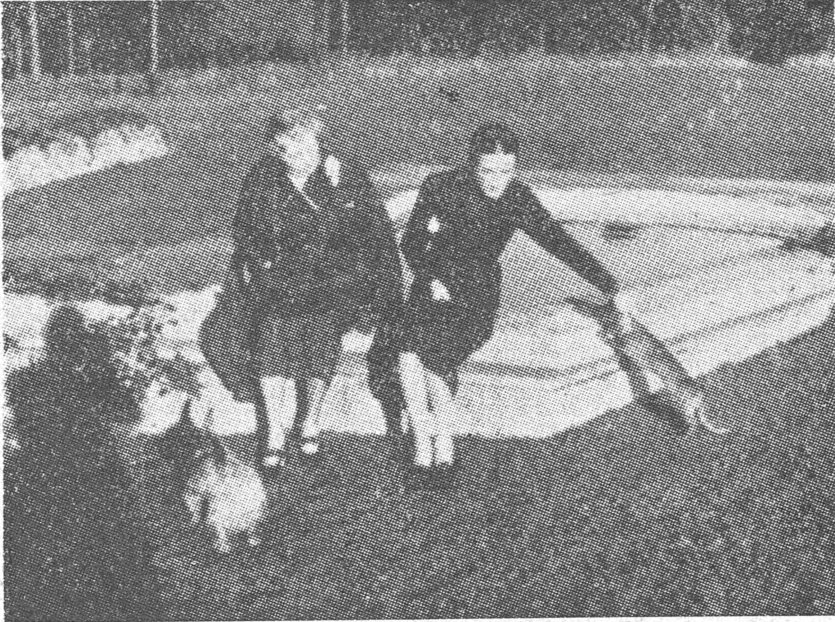
Wallis and Aunt Bessie at the palace of the British heir apparent