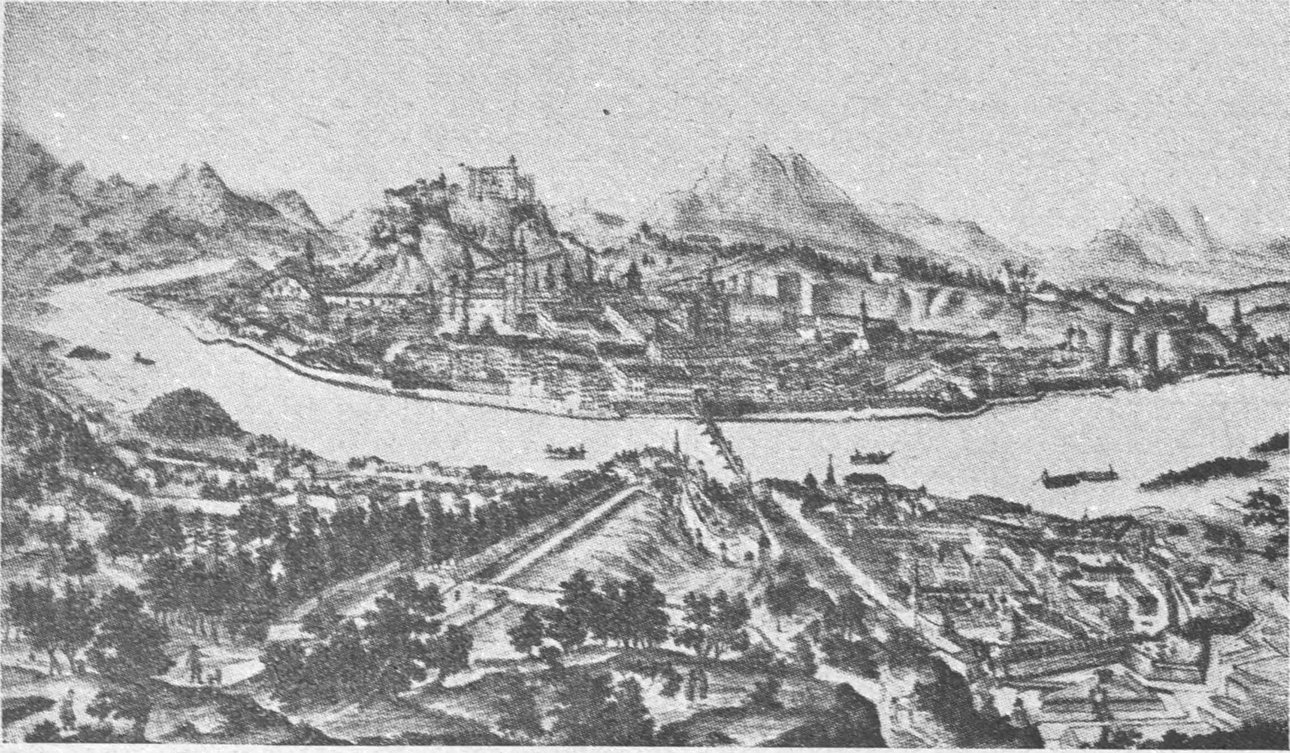
The city of Salzburg in the late eighteenth century
the pouring rain, to listen in reverence to the 32 bells ringing out, in measured order, a certain "melody" of Mozart's! I understood afterward that this performance is repeated three times a day: at eight and eleven in the morning and at six in the evening. To this degree and beyond has gone their esteem and their homage for this matchless composer whom their soil brought forth.
Sights and impressions: I was astonished by the enchanting natural scenery in Mozart's homeland. Around Salzburg lie four lakes ringed by high green mountains, until the very waters, from the reflection of the dense forests, become green rather than blue!
I admired beyond measure the perfect cleanliness everywhere, and the kindliness of the people and their exquisite good manners; but I could not miss, in their faces, the marks of strain and of suppressed pain that the recent wars had caused them...
We passed many women toiling at plowing the land — men's work, with us — and the signs of fatigue showed on their faces...
I said to myself: the men must surely be taken up with work of greater weight...
Poor Gibran! Faced with the greatness of what I saw, I could not help remembering Gibran, our own "great one," and the vast gulf between the people of Salzburg and the people of Bsharri in their esteem for their men of genius... And my heart was wrung with envy as I compared the two situations at the present hour... especially after I had called back to mind the state of the Gibran museum in Bsharri today, and
— more important than this — the "awareness" which Mozart's countrymen feel and act upon, and which "does not exist" in Gibran's birthplace, least of all in the "committee for the perpetuation of his memory," which pursues every end but this very one...
Poor Gibran! Why should he not have loyal countrymen who would lay their hands on the splendid stream of revenue that flows into Bsharri every year from the sale of his books, and direct it toward honoring his memory in truth, and spend it along the path on which it ought to be spent — to make this great Lebanese artist and poet live, and to set him in the lofty station in which he ought to be set?
And if the Gibran committee, and behind it the people of Bsharri, are of the artistic obtuseness we know, then why does not the Commission of Tourism and Summering, for instance, hasten to save the situation?!
This is what haunted my mind on my return from Salzburg, and I wished in my turn to whisper it to the readers — in the hope that I may find among them someone whose enthusiasm will drive him to sincere, positive action...
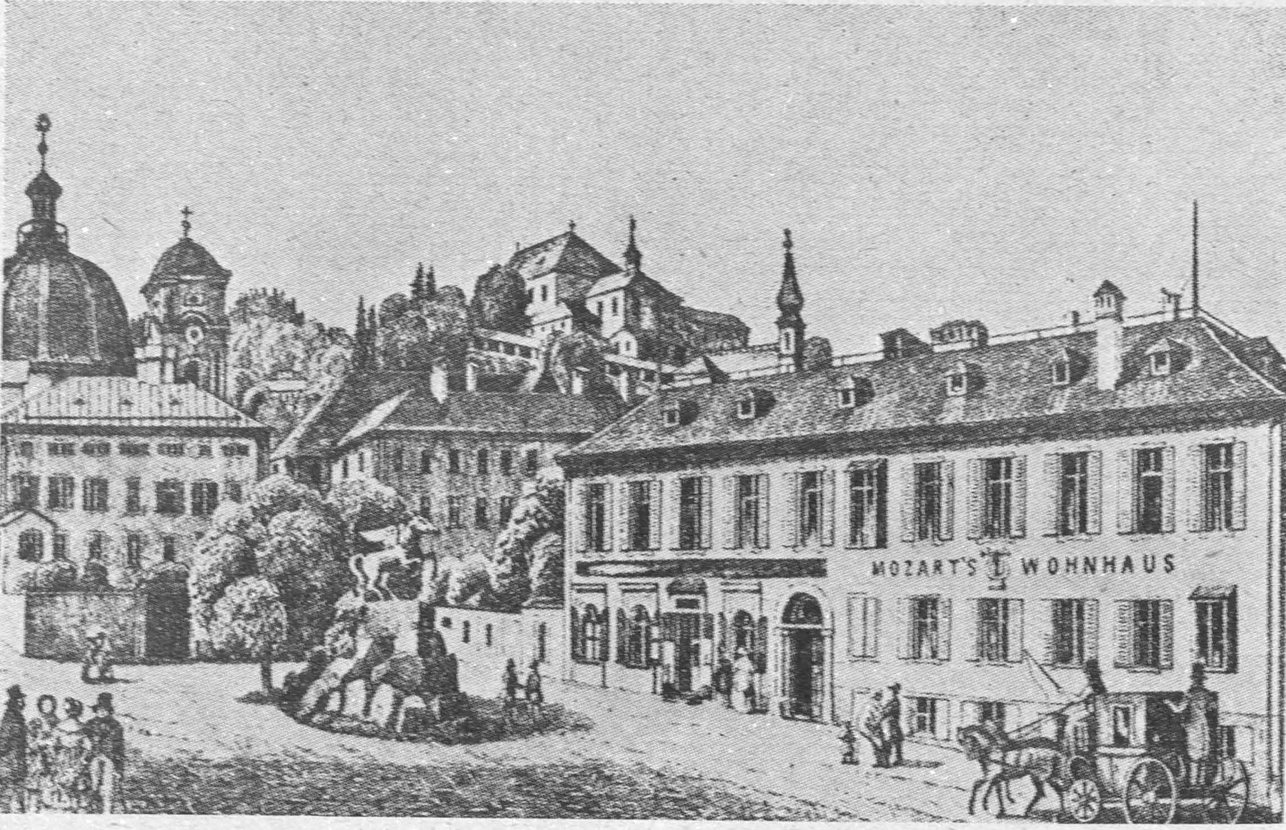
Mozart's house in Salzburg