'O tree, you drawing of the reckless boy, the boy so extravagantly poor that he cannot buy coloring pencils, who drew you in bad lines with the brown pencil left over from drawing geography maps. O tree, I am coming to you — console me, that I may remain I, I.'
No, this is no school exercise that the teacher forced the child to copy. This is splendid poetry, poured out by a child's dewy pen, after the clock on the mantelpiece had struck its five strokes. And after a short sigh. And after pulling the hairpin from the mad blond locks. And after a serious smile: the smile of a dangerous woman on the innocent lips of a little girl.
And the poetess continues her call: 'O tree, you are my friend you are like me heavy-laden with
music under the fingers of the wind that strips away your leaves like a tale of the jinn.'
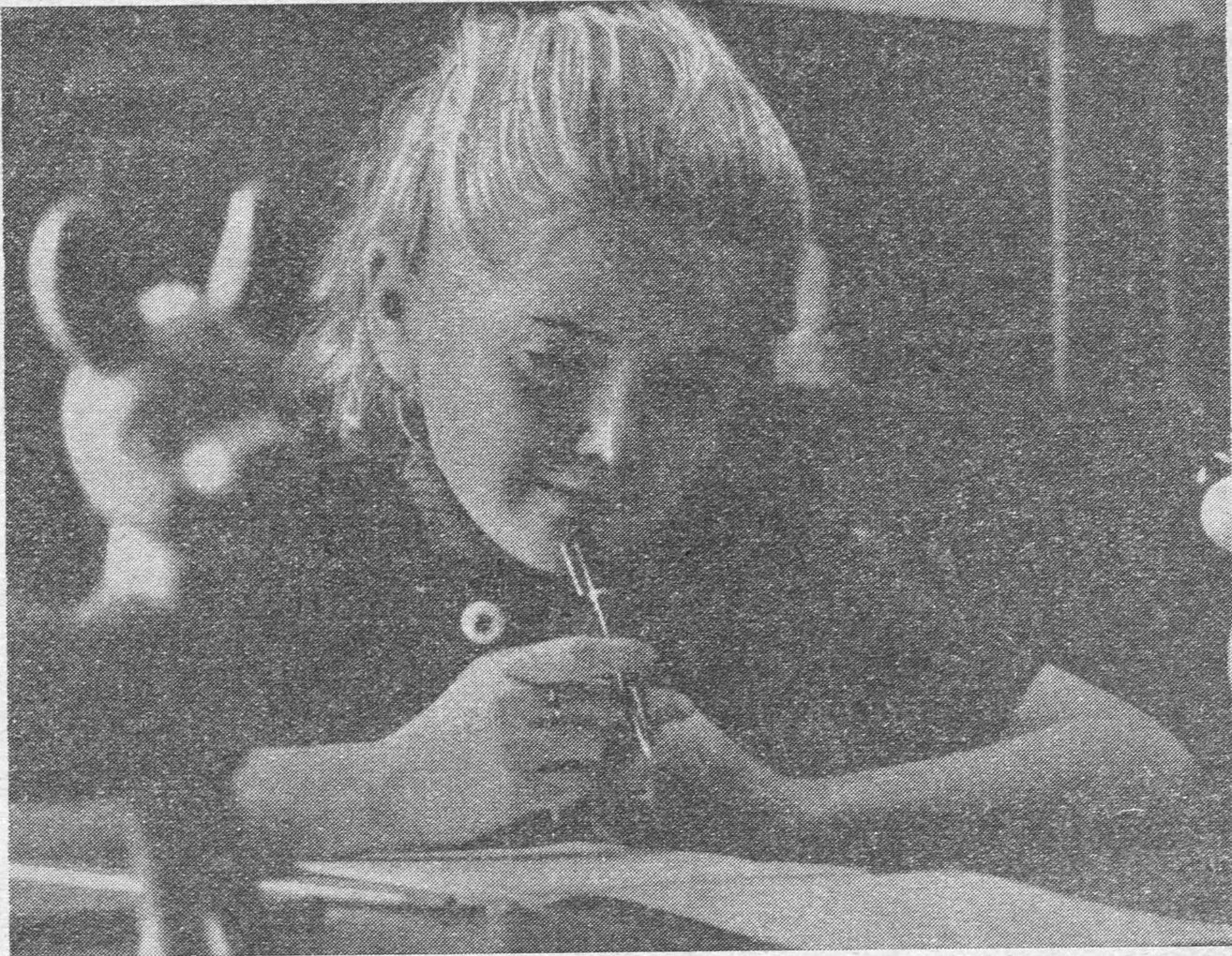
'Minou Drouet' is a child poetess from France who has never once gone to school. For her teacher is the mother who adopted her, and who gives her lessons every evening in reading, arithmetic, and geography... And there is also the music teacher.
I believe that music — those fleeting sessions the child Minou spent at the piano — had a palpable effect on the unfolding of her gift and its early ripening. It also left a sweet strain of melody in her every expression, and in every letter. Let us hear these melodies in 'Song':
'My heart is a light boat made of moonbeams its sail breaks in the wind — its sail woven of clouds, clouds the color of blood, that
break, they too, against the cheek of the sky.
Like a fingernail splitting my outstretched fingers, the red fingers of my anguish, which would beg forgiveness because they cannot close properly upon the voice of the great melody.'
No sooner had these poems appeared in a small pamphlet, distributed by 'Julliard,' the well-known French publisher, to the critics and the newspaper houses, than a child of eight had created the 'Minou Drouet' problem. For the first time the public was distracted from the bicycle race, and split into two camps:
One that does not believe these poems are by a child who ought to be amusing herself with her doll, not composing verse — the whole story being that the woman who adopted her dictates to her what she writes.
And the other, which believes in the rare gift that God caused to burst forth out of the innocence of childhood; the leader of this camp, 'Professor Pasteur Vallery-Radot' of the French Academy, defended Minou, explaining:
We must admit, when genius appears, that we cannot explain it: neither heredity, nor place, nor any interpretation our reason imposes has any connection with its appearance. It is a strange gift — a divine gift, as some call it. A gift that permits the individual
to see, to hear, and to feel what is hidden from the mass of ordinary persons...
Until he says:
Genius is a frightening gift... Even the gifted person cannot explain it, for he — the gifted person — is no more than an instrument of discharge. No more