

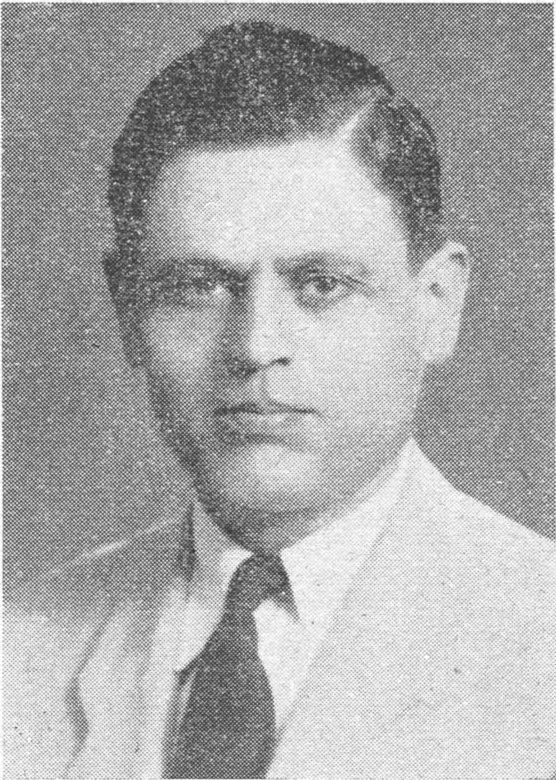
The agricultural engineer Fouad Najjar speaks about:
In recent years a wave of agricultural awareness has been sweeping the Arab countries, called forth by the nature of these lands and by the buried bounties of the earth, which had to be brought out by means of modern science. Among the causes of this agricultural awareness, too, are need, and then these successive crises.
In fact, the Arab countries possess three elements abundant in benefit and yield once they are harnessed and invested in agriculture: I mean the plentiful flowing waters, the fertile, generous soil, and the bright, clear sun — a combination rarely found together in any other country. If the farmer in these lands is enabled to work energetically on modern scientific foundations, these three elements will be allowed to interact, and our lands will burst forth with the finest results...
The agricultural engineer Fouad Najjar is in the vanguard of those who kindled the fire of agricultural awareness in the Arab countries and worked to promote it in theory and in practice, sacrificing much for the sake of a comprehensive agricultural renaissance that would raise the standard of agricultural life and save the Arab countryside — particularly in Lebanon — from the migration of its sons to the cities in pursuit of their livelihood, far removed from the service of the land.
Engineer Fouad Najjar graduated from the National Higher School of Agriculture at Montpellier, France, in 1932. He is president of the Agricultural Cooperative Association in Abadiyeh, vice-president of the Syndicate of Apple Orchard Owners, secretary of the Friends of the Tree Association, and the holder of other interests besides, all directed toward an ideal agricultural goal.
The Lebanese press takes a particular interest in the agricultural
cooperative exhibitions which Mr. Najjar has been accustomed to holding, and supervising the organization of, in his village of Abadiyeh nearly every summer since 1941.
He has kindly consented here to answer these questions:
Q — How far back does the history of the agricultural cooperative movement in Lebanon go?
A — The agricultural cooperative movement is of recent date in Lebanon; its appearance dates back to the year 1937.
Q — Who was the first to think of founding an agricultural cooperative in Lebanon?
A — It was Mr. Halim Najjar, former director of the Institute of Rural Life at the American University of Beirut, former
director of Lebanese agriculture, and at present an agricultural expert at the Food and Agriculture Organization of the United Nations. He founded the first agricultural cooperative association in Lebanon in his town of Abadiyeh, in the province of Mount Lebanon, in 1937.
Q — Are there agricultural cooperatives in the Arab countries on the model of ours?
A — Yes. Egypt comes foremost among the Arab countries in concern for the cooperative movement; there, cooperative work has reached a high degree of specialization and advancement. Jordan follows Egypt. As for Syria and Iraq, the readiness exists to spread the cooperative movement
in the various fields of economic and social activity.
Q — I understand, Mr. Fouad, that you attach great importance to strengthening the agricultural cooperative movement. Can you summarize its benefits?
A — The benefits of cooperation are very many indeed, but to put it briefly: cooperation raises the farmers' level economically and socially, directs them toward the public interest, trains them in democratic systems, teaches them love of upholding regulations and laws, makes them respect the rights of others, instills in them the spirit of ambition, strengthens in them the spirit of sacrifice, unites their efforts, and creates among them the mutual trust upon which the foundation of their work rests. Alongside all this, cooperation combats
individualism in work and makes the farmers share in the economic benefits. In my view, nothing gathers people together and unites them like their sharing in such benefits. From all this we see