... where her gifts can come forward in giving first aid to the army, making clothing, and raising morale...
At the present time, talk of defense and the army is surrounded with gravity and reserve. Yet there is one thing on which Lebanese circles are agreed — I mean that total reverence with which the men of the soldiery are regarded, now that they have proved their ability to take firm hold of order and to spread tranquillity and security...
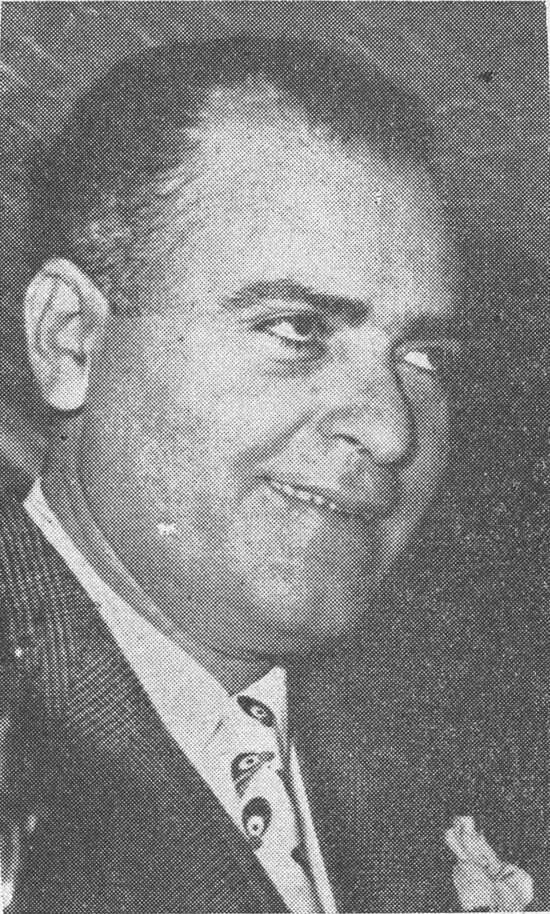
On these matters, questions were put to Sheikh Mounir Takieddine, Director General of Lebanese Defense — that bold patriot who has accompanied the valiant army since its formation in 1944, and who for twelve years now has graced his high administrative post, watching closely over the growth of this national institution, but for which independence would have had no strong arm to lean on, nor any wing to soar with...
Sheikh Mounir Takieddine holds a "Master of Arts" degree in history and political science from the American University of Beirut. He has written two books, The Birth of an Independence and The
Evacuation — a faithful, living record of that mighty leap after which the sun of freedom and independence rose over these lands.
The government sent Sheikh Mounir on one journey to Yugoslavia and two journeys to the United States on an official mission whose nature we have not learned; but we did learn that it was a positive, effective mission, and that success attended it.
Q — What do you mean by civil defense, and what is its use? — The aim of civil defense is to protect the citizens in time of war and to watch over the safety of those left behind by the fighting army and exposed to the woes of war.
The constant motto of the military authority, and the incentive for carrying through the civil defense project, has been: "A dirham of prevention is better
than a qintar of cure," or "To govern is to look far ahead."
As for the chief benefits of civil defense, I sum them up as follows: 1 — Training the citizen, man and woman alike, in protection against disasters. 2 — Giving effective help to the homeless. 3 — Rescuing the injured and giving them first aid. 4 — Training the citizens in steadiness of nerve and in facing dangers with resolve.
And of what use is an army if it is not backed by a nation that does not fear death? — How can woman bring out her abilities in civil defense? — I believe that civil defense is the best means of showing woman's competence and her gifts, outside her home and within it.
Woman's gifts come forward, in the course of her training for civil defense, in the following matters: in giving first aid to the wounded; in making and mending clothing...; in protecting the members of her family and her fellow citizens; and finally in raising the people's morale and giving help to the stricken.
Q — And how did the Lebanese woman respond to the repeated appeals summoning her to the duty of civil defense? — I am sorry to say that the Lebanese woman's response in civil defense was very slight indeed, out of all proportion to her capacity. According to the statistics we arrived at during the joint work between the Ministry of Defense and the Red Cross, it appeared that the number of women who volunteered for civil defense did not exceed two hundred... And since what was required was 10% of the nation's women, I can therefore say frankly: the Lebanese woman has failed utterly in this field!
Q — Do you believe that the Lebanese woman has reached such maturity and national consciousness as qualifies her for the seats of Parliament, for the ministry, and for the other high offices of the state? — I have called, and still call, for bringing to life the paralyzed half of the nation by giving the Arab woman the role she deserves; for the Arab homeland, by isolating woman, exposes half of its fruitful effort to waste...
In my book The Birth of an
Independence I noted the