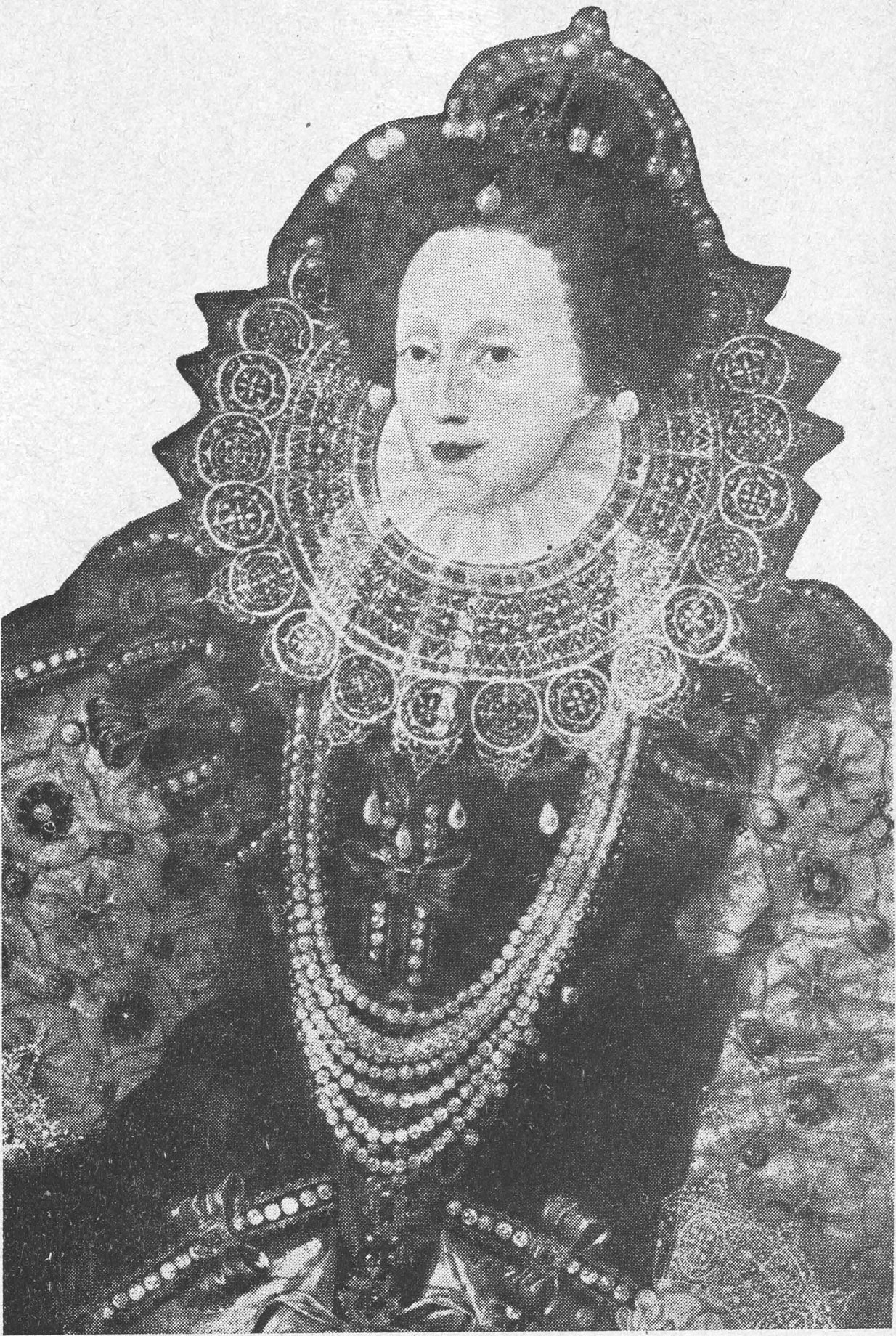
Elizabeth at the height of her glory
Sir Winston Churchill devotes himself these days to writing... Before him is a large work he is on the point of finishing, in which he reviews the history of the British people in detail, and takes up the succession of the royal family, the events that followed one upon another in its life, and the plots and scandals concealed within its palaces... In this chapter, the old statesman speaks of the life of Queen Elizabeth, who ascended the throne in her twenty-fifth spring, after her sister Mary I, in October of the year 1558...
The new queen was not versed in the ways of politics, nor expert in the affairs of government, but she combined some of the traditions rooted in her family; she mounted the throne as the daughter of Henry VIII, and brought with her all his qualities — eloquence, pride, beauty and elegance, firmness in calamities, and a
sharp temper.
The young queen followed the path of her forebears: she studied music, dancing, and archery, and she commanded six languages. Like them, too, she loved moving from place to place, scarcely settling in any one palace — and this goes back to the life of unease in which she grew up from her earliest youth, for she had been accounted illegitimate, and on that ground was banished from the court, and she learned a harsh lesson that made her exceedingly wary and deeply reflective. Her period of rule demanded firmness, knowledge, and far-sightedness in affairs at home and abroad, and she lacked nothing of all this; she had, besides, an extraordinary gift for choosing her intimates and her agents.
She would pass through violent crises of temper — merry and boisterous at one moment, raging at another, hurling her lava in the face of whoever's unhappy fortune led him across her path. It was nothing strange in her to slap her treasurer, or to fling her shoe in the face of her secretary. She was free and unconstrained in her relations with the other sex, until it was said of her that on some of her days she was stronger than men, and when she weakened she became as the feeblest of women. She knew, by instinct, how to draw others to her, even when that called her to flirtation; she distributed her love among a number of men — and the strangest thing of all is that her subjects looked upon her with a gaze of worship and sanctification.
Elizabeth embraced the Protestant creed, and so did the men of her court; she proclaimed the sovereignty of the monarch over the Church, and then managed, despite the weakness of her fleet, to quell the religious revolts that arose in Scotland. There remained, accordingly, the matter of her marriage... The Council approached the Virgin Queen with this request, but she refused, her excuse being that she would not sacrifice the political interest for the sake of individual desires...