

Music by: Vincenzo Bellini (1801–1835) Rendered into Arabic by: Samir Shikhani An opera in four acts, by Romani First produced in Milan in 1831
The characters: • Oroveso, the high priest • Norma, the high priestess, his daughter • Pollione, the Roman governor • Flavio, his friend • Adalgisa, a virgin of the temple • Clotilde, Norma's attendant Priests and priestesses, virgins of the temple, soldiers of Gaul, servants, and Norma's two children.
Time: during the Roman occupation of Gaul, about the year 50 before Christ. Place: Gaul.
Act One
The scene: the sacred forest
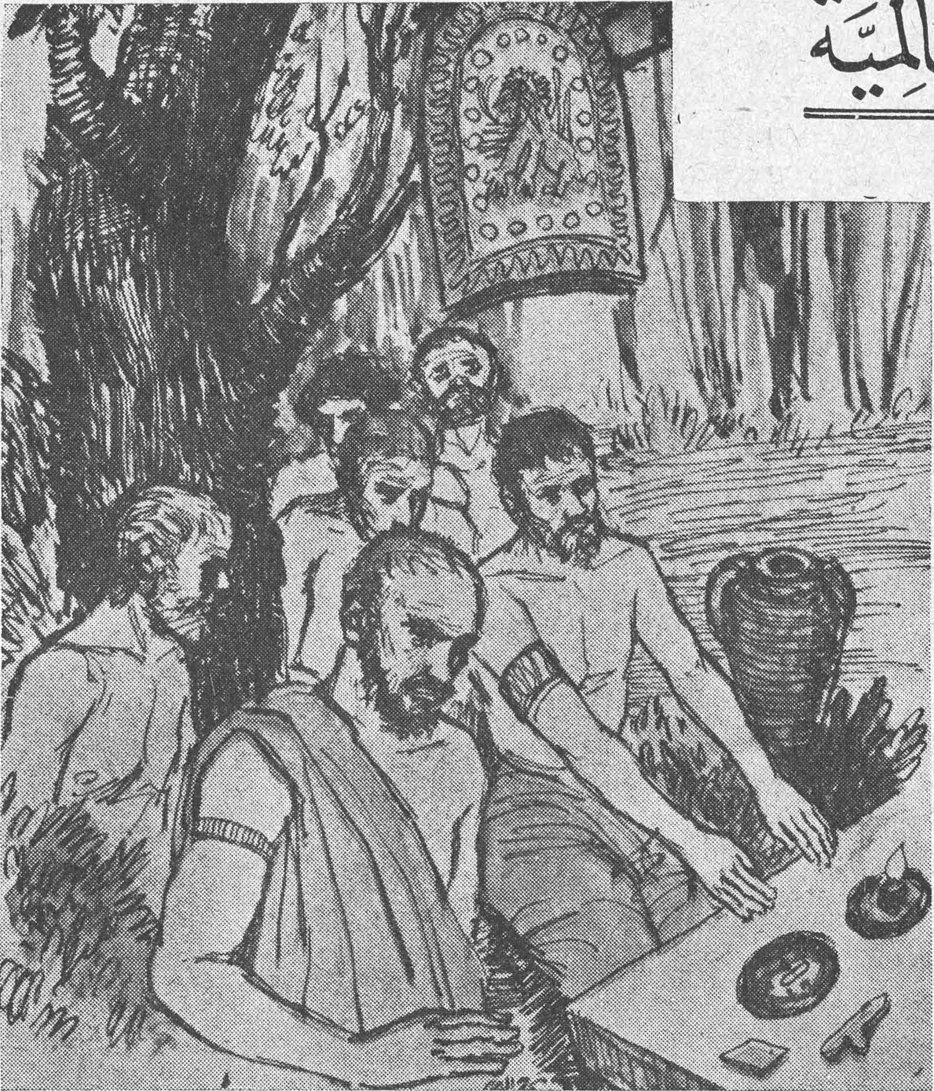
Under Roman rule the people know no rest, and revolt seethes in their souls; but they can do nothing before their priests give them leave. The first act takes place at the sacred oak tree, in the midst of the forest, beneath which a huge stone altar has been raised. It is night, and now a solemn procession approaches the sacred tree, the Gallic warriors at its head, followed by the priests, and last of them Oroveso, the high priest. He stands before the altar and orders those present to climb the neighboring hills and watch for the rising of the moon, the signal for cutting the fruits that clothe the branches of the oak tree.
But before going they implore their god Irminsul to help them scatter the hateful legions of the Romans. Near the altar hangs the bronze shield of Irminsul, whose striking announces the beginning of the solemn ceremony.
When the place is empty, two Romans advance cautiously: Pollione, the Roman governor, and his friend Flavio, who reminds him that Norma warned them against entering the forbidden sacred forest, saying that such an act is punished by death. From the two men's talk we quickly learn that Pollione has secretly married Norma, the high priestess of the country and daughter of Oroveso, chief of the priests,
and that she has two children by him. Pollione tells his friend that his love for Norma has died, and that he now loves another priestess, a young girl named Adalgisa. He knows full well that Norma's vengeance will be merciless should she discover this. Then he recounts to him a dream he had, in which he saw himself with Adalgisa at his side, kneeling before an altar in Rome; but Adalgisa suddenly vanished, and a voice echoed through the temple announcing that Norma had avenged herself in this manner.
Voices rise outside, announcing that the moon has climbed to the heart of the sky, and the two Romans slip away from the sacred forest while the priests return, followed by the people in an ordered procession to the rhythm of the "religious march."
After all have taken their places, the high priestess Norma enters, raising a sickle, accompanied by her attendants.
She mounts the steps of the altar that stands beneath the oak tree, then warns her people that the time for driving out the occupying Roman invaders has not yet come, saying that the fate of Rome lies in the hands of the gods, and that the end of Roman power will come not by any outside force but through inner decay. Under the bright rays of the moon, Norma turns and cuts the fruited branches and sings the hymn of "the Chaste Goddess," praying for peace. At the end she tells her people that she will give