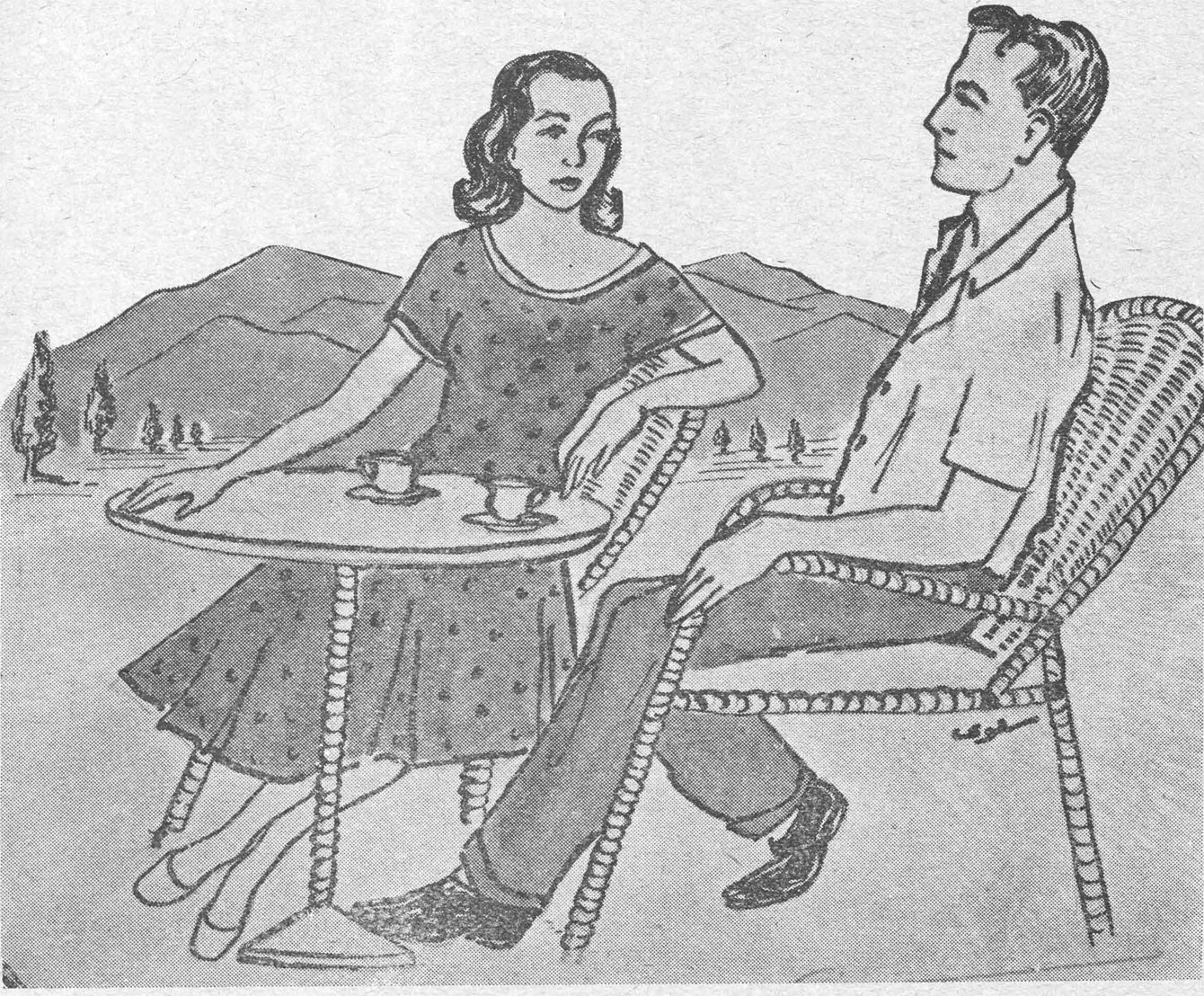
This resolve had grown in her as a result of what she had observed of the common people's attitude toward the official class: she would watch with a certain interest, and then with growing admiration, the many forms of respect and honor the villagers showed toward these gentlemen, whether they were gendarmes or tax collectors, magistrates or qaimaqams or governors.
— I hope your purpose in traveling to Damascus is not to remind me of your presence there...
Adnan cut her short, saying: "That is exactly my purpose in going."
— I shall deal fairly with you, and I promise to marry you if you become a deputy or a governor or a minister.
Adnan said, meeting her banter with banter of his own: "Do you promise on your honor?"
She gave him a questioning look, then said with a certain unconcern: "I promise on my honor."
— Then give me your hand, to bind yourself to this promise.
She held out her hand and said: "And how long a term must pass for this to come about?"
— That is a matter for you to decide.
She asked him, without the least suspicion that the whole affair was anything but a jest: "Will half a year do?"
He answered in the tone of one confident and assured: "The term may well be far shorter than you say."
At that moment the maid came in carrying the coffee. Adnan sipped his cup, lit a cigarette, then rose, saying: "Farewell for now, and may God keep you."
She answered him, laughing heartily: "In God's care, Adnan Bey."
After her arrival in Damascus, Haifa attended the opening session of the congress and delivered her speech, to which the newspapers gave attention and comment. Then she went with a
delegation of ladies to call on the Minister of the Interior, and they presented him a memorandum asking that women be granted the right to vote. The Minister received them warmly, reserving a special welcome for Haifa, whose late father had been one of the Minister's comrades-in-arms during the Syrian revolt against the French Mandatory power in the years 1925–1927. Before Haifa left the Minister's office he drew her aside and invited her to dine at his home on Friday evening. Haifa thanked him and took her leave.
On Friday evening the Minister sent his automobile to bring Haifa to his house on the modern Abu Rummaneh Avenue. Haifa was wearing an evening gown that dazzled the eyes. The Minister and his wife received her at the door of their home, and they walked together to a spacious hall where the guests were sitting. There was nothing of an Eastern stamp about the hall: it was modern in its paint, its designs, its ornaments, and its furnishings, so that one might have taken it for a piece
of the grand aristocratic quarters of New York or Paris. The guests were not many; among them were the commander-general of the Syrian gendarmerie, one of the Pashas of Jabal al-Druze, a deputy accompanied by his English wife, and Mansour Bey, the governor of Aleppo.
Haifa sat near the Druze Pasha, and noticed as she talked with him that Mansour Bey, the governor of Aleppo, never ceased looking at her with his black eyes; but she paid the matter no attention.
When the table was laid, the Minister seated Haifa at his right, near Mansour Bey. Haifa exchanged conversation with Mansour Bey, and it became clear to her that he possessed an abundant knowledge of the history of Syria and the lands of the Middle East in ancient times. He spoke to her of the history of Aleppo, of its museum and the rare antiquities it contains, discovered not long since at Ras Shamra. He spoke to her also of the project to bring the waters of the Euphrates to the city of Aleppo. After dinner they moved to the reception room to