
Pages from the Life of Gibran and Howayek in Paris
Memoirs — Jureidini Shayboub
... Admission to the Louvre Museum is free every Sunday, and so it is natural that the Sundays in the lives of budding artists and art students
— above all the hard-up among them — should be set aside for visiting the Louvre, the richest of the museums of Paris and of the world. Gibran and I used to distribute the rest of our days, in much confusion and bohemian disorder, among all manner of activities and concerns, public and private; and we might disagree over some matter, and each would go his own way, heedless and holding no account. But there was one thing we never once disagreed about: meeting at the Louvre every Sunday. We would make our way there in agreement, in utter longing and desire, as devout pilgrims make their way to their holy places, moving for long hours through its spacious halls filled with immortal masterpieces. Here are relics of the ancient civilization that grew and flourished in the lands of Egypt,
Sumer, Assyria, Iran, Greece, and Rome; and there, the works of the "Renaissance" down to the opening of the twentieth century...
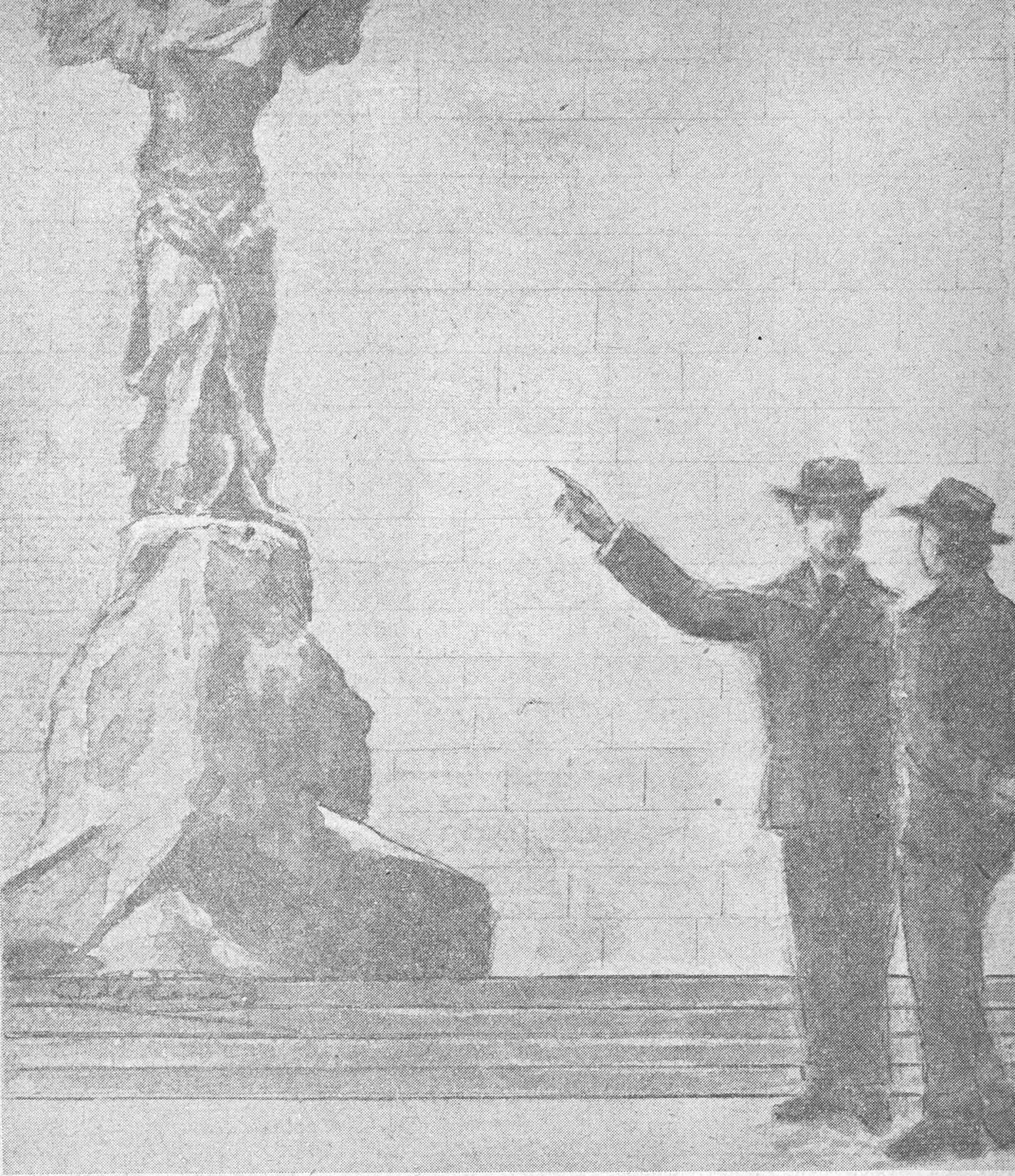
One day, at the very height of our passion and absorption, we stood a while among the Egyptian antiquities, voicing our admiration for the statue of "the Scribe," seated with pen in hand... Then we moved on to a group of "Greek" antiquities and pointed with amazement at the statue of the goddess of victory, "of Samothrace," and the statue of the beloved "Venus de Milo"; and among the pictures of the Renaissance we stood a moment, taken by the picture of "Mona Lisa, La Gioconda," and others and still others of the statues and canvases... And after we had grown intoxicated to the point of drunkenness with gazing at the wonders and masterpieces of the arts — each of us wishing he could keep to them night and day, asking for no other desire — I turned to Gibran, my eyes gleaming with such fierce fervor that they grew wet with tears, and I said to him: "Shall we throw all this great artistic heritage into the refuse bin... because certain charlatans fell short of climbing the summits of art and preferred to change their road, in hopes of discovering something new... with the result that they brought us strange, deformed works that would make bereaved mothers laugh!"
Gibran started up, pleased by my sudden plunge into the heart of our chief subject, the one we had so often circled around without daring to storm it! He laughed aloud — those around us in the hall heard him — and then said: "Your pulse is strong today, Youssef... You please me! But unfortunately your argument is not strong!... Don't you think there must be 'something' behind the uproar now raging? We must first try to understand this 'something.' Then we have full freedom to follow the style we find congenial, the one that suits our feelings and our temperaments. I have begun to believe that the 'type' (the painting or the statue or any other work of art) which the eye understands easily, whose lines and colors and meanings it finds familiar, is more often than not banal and cold, bringing drowsi