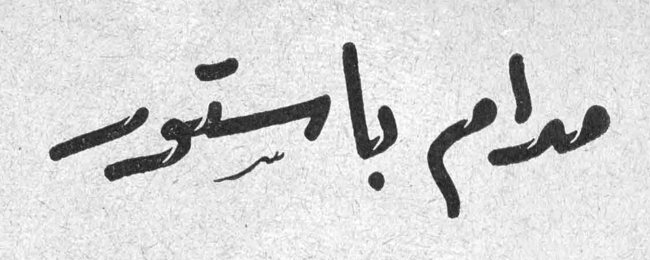
• A great woman whose gentle personality shone upon the life of a great scientist..
• She encouraged him and stood by him in his scientific discoveries, and denied herself..
• To her alone would Pasteur entrust the secrets of his researches before they were complete and presented to the public.
• But for the comfortable life she secured for him, the great scientist would never have attained such a measure of discoveries and glory...
Through the ample studies, the valuable works, and the splendid articles that have been written about the life of the famous French scientist (Pasteur), there emerges before us a great, silent personality who chose to serve humanity without clamor or noise: his good wife, who played in his splendid discoveries a role that no fair-minded person may ignore or undervalue.
It was humanity's good fortune that Pasteur should have such a devoted and faithful wife, who preferred a man of the common people — his father a mere tanner of hides — over many men of wealth, standing, and influence. It was also humanity's good fortune that this noble creature stood at the very summit of the pampered
aristocratic class, from whose vanity and tyranny the great mass of the French people suffered so much in those days.
She was the daughter of Monsieur Laurent, rector of the University of Strasbourg, to which venerable university Pasteur had been transferred from his old post in teaching.
And if the name of this good woman is rarely mentioned, let alone appreciated, whenever Pasteur's name comes up, her name was often repeated in the tones of one acknowledging a debt by the very man to whom she consecrated her life, so that he in his turn might consecrate his life to the service of humanity.
He once said to himself: "I found in her all the qualities I sought when I was searching for a wife." And what he said was true — nor is that too much from a great man of sound judgment like Pasteur. From the first day of their blessed marriage she was not content merely to allow him to give his researches the first place in her married life; she encouraged him and supported him in following the course he wished, in the manner that would achieve what he aspired to in the service of all the sons of mankind. Besides this, she never
ceased caring for him, watching over his comfort, and rendering him every service she found herself able to perform for him in the best way. And to her alone would her scientist husband confide the hidden contents and secrets of his researches before they were completed and presented to the public, that people might reap the fruits of this ideal married life. It is no exaggeration to say that Pasteur would never have offered the world of medicine, industry, and agriculture the researches and discoveries that he did offer, but for this tranquil married life which his wife provided for him at the cost of her health, her rest, and the innocent pleasures to which she had been accustomed before her marriage to him.
It is very difficult, if not impossible, to enumerate the deeds she accomplished, content and satisfied that hers should be the pride of sharing the life of a great man — sharing his despair and his hope, his triumph and his failure, in the depths of a world of experiments and research stripped utterly of sentiment and of the circumstances of the ordinary individual's life.
When her youngest daughter complained of an indisposition in her health, which afterward developed into an illness that carried off her life within a short span of time, she for her part avoided everything that might stir anxiety in the soul of her husband, absorbed as he was in his researches and experiments. She sent him letter after letter, all of them enforced disguise and contrived illusion as to the health of the child who was bitterly wrestling with death, to leave him free to press far ahead in the field of immortal glory — until she went so far as to conceal and suppress her overwhelming tenderness, the tenderness of a loving mother for her little girl who was hastening toward inevitable death; she hid from her husband the true state of her child, and did not let him see her until she lay a lifeless body on the bed of death.