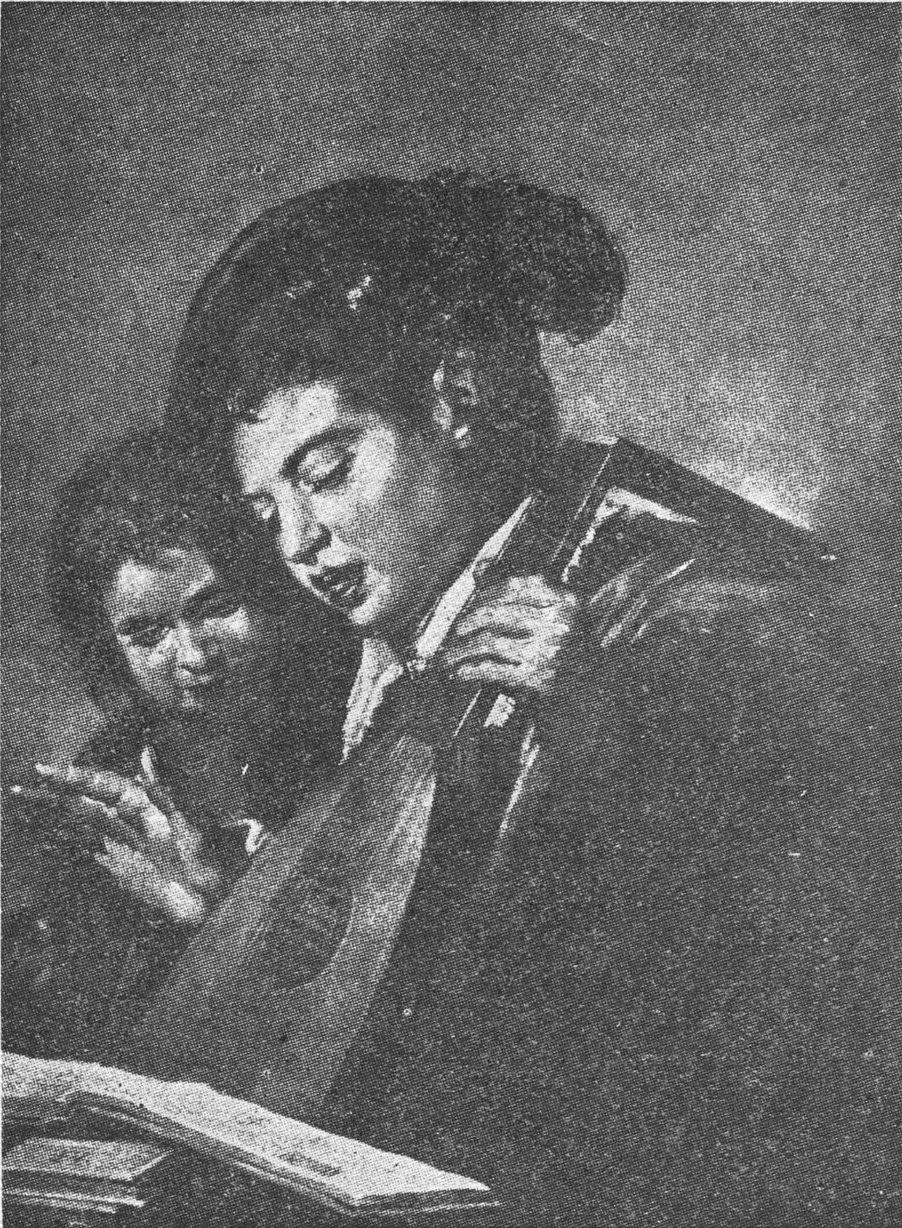
"The Two Boy Musicians" — a painting by the German Frans Hals
Several things were introduced into music that made of it a lofty art, and it was given the title of the noble science. In this period, progress and development touched music in all its aspects. The known instruments were improved and new ones devised; musical writing and notation were organized according to fixed principles; and musical composition took a new direction, freeing itself from simple monophonic composition and adopting complex polyphonic composition. This development in the method of composition was followed by the appearance of new musical forms, among them the motet, the madrigal, and the folk song. The flourishing that music attained then proceeded in two opposing directions: the first an ecclesiastical direction, distinguished by restrictions laid down by the Church so as to preserve the sanctity of the religious melodies lest new elements corrupt them; the other a popular direction, whose banner was carried by the minnesingers in Germany and the troubadours in France. Three great figures stood out in the age of the Renaissance: Lassus, Martin Luther the Reformer, and Palestrina.
Church Music
Modern religious music first flourished in the monasteries and Christian temples of Syria, Egypt, and the land of the Chaldeans. Ancient Hebrew music was used at first for this purpose, with the additions and improvements the Greeks had introduced into it. The first church melodies were similar to "the Psalms of David," but they soon developed rapidly in style and form at the hands of Western musicians when they passed to Europe by way of the Roman Empire. The greatest credit for spreading these melodies and making them general in the land of Gaul (France), Spain, and Italy belongs to the Catholic Church.
In view of the importance of religious melodies in worship, the successive Popes saw that there was need to preserve the integrity of this sacred heritage, and that the best way of achieving this aim was to subject all these melodies to a single style. The melodies were arranged in eight modes; then, in the sixth century, Pope Gregory the Great ordered all churches to use these unified melodies according to the eight modes. These modes were later known
as the Gregorian modes. As for the effect of this restriction, it was harmful to music, for it forbade taking liberties with the melodies, which robbed them of many of their important qualities, such as splendor and freedom, and stood in the way of their progress and development.
Popular Music:
The popular movement went side by side with religious music; its banner was carried by the troubadours in France and the minnesingers in Germany. This movement was a movement of liberation and release where music was concerned, for it was not subject to the same restrictions that the Gregorian modes had imposed on religious music. The troubadours were a company of knight-poets who sang verses and spent most of their time roaming the countryside among the palaces of the nobles, where they found material support and moral encouragement. The minnesingers were a class of German nobles who were passionately fond of music and song; the word in German means "singers of love poems." The minnesingers made continual journeys through the German principalities, playing their new melodies. In such an atmosphere the folk song arose, springing from the soil of the people,