from my own corner — that is, from the educational side, in which I have gained some experience.
I hold that the cure for this condition lies in treating the causes of the disease — that is, in taking a middle course between pressure and freedom in the methods of upbringing, since excess in either is a cause of moral decline. If I wished to be specific, I would say there must be supervision of the motion pictures shown to adolescents; a ban on the spread of books that make the faces of licentiousness attractive to them; a ban on secondary-school students enrolling in political parties; and the use of the means of vocational guidance, which direct the student to the profession that suits him and smooth his way to success by other than the path of cheating, deception, and the scramble for a government post.
And if I wished to generalize, I would say that the most important means of improving morals is the establishment of social justice and the removal of the causes of anxiety and complaint in society. This depends on the rulers and on those connected with them among the men of the press and the leaders of thought. So we must choose well our deputies, our rulers, and our teachers; and above all this, we must strive to reform education and to raise the teacher's standing financially and socially, so that this profession is not left open to the ignorant and the morally degenerate, who raise up a generation in their own image.
XXXX
As for Mrs. Widad Cortas, she set about analyzing the causes of the moral collapse with deliberation and knowledge, laying the greatest responsibility upon the home; for upbringing, in her view, is a foundation among the constituents of morals, and this foundation goes back to the home, on which the first imitation and the lasting impressions depend.
The unsteadiness now present in the family structure, and the neglect that crouches between the
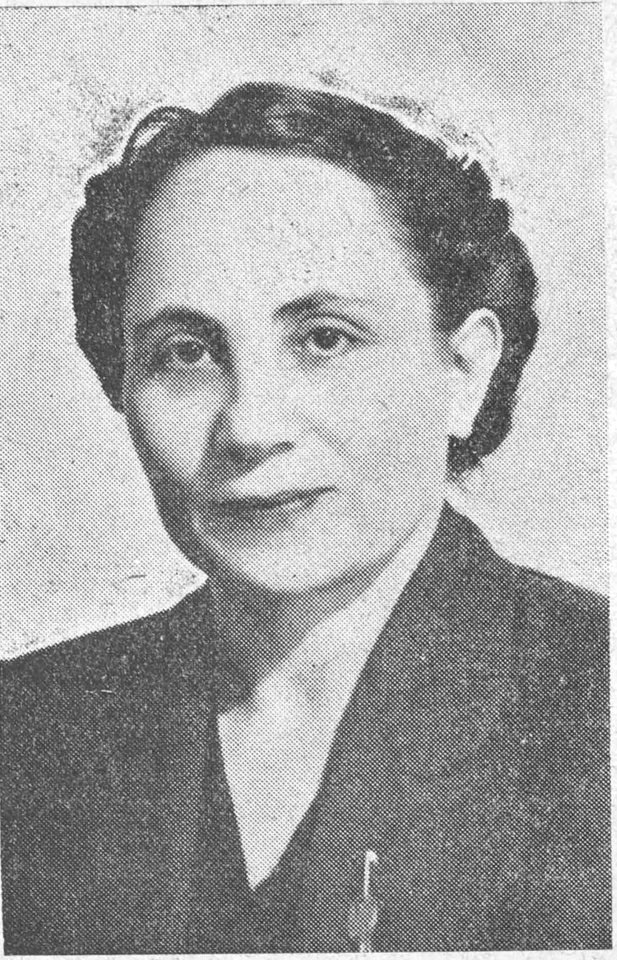
Mrs. Cortas lays the responsibility upon the home
two covers of this disintegration, which stretches on and multiplies in the very heart of the family, have their far-reaching effect on the mentality of the children.
Then the parents must watch over their children, especially at the age of adolescence; for this stage has its perils — it is the mold made ready for the strong inclinations to settle into and take root. Among the most important means of curbing the danger that faces the children are: watching them in their hours of leisure, keeping abreast of their means of amusement, and knowing their companions. For bad company corrupts morals and destroys what the home has prepared, by planting and by counsel, throughout their tender years — so that the child grows twisted before his stalk has hardened in strength and toughness, and before the strong morals in him have become firm and governing.
Among the causes of children slipping loose from the shackle of supervision is the parents' clinging to the husks of conservatism, without any regard for the demands of the age and of the generation. Conscious guidance reaches a commendable measure
when the parents merge with the child's inner self, taking heed of its inclinations and its aims; otherwise this obstinate clinging is one of the things that drive the children to do forbidden things in secret — and they may even reach thereby the point of a sudden breakaway.
Then they must open to their children the breadth of affection, without any fear holding them back from hearing their inclinations, their desires, and their complaints, until formality is lifted between them and confidence is exchanged. In this way the children feel a pressing urge to tell their parents of all their problems, so as to receive from them the necessary guidance. By such treatment the child becomes his parents' little friend.