preparation and that the means of hostile publicity cannot harm in any way; and all the criticisms directed at it became a thing of the past once "Jean Seberg" began to plunge into the great venture traced out before her.
"Otto Preminger," the maker of such sharply contrasting films as "Carmen Jones," "The Moon Is Blue," and "The Man with the Golden Arm," gathered around "Jean Seberg" a troupe of the greatest actors of the English stage, and the dialogue for the screen was written as a condensation — not of the story of the holy struggle of one of the greatest figures of history, but of the self-awareness that "George Bernard Shaw" set down with his mocking, piercing pen, mingling imagination with truth, as is the habit of the great Irish writer.
In numerous and repeated attempts, "Shaw's" plays have failed in their cinematic mold. And so, when the director turned his eye once more to the story of Joan of Arc with a view to putting it into the language of the cinema, the writer "Graham Greene" was obliged to revise "Shaw's story" in its entirety. It may be said that he wrote it for the screen anew, keeping the essence of the story with surpassing fidelity.
The events of "Joan of Arc" begin with the rising of the sun on a day in the year 1429, in the shadow of one of the walls of the castle of "Vaucouleurs," where a young girl was waiting with patience and endurance! She wanted to see Sir "Robert de
Baudricourt," who at last decided to receive her himself. He believed she was mad when she began to recite her orders to him. She ordered him to provide her with a horse, military dress, soldiers, and a letter of recommendation. She informed him that she had received divine orders and could not turn back; and the strange thing is that "Baudricourt" granted her all her requests — in order to be rid of her. Thus began that great struggle which led "Joan," through various stages, to the pile of firewood, and then the fire!
In this story of Joan of Arc there are famous perils and intrigues; we shall not, therefore, insist on the fitness and merit of "Preminger's" film. Nothing runs through this film but beautiful scenes of an attractive stamp, in which we find a spirit — a spirit that trembles and freezes in the frail figure of "Jean Seberg," steeped in truthful expressions. She performed this important role with brilliant skill, especially as she is a budding star in the world of the cinema.
And so, amid a company of brilliant actors, the girl from "Marshalltown," nicknamed the little unknown, succeeded in achieving an astonishing presence through a genuine merit unique of its kind; and after her it will be hard for us to imagine "Joan of Arc" without the innocent, believing features that "Jean Seberg" bears.
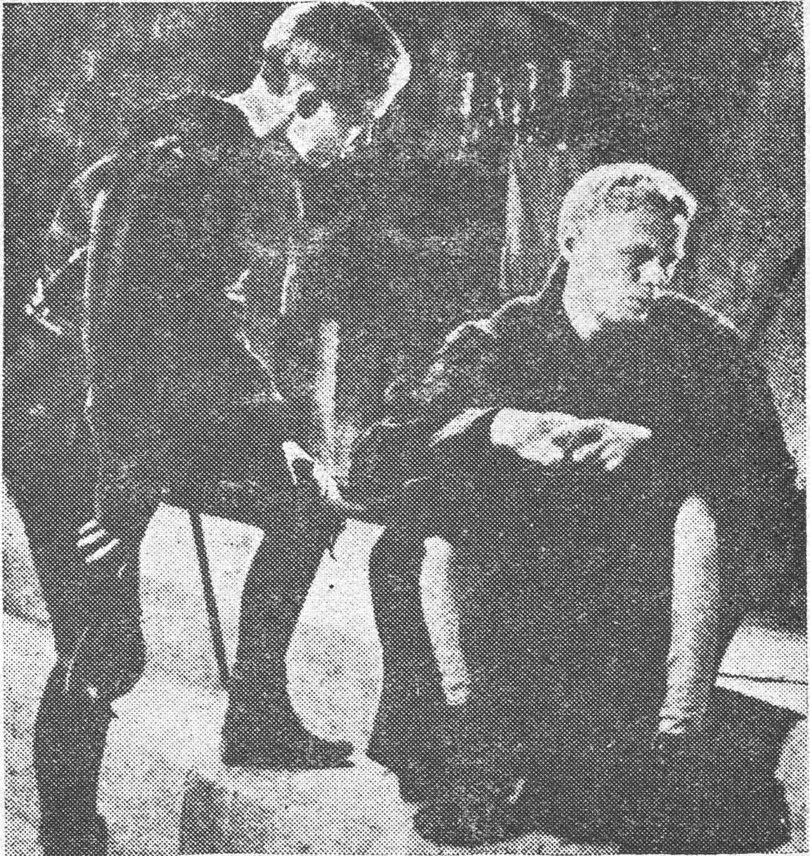
She speaks of her visions . .
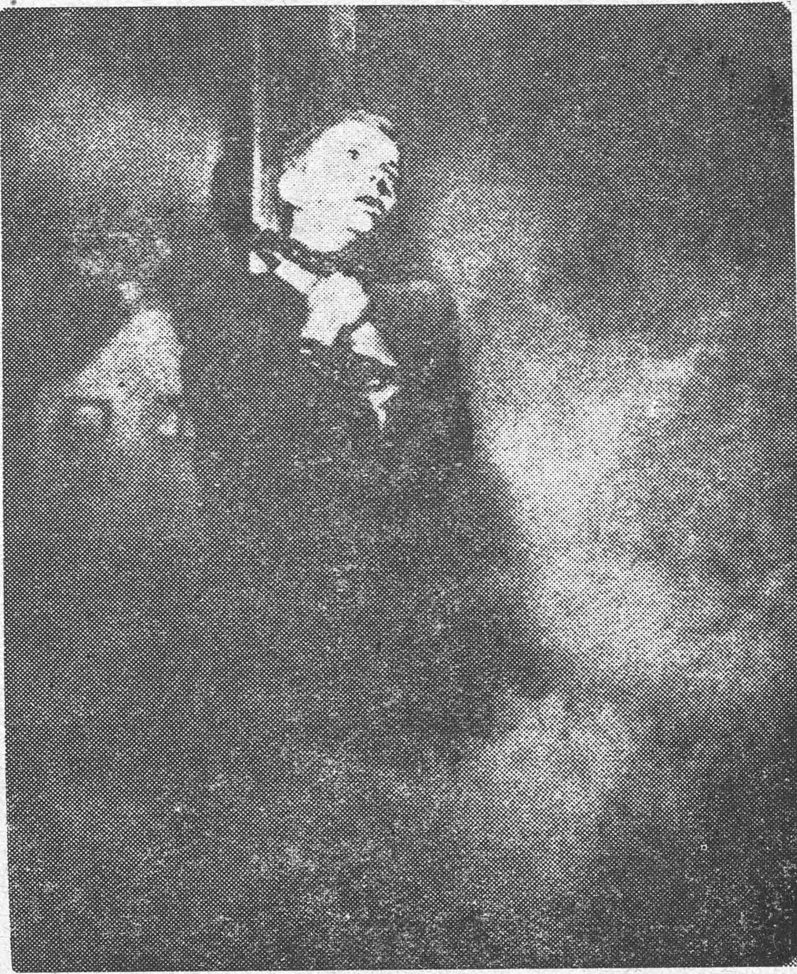
She was bound with chains to the stake while the soldiers kindled the fire