temples and their glory, and to make Paris the capital of his realm in place of "Byzantium," to get away from the Eastern atmosphere where controversies spring up and spread with ease.
Gibran changed the subject, as though he had had enough, and fell to retelling anecdotes of Balzac — how he would roam these alleys on pitch-black nights, gathering impressions to deposit in his stories... And in truth, every alley and every door and every window and every passing shadow... all of it whispered to the imagination things upon things about the tragedy of life, its mockery, its beauty, and its horror...
In the flood of these deep meditations, Gibran would pass over into his unknown world and ask, or wonder: "And we — who are we? Whence have we come and whither are we going?? How like we are to phantoms astray in these narrow alleys... while a short distance off, in the wide streets — the "boulevards" — the river of humanity flows on, to lose itself in the ocean of oblivion... Strange is this life. Who can foretell a single letter of what it hides, or uncover its aims and its purposes?
I no longer remember every word Gibran spoke on that night stroll... but I remember well his state of soul... He dragged his feet, carrying his body over the cold ground, while his spirit soared in infinite space and his thought ranged out to the boundless... When we had drawn near the "Sorbonne"
I stopped before a statue standing in the middle of a small garden, lifted my hat in salute, and said to Gibran:
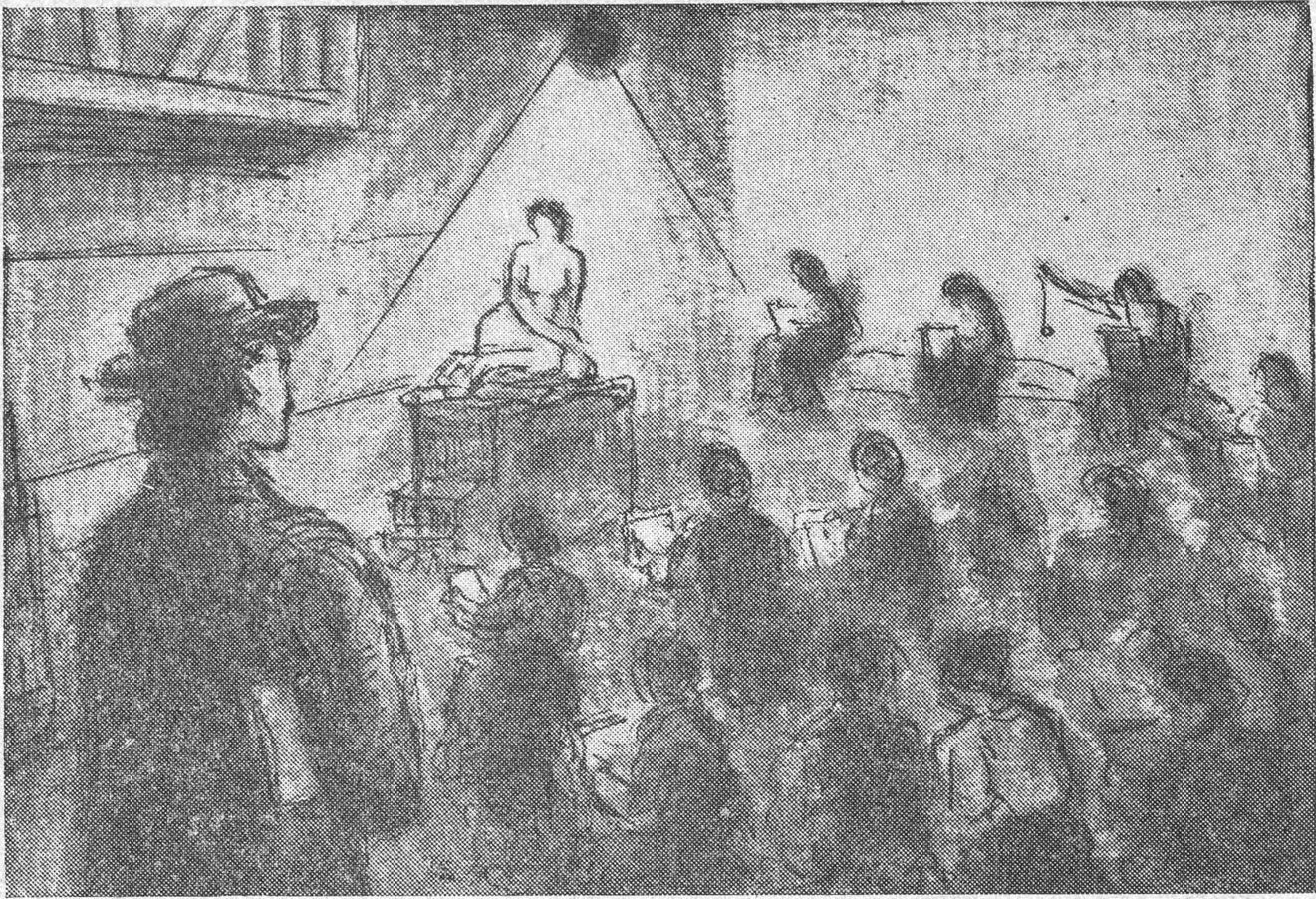
Gibran entered the drawing hall...
— This is the great poet "Dante"... He visited Paris at the opening of the fourteenth century, and his admirers raised this statue to him...
Gibran asked me: — How far have you come with your translation of the Inferno?... How many times over have you promised to read me something of it? And I see no time so fitting for it as this night — will you not do it?
We made for my place — the proposal had pleased me — and to arrive quickly we boarded the "tramway" to the Place "Denfert," and all along the way I was explaining to Gibran and analyzing the greatness of this great poet: ..."He is the third after Homer and Virgil, and perhaps he surpassed them both... he is the first modern man of letters... he left no meaning and no feeling without expressing it with surpassing eloquence and depth... He loved "Beatrice" when he was a boy of ten... and she not yet ten... but death snatched her away before she completed her twentieth spring. Dante was afterward exiled for political reasons, and lived out his life a stranger to "Florence," his beloved city... One day he sighed in anguish, from the depths of his heart, this famous saying: — Ah! How hard is the climbing and descending of other men's stairs!"
And with all that, Dante sang immortal cantos that set him in the rank of the greatest poets. He never forgot the beloved of his heart, "Beatrice" — her name echoes through his immortal cantos, as if she were his faithful "guide" on his journey to Heaven... And there are those who affirm that it was she, and none other, who inspired his poetry and remained the gushing spring of his inspiration!..."
Gibran interrupted me, intoxicated by my talk of Dante: — How I should like to visit Florence, to see the airs in which lived Dante and Giotto and Angelico and Botticelli and Leonardo and Michelangelo and Machiavelli and so many others... It will remain a pang in my heart if I am not able to climb to the summit of "Fiesole"...
At that moment we reached my place... and Gibran asked me: Is there anything to eat?
Talk of poetry does not fill the stomach" When the house had taken us in, I handed him the bowl of laban, the jam jar, and a tin of biscuits... and I made two cups of coffee, and after eating we sat on the divan: Gibran listening, his head propped on his palm, and I reading my translation of the