Who is responsible for the moral decline in our society? And what are the earnest ways of averting this danger that faces our young people?
— 2 —
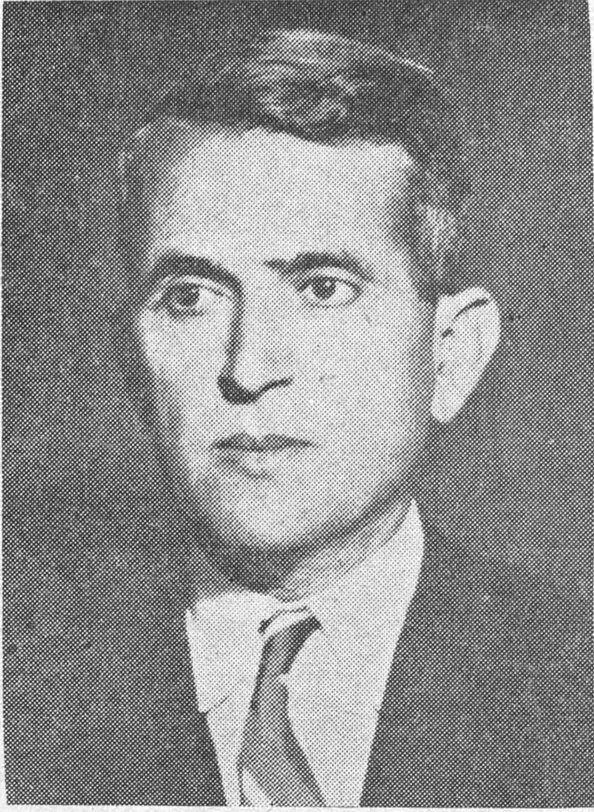
What does Mr. Youssef Nowayhed say?
The one responsible for this moral decline in our society is those very people who make up this society; it is: I, and you, and they — the men and the women!
And let it not occur to your mind that I lay this responsibility upon all equally; truly no — for people in this respect resemble a ladder of many rungs: each class of them stands as a rung, and each bears of the responsibility what corresponds to the height or the lowness of that very rung.
Lebanese society is like an orchard in which tares sprout beside the wheat, thorns beside the violets, fleabane near the vineyard, and parasitic weeds at the roots of the fragrant shrubs; and each of these two kinds of growth answers to a human element of this society. When the gardeners neglected to root the harmful out of the orchard, growth ceased in the plants, wilting and wasting crept in, the rate of yield declined — and there was the moral decline of which we complain.
This neglect that has taken place may be the result of laziness, or of ignorance of the principles of gardening; but in my belief it comes from the gardeners' lack of love for this orchard: they did not tend it faithfully,
and so the harmful overran the beneficial in it.
The weakness of love, in my opinion, is among the causes of the moral decline, for it is accompanied by inward shrinking and lack of cooperation; mutual hatred and mutual envy walk alongside it; with it respect and obedience are lost, the water of the face dries up, and shame grows scarce — and when a man feels no shame he does as he pleases, in ways that bring no honor to his homeland. Yes, I said love, because I attach the greatest importance to it. Love of others keeps us far from unbridled selfishness — itself among the causes of our decline — so that we live in an atmosphere of solidarity; sectarian fanaticism is done away with, and fellowship prevails among the different elements. Through love the official performs his duty in the best manner and is sincere in serving his fellow
citizens; it is love that spurs the judge to hold to the ways of justice among the litigants before him; it is love that makes the merchant contented, satisfied with a reasonable profit, so that he does not corner goods in order to exploit the poor and the middling among those he lives with, nor drive them to fight him and intrigue against him. And it is love that makes the people's representative look upon all citizens with the gaze of a gentle father toward his children, making no distinction among them; he does not harness his influence, drawn from the people, to his private interests, nor violate the regulations and laws which he himself enacted and whose lines his own hands traced for the good of society.
Among the causes that have worked, and still work, to increase the moral decline is "idleness" in the lives of the many young men who do not work — and I single out among them the educated and the half-educated, whom vanity has so hemmed in that it made them disdain to take up manual occupations; so they sat back from work and wasted their hours in places that corrupted them, where their morals declined and their souls sickened, and they became a dangerous element, a germ whose infection passes on to the rest of the people. They came to resemble the orchard's parasitic plants that injure the useful crop — and in all this lies danger to the future of the rising generation and of the homeland.
As for how to avert this danger, there are many effective ways, of which the most important are