his musical ensemble at his disposal.
In 1760 Haydn married, and shortly thereafter he moved to live with the family of Prince Paul Esterházy, among whom he spent thirty years, from 1761 to 1790, during which he drew a respectable salary apart from his other expenses. In this period of his life — the only period in which he was free of financial straits — Haydn produced most of his immortal works. As for his duties, they were confined to rehearsing the orchestra daily, giving certain lessons, composing for the orchestra, and training the singers under contract to the Prince.
In 1791 he set out for England to give some concerts, after his renown had gone abroad and his fame had spread. On his way to England, Haydn passed through Bonn (at present the capital of West Germany), where Beethoven met him, as will be told in another article. During his visit to England he met with every honor and welcome, for his fame had preceded him. And because of the affection the English showed him and their appreciation of his gift, he decided to remain in England. Late in his life Haydn commented on this occasion, saying: "Thanks to England, I became famous in Germany."
In 1809 Haydn's life came to an end in Vienna, of terror, when a cannon shell exploded near his house during the siege the French laid around the aforementioned city. Thus passed Haydn, that man of delicate feeling whose life is summed up in a phrase he uttered after he had advanced in years. He said: "I know that Divine Providence sent me on a mission. I thank the Divine Will that singled me out for this grace, and may I have performed the mission that was entrusted to me."
What did Haydn give to music?
Haydn renewed the orchestra and organized it on original foundations, and he added to it a new instrument, the clarinet. He was the first composer to open a place for gaiety — for all the difficulty of introducing it — in his musical compositions. There is no doubt that Haydn was the first musician to acknowledge the importance of the particular tonal character of each instrument, and it was on this basis that he distributed the instruments in the orchestra and the parts among the different instruments.
Haydn wrote upward of 1,407 pieces, among them 104 symphonies, 83 string quartets (String Quartet), 66 sonatas, 16 Italian operas, and others.
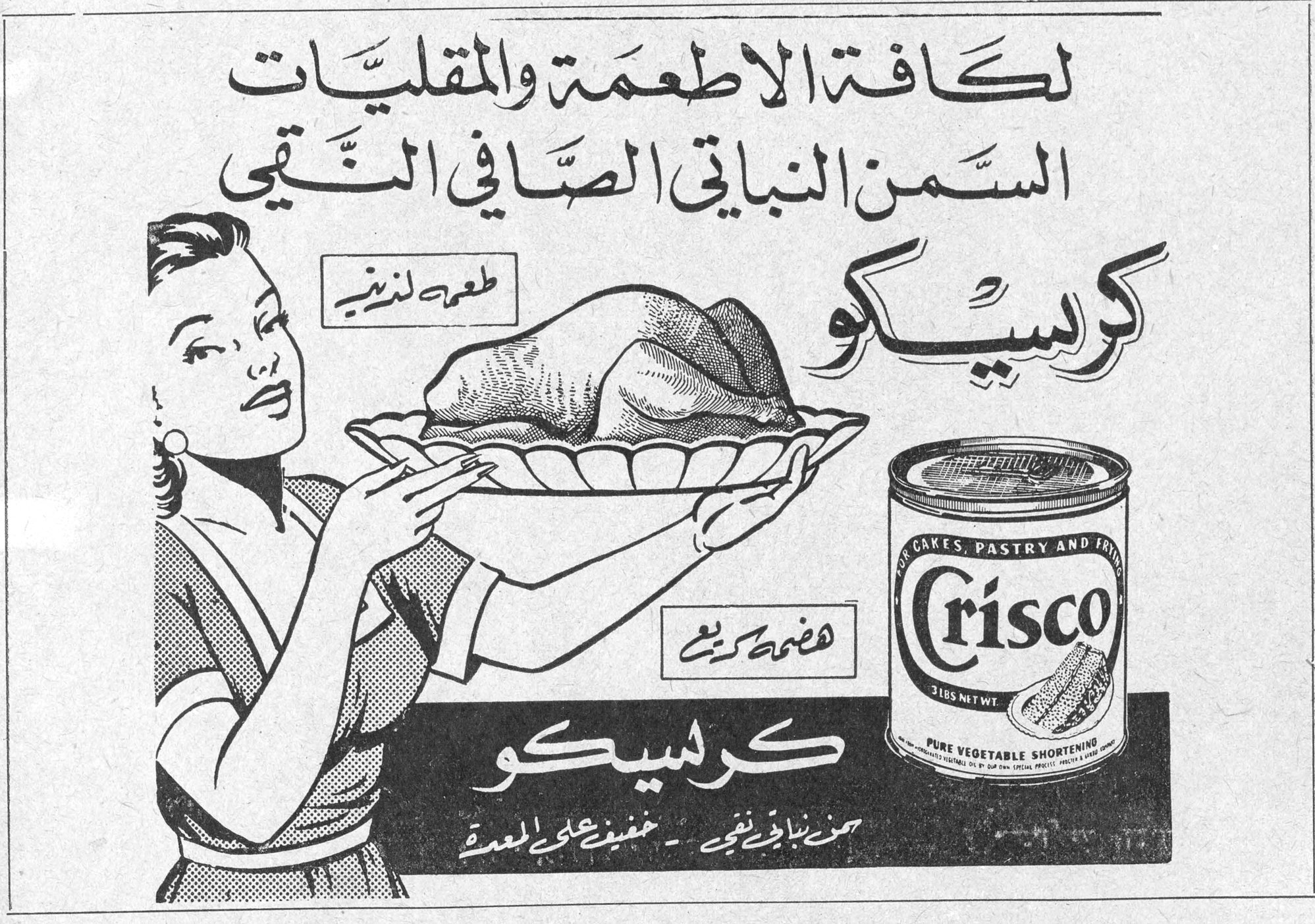
Crisco
For all foods and fried dishes
The pure, unadulterated vegetable shortening
Crisco
Delicious in taste
Kind to the digestion
Crisco
FOR CAKES, PASTRY AND FRIED
3 LBS NET WT.
PURE VEGETABLE SHORTENING
Crisco
Pure vegetable shortening — light on the stomach