• A deficiency of iron in the body causes anemia, and this is more common among children than among adults.
• Woman's need of iron-bearing food exceeds man's.
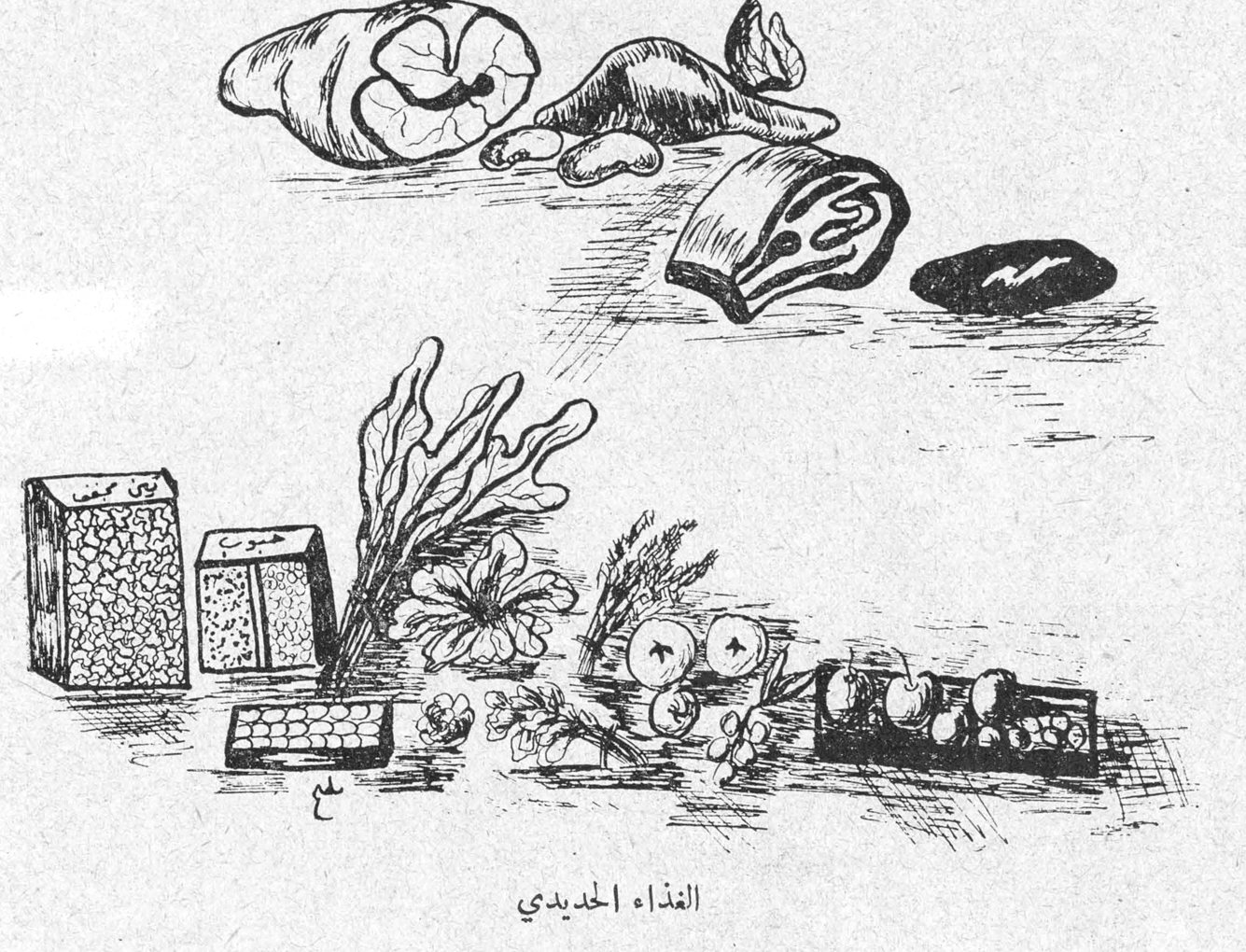
• The most important sources of iron are liver, kidney, heart, and the meat of sheep, cattle, and pigs.
• Among vegetables: spinach, chicory, chard, and others.
• Dried fruits such as apricots, figs, dates, and prunes.
• Dried legumes such as broad beans, chickpeas, and lentils.
• Dibs is rich in iron...
* * *
Iron plays an important and essential role in the body, despite the smallness of its quantity there. The blood contains 55–60% of the iron present in the body, a matter of real importance. It assists in the processes of oxidation and conversion, carrying oxygen to the tissues and carbon dioxide to the lungs. And the coloring matter in the nucleus of the cell is composed of an iron-protein compound.
Iron appears in different forms. The ferric form (Ferric) makes up, with protein and sugar, a complex compound. This takes place only in the presence of hydrochloric acid in the stomach, for this acid assists the absorption of iron and hence the benefit derived from it. In the digestive canal, meanwhile, the
oxidizing substances and the gastric juice convert iron into the ferrous form (Ferrous), and only in this form can it be absorbed. Absorption takes place in the stomach and the small intestine; the iron is then carried to the liver, which is its principal storehouse, and from it the body draws its supply, whenever necessity requires, for the formation of hemoglobin. There are other sites for the storing of iron, such as the spleen, the kidney, the bone marrow, the tissues, and the muscles. Those who suffer from a deficiency absorb larger quantities of iron than the healthy do. There is an active relation between calcium and the consumption of iron in the formation of blood, for a reduction in the quantity of calcium may cause severe anemia. One nutrition scientist has observed that an excess of iron causes a loss of phosphorus, just as an excess of phosphorus causes a loss of iron.
A person needs 12 milligrams of iron daily. Woman, however, needs larger quantities than man, because of the iron she loses in menstruation. The child must take more abundant quantities, as must the woman during pregnancy and nursing. Its most important rich sources are the liver, kidney, and heart of sheep, cattle, and pigs; beef and pork likewise contain a good quantity. So do certain vegetables and legumes — such as spinach, chicory, chard, parsley, and tomatoes — and certain dried fruits — such as apples, apricots, figs, dates, and prunes. Among its sources also are dried broad beans and chickpeas, lentils, and the other grains. Nor must we forget dibs, for it is rich in this mineral.
It is an accepted fact that a deficiency of iron causes anemia. Anemia is defined as a condition in which the blood lacks hemoglobin, or red corpuscles, or both together. But we must remember that anemia does not always mean a deficiency of iron in the diet. It is very often the result
Iron-bearing food