Music by: Wolfgang Mozart (1756–1791) Rendered into Arabic by: Samir Shikhani
An opera in four acts, adapted from a comedy by Beaumarchais, produced for the first time in Vienna in 1786.
The characters: • Count Almaviva • Countess Almaviva • Figaro: the Count's personal valet • Susanna: the Countess's personal maid, and Figaro's fiancée • Cherubino: the Count's servant • Barbarina: the gardener's daughter • Dr. Bartolo • Marcellina: Bartolo's housekeeper • Don Basilio: a music master • Don Curzio: a lawyer • Antonio: a gardener
The time: the eighteenth century The place: the house of Count Almaviva, near Seville, in Spain
Act One The scene: a room in the house of
Count Almaviva
Several years have passed since the marriage of Count Almaviva and his beloved Rosina. And here is Figaro, the former barber of Seville, become the Count's personal valet, and about to marry his fiancée Susanna, the Countess's personal maid. The room in which the bridal pair are to live lies between the rooms of the Count and the Countess, and Figaro points out that it suits them perfectly should their master and mistress call them, whereas Susanna does not take the same view of making this room their bedchamber.
Susanna declares that the Count has repeatedly tried to flirt with her, as is his right in his capacity as her master and lord of the house. She goes off to the Countess's room, and Figaro gives vent to his jealousy in the song "If You Wish to Dance," in which he declares that he will have something to say if the Count wishes to dance this dance.
He leaves the hall, and in comes old Dr. Bartolo, who nurses a fierce grudge against Figaro, accompanied by his housekeeper Marcellina, a woman of middle age. We learn that Figaro borrowed money from her some time ago, and undertook, in the agreement concluded between them, to marry her if he did not repay this debt. She has come with Dr. Bartolo to catch Figaro in this marriage trap. After Bartolo swears to be revenged on Figaro and goes out, Susanna returns; she and Marcellina exchange stinging words, and the latter goes out in a fury.
Thereupon enters the young servant Cherubino, who has newly discovered the delight of love. He is in love with every woman in the opera, among them Barbarina, the gardener's daughter. Cherubino describes his agitations and emotions to the astonished Susanna in the song "I Know Not What I Am Doing!" No sooner does the Count enter the room than Cherubino hastens to hide behind one of the large chairs, since there is nothing to warrant his presence in that hall; and from his hiding place he hears the Count fixing a rendezvous with Susanna in the garden.
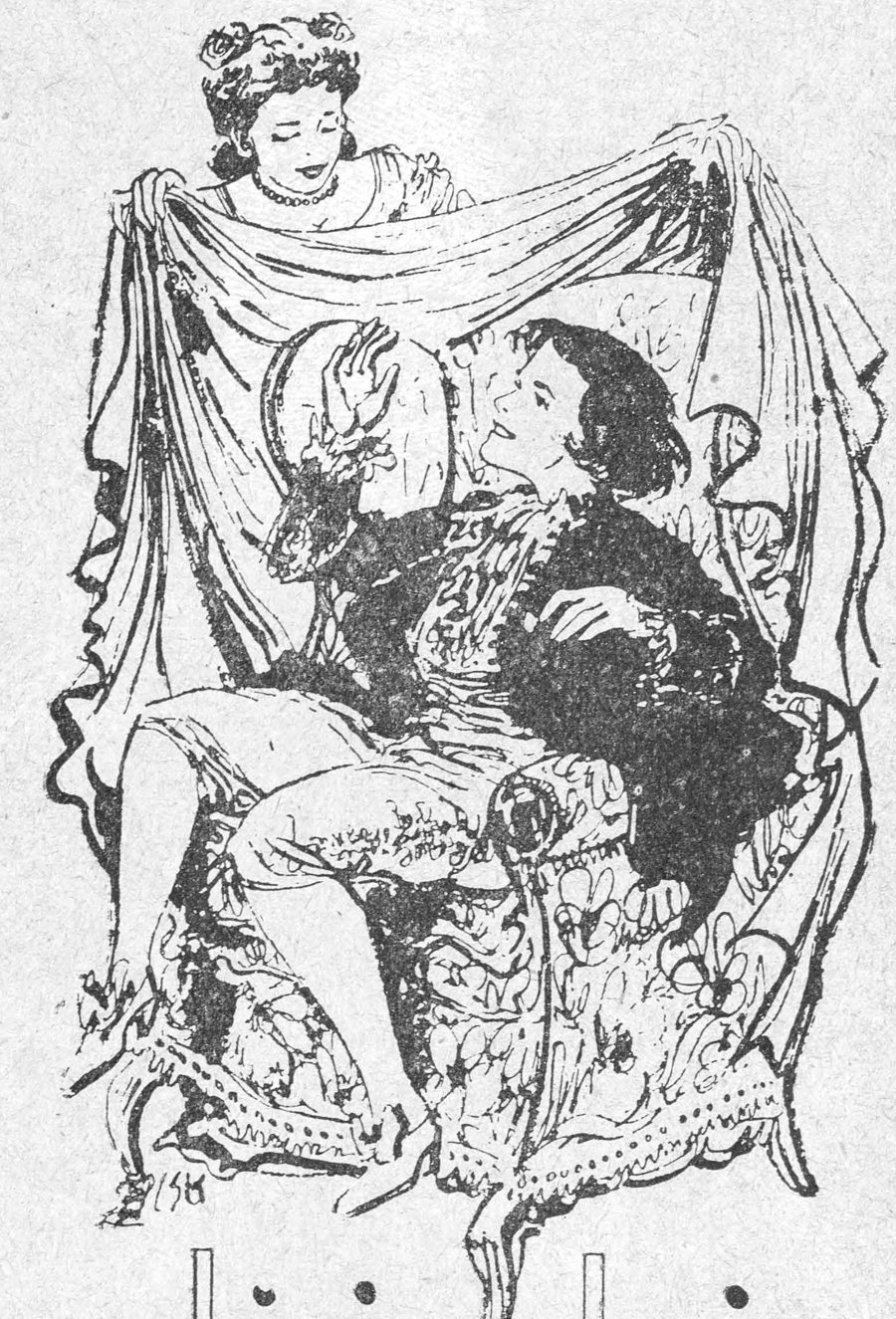
While they are thus engaged, the musician Don Basilio arrives, and the Count in his turn is obliged to hide behind the chair behind which Cherubino has vanished. But the latter slips nimbly around the chair and creeps to another chair, sinking down upon it with care, and Susanna covers him with a cloak. Basilio, for his part, sets about gossiping over the Countess and Cherubino. The Count