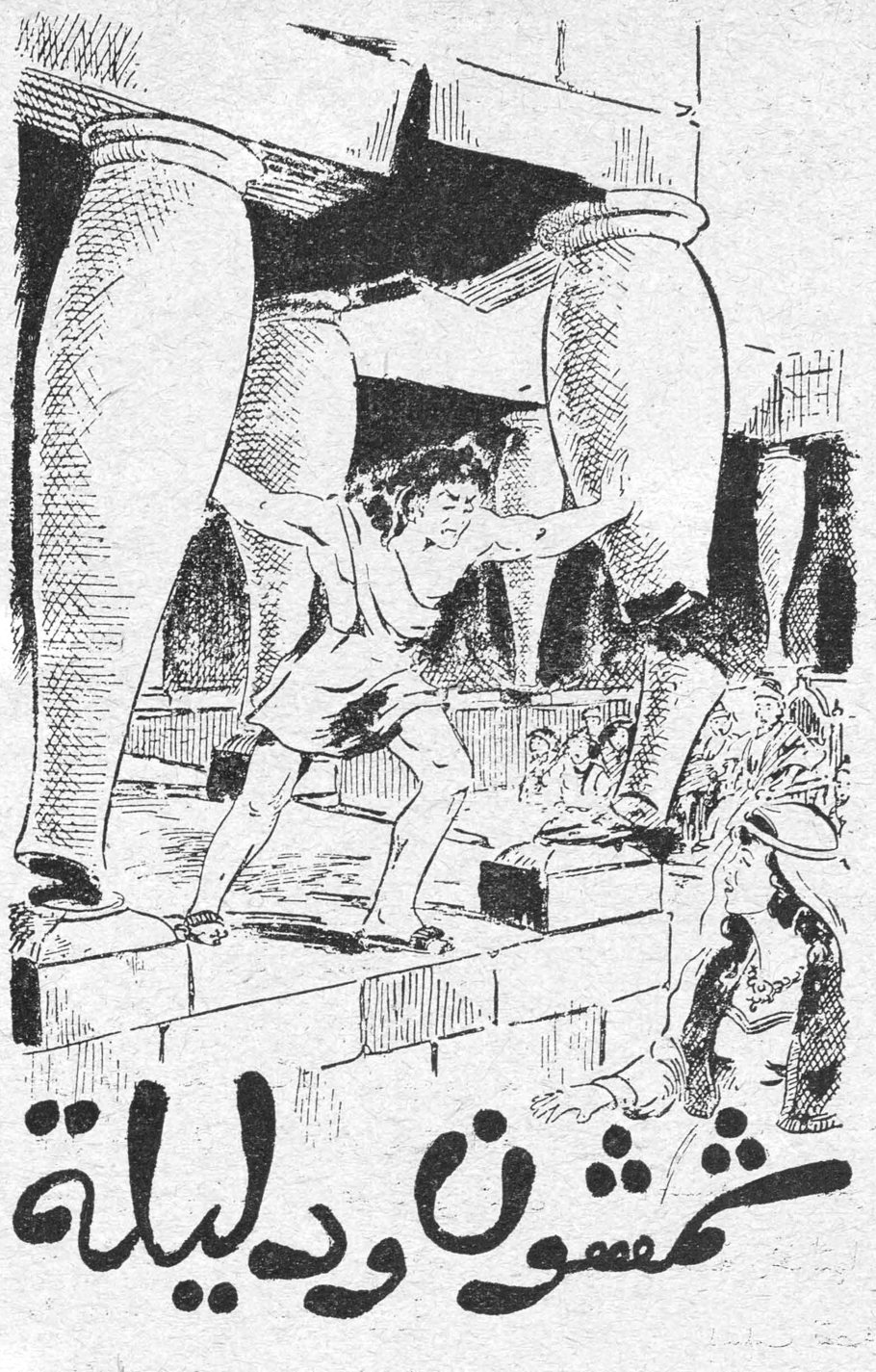
Music by: Camille Saint-Saëns (1835–1921) Rendered into Arabic by: Samir Shikhani An opera in three acts, first produced in Weimar in 1877
The Characters: • Samson: leader of the Israelites • Delilah: a priestess in the temple of Dagon • Abimelech: governor of Gaza • The High Priest of Dagon • Hebrews, Philistines, dancing girls
The Time: the year 1150 before Christ The Place: the city of Gaza in Palestine
Act One
The Scene: a public square in Gaza
The Hebrews have gathered in the public square before the temple of Dagon, god of the Philistines, and have fallen to bewailing their ill fortune under the oppression of these, their traditional enemies, crying: "Why has God forsaken us?" But one of them, Samson, rebukes them for it, telling them that the hour of deliverance is near at hand, and that they will soon be lifting up their voices in praise instead of protest.
Abimelech, the Philistine military commander and
governor of the city, comes to the square at the head of a force of soldiers and orders them to keep quiet and calm; he taunts them with their defeat and their humiliation, saying that their god, Jehovah, is no match for the Philistine god Dagon. Samson defies Abimelech and accuses him of injustice and tyranny, crying out that the hour of the Hebrews' deliverance will soon strike, and that their god, Jehovah, will stretch out a helping hand to them as in the past. The Hebrews take fire and echo Samson's defiance. In a fit of violent rage Abimelech draws his sword against Samson, but before he can strike him Samson wrests the sword from his hand and slays him with a mighty blow.
Terror runs through the limbs of the Philistine soldiers, and they fall back before this catastrophe. Samson and the Jews leave the square, Abimelech's sword raised high. The great doors of the temple of Dagon swing wide open, and the High Priest comes forth and berates the Philistine soldiers for letting Abimelech's slayer slip through their hands. They kneel before his fierce anger, and two of them try to explain to the High Priest how a strange power had nailed them to the spot. But he pours out on them the full measure of his wrath and his contempt for their cowardice, declaring that the Jews must be utterly destroyed in punishment for their heinous crime.
A messenger arrives in haste and informs them that a mighty army under Samson's command has vanquished the Philistines. The High Priest calls down a curse upon Samson and the Hebrews, but the Philistines are seized with foreboding; their hearts quail and they press to flee. And so they carry off Abimelech's body and turn tail.
The square teems once more with Hebrews, but now they do not bewail their ill fortune; rather they exult in victory. They acclaim Samson as their leader. The temple doors swing wide open once again, and instead of the High Priest there appears the enchanting priestess, Delilah, surrounded by maidens bearing garlands of flowers. They come down the steps and sway among the Hebrew warriors in a stirring pagan dance, and Delilah approaches Samson seductively; but one of the elders warns him against surrendering to her spell, lest she lead him down to destruction. Yet Samson is captivated by Delilah's beauty, and he prays for deliverance from her sway. Delilah sings a sweet song beginning "The voices of spring are singing," in which she tells him that she will await him at her house, fragrant with the scent of flowers, in the Valley of Sorek. The Hebrew elder repeats his warning as Delilah and the young dancing