Who is the aged person?
Is he a bedouin in Iran, wrapped in his tent, watching his flock?
Or an old man lounging in the sun on the banks of the river Thames?
Or is it a woman infirm at thirty-five, in Brazil, where only one person in forty passes sixty-five?
Wherever the aged person may be, and whoever he may be, he is bound to have his problems, brought on
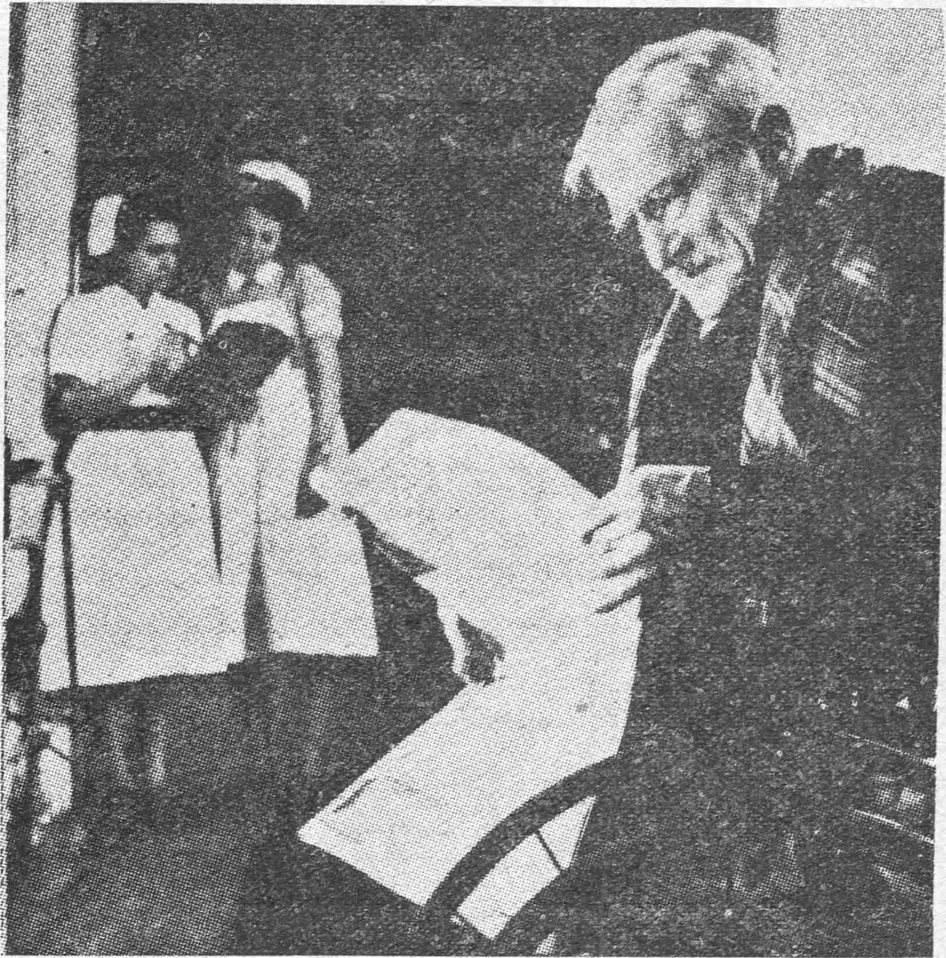
An old man reading the morning paper
by his age; and these problems differ in one particular country from another, according to the average length of life there... In Bolivia, for example, the average person dies at thirty-three; in the Philippines only one person in thirty lives on to sixty-five; and so too in India, where most people live only to thirty.
In the countries of the West, however, the average life span passes sixty-five, and a man there often remains until beyond eighty, enjoying excellent vigor and health.
These differences go back to several factors, the most important of them climate, culture, and civilization. In Europe and the United States, Canada, Australia, and New Zealand, where the level
of old age rises, its problems multiply — and the reverse holds too: they diminish in the backward countries, where people die before reaching sixty.
Sociologists estimate that the problems of old age in the world are on the increase and the rise, in view of the progress and advance of health and material conditions... The important thing in the matter is that the aged person be assured, in his last days, of every cause of comfort and peace of mind — above all from the economic side!
There are fifty states in the world today that follow the pension system, which solves the economic problem; but it does not answer the question in its entirety, and its moral side remains: for the aged person put on pension always feels that there is no longer any need of him, and despair — the deadliest enemy of activity — creeps into his heart.

Knitting wool... the first hobby of the aged